• 7 min read
Anthropic debuts Claude Opus 4.8, Xiaomi 17T launches in Russia, YouTube restricts VPN video access
Anthropic rolled out Claude Opus 4.8, Xiaomi launched its 17T series in Russia starting at 49,990 rubles, and YouTube began restricting VPN users from accessing regional videos. This week’s roundup covers AI improvements
Anthropic rolled out Claude Opus 4.8, Xiaomi launched its 17T series in Russia starting at 49,990 rubles, and YouTube began restricting VPN users from accessing regional videos. This week’s roundup covers AI improvements, flashy new smartphones, tightening content controls, and more – all packed in a fresh episode from itzine.ru and Forgeeks on Telegram. Here’s what’s happening.
Claude Opus 4.8 focuses on honesty and control over benchmarks
Anthropic’s new flagship Claude Opus 4.8 is out with the same pricing as before: $5 per million input tokens and $25 per million output tokens. Instead of chasing record-breaking benchmarks, this update emphasizes transparency. The AI now admits uncertainty more often and flags weak data points rather than masking them with false confidence – a feature important for enterprise reliability.
Updates include dynamic workflows that split complex tasks into parallel subtasks handled by hundreds of subagents, and a new effort control switch allowing manual adjustment of model exertion – from Low to Max or an adaptive setting. This addresses user complaints from Opus 4.7, where the adaptive mode sometimes misallocated resources. Alongside Opus 4.8, Anthropic teased “Mythos-class models,” a more powerful line expected in coming weeks, though details remain under wraps.
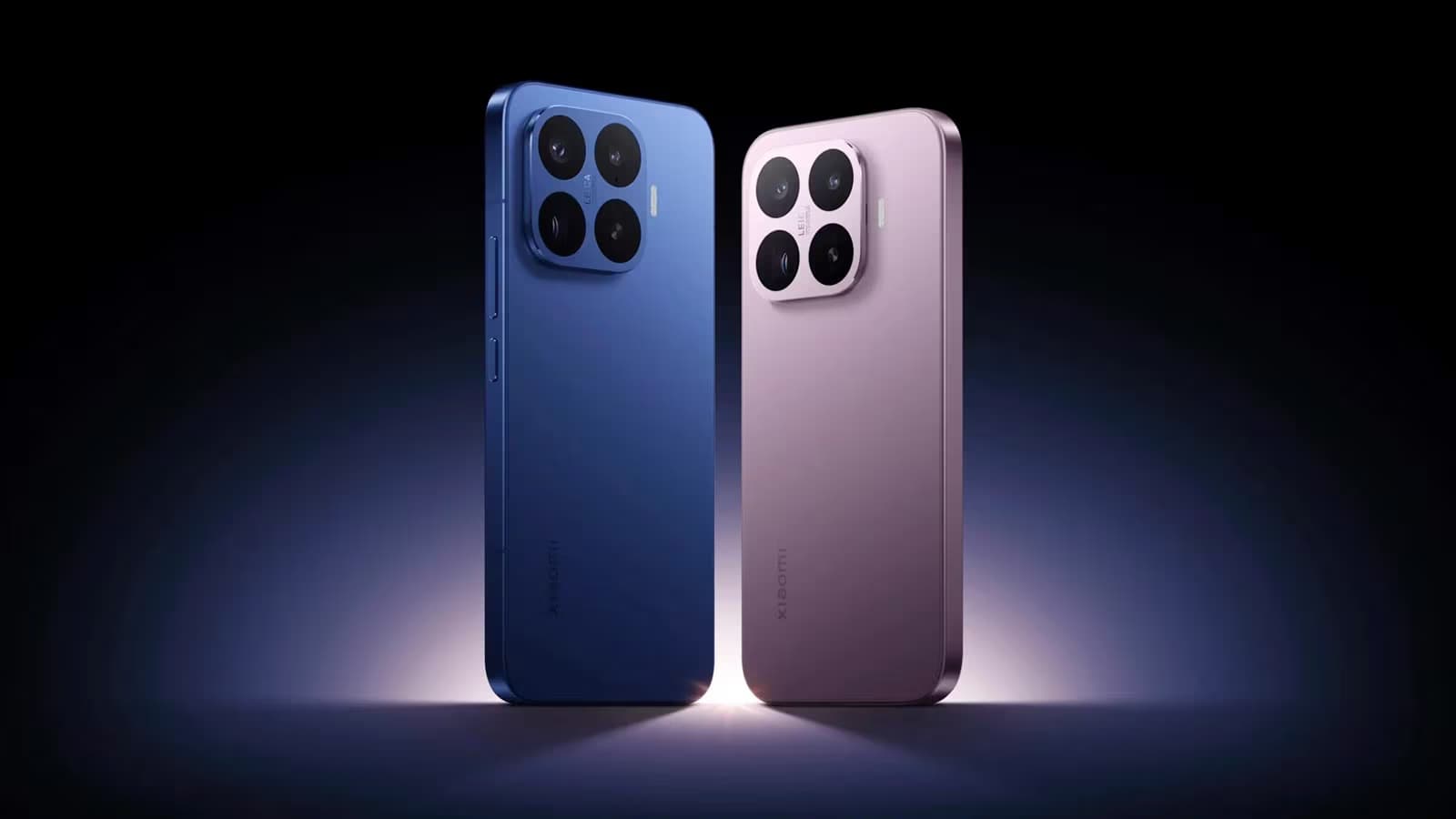
Xiaomi 17T and 17T Pro debut in Russia with premium cameras and bright OLED screens
Xiaomi’s 17T and 17T Pro hit the Russian market, priced as follows with a 5,000-ruble discount until June 30:
- 17T: 49,990 rubles (~$580)
- 17T Pro: 67,990 rubles (~$790)
Both feature Leica Summilux cameras boasting 5x optical zoom and daylight-bright OLED panels reaching up to 3,500 nits, along with IP68 water resistance.

Recommended reading
Google backs 1.8 GW Arkansas solar project
The 17T runs on a Dimensity 8500 processor, backed by a 6,500 mAh battery with 67W fast charging. Meanwhile, the 17T Pro steps it up with a Dimensity 9500 chipset, a 7,000 mAh silicon-carbon battery, and faster charging speeds-100W wired and 50W wireless.
Apple experiments with automatic iPhone lock when snatched
Apple is reportedly testing a new security feature that locks the iPhone instantly if it detects a sudden grab, leveraging accelerometer data. If an Apple Watch is nearby, it also checks for unexpected distance increases between the devices to avoid false triggers during fast but normal motions.
After activation, the iPhone checks if it’s connected to a familiar Wi-Fi or known location. If not, it triggers Stolen Device Protection-applying full restrictions. This measure targets cases where a thief snatches an already unlocked phone, a gap in Apple’s security. Google launched a similar Theft Detection Lock feature for Android earlier this year. No official rollout date yet.
Honor 600 and 600 Pro arrive in Russia with massive batteries and 200MP cameras
Honor’s 600 and 600 Pro models landed in Russia, priced as follows:
- Honor 600: 45,990 rubles (~$535)
- Honor 600 Pro: 70,990 rubles (~$825)
Both sport a 6.57-inch screen peaking at 8,000 nits, a 200MP main camera with CIPA 6.0 optical stabilization, and a hefty 7,000 mAh battery with 80W charging.
The base Honor 600 runs Snapdragon 7 Gen 4, while the Pro jumps to Snapdragon 8 Elite. The Pro adds a 50MP periscope telephoto lens with 3.5x optical zoom and 50W wireless charging. Key features include OneHop for syncing notifications with iPhone, file sharing with Mac, and Apple Watch message display. Both models have IP68, IP69, and IP69K water protection.
Steam Deck OLED returns with price increases due to memory costs
Valve resumed Steam Deck sales but raised prices significantly due to rising memory and storage costs. The updated prices are:
- 512GB model: $789 (up from $549)
- 1TB model: $949 (up from $649)
Hardware specifications remain unchanged.
The same memory chip shortage postponed Steam Machine and Steam Frame launches indefinitely from early 2026. Against this backdrop, pricier handhelds like Lenovo Legion Go 2 at $1,350 and Asus ROG Xbox Ally X at $1,000 now seem less intimidating, while the base ROG Ally at $600 looks surprisingly attractive.
Huawei unveils 'Tao Law' to reshape chip design beyond Moore’s Law
Instead of shrinking transistors further, Huawei bets on slashing signal delays inside chips by “logic folding”-stacking circuit logic in multiple layers. This approach aims to boost performance and cut power usage similar to new manufacturing nodes, but through architectural innovation rather than raw process advancements.
The first mass-produced chip using this new architecture is expected in the Kirin mobile lineup this fall. Huawei forecasts that by 2031, this method will deliver performance rivaling 1.4-nanometer chips-without the cost or political hurdles of actual 1.4nm fabrication. This emerges partly due to U.S. sanctions blocking direct process advancements, making logic folding a necessary workaround rather than a theoretical concept. Its true value will become clear after real-world device testing.
Yandex launches Vibecraft AI to generate websites and apps from text
Yandex introduced Vibecraft, an AI-powered tool that creates websites, CRM systems, trackers, surveys, and online games directly from text descriptions. The AI clarifies your idea and builds a tailored product rather than fitting you into templates.
Without Vibecraft, corporate websites in Russia typically cost upwards of 350,000 rubles ($4,000) and take weeks. The new tool aims to drop costs close to zero and turnaround in hours. It launches officially in June, with early access available by application. Pricing will be subscription-based with limited free requests.
VK embeds ads inside Mail.ru inboxes, following Gmail’s lead
VK started inserting ads directly in Mail.ru email inbox lists, adapting them to match the service interface and targeting users based on interests. From December to April, VK reports a 4x rise in click-through rates and an 11x boost in conversions, particularly among under-24s and over-45s.
While this ad format isn’t new-Gmail and Yahoo have done it for years-it’s relevant for Russian platforms. With foreign ad inventories retreating, big local ecosystems are monetizing homegrown touchpoints where users spend daily hours.
007 First Light hits Steam with 91% positive reviews, hailed as the Bond game fans wanted
The new James Bond action stealth game from Hitman’s creators launched on Steam with over 2,800 “very positive” reviews and a peak concurrent player count of 55,000 before official release. Critics are calling it the best Bond game since GoldenEye 007.
Praises focus on its blend of Hitman’s stealth and Uncharted’s dynamic narrative, plus solid optimization. Criticism targets technical bugs, missing AMD FSR 4.1 support, and the last-minute addition of Denuvo DRM two days before launch. Priced at $70, it’s not available in Russia but runs on PC, PS5, Xbox Series X|S, and Nintendo Switch 2.
YouTube tightens VPN user access to region-locked content in Russia
YouTube has begun blocking Russian viewers using VPNs or proxies from watching certain videos under regional licensing restrictions, such as sports broadcasts, Formula 1, Olympics, and TV premieres. Attempting to access these triggers a prompt to disable VPN or proxy use.
YouTube’s system cross-references IP addresses, account country, payment details, and VPN signals, meaning users see varying access levels even for the same videos. This tightening targets license compliance rather than imposing a blanket content ban.
These moves reflect challenges for Russian internet users as platforms adjust to geopolitical constraints, with companies balancing content rights and user access in volatile regulatory environments.

Culture Editor
Maya explores gaming, streaming, and the internet as a place where people actually live. From deep-dives into creator economies to the anthropology of digital communities, she tracks platform drama and cultural shifts so you don't have to. She believes the best tech stories are fundamentally about human behavior.