

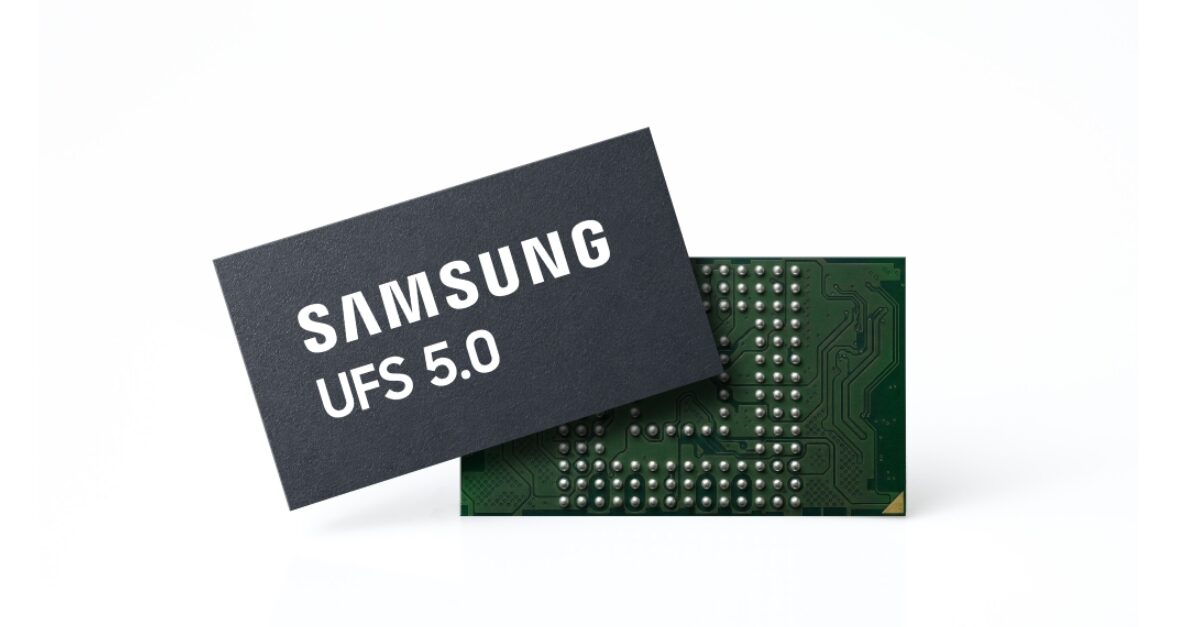
Samsung has unveiled UFS 5.0, a new mobile storage standard built for AI-heavy phones that are about to ask a lot more from memory than just ”store my photos and shut up.” The company says the technology can hit up to 10.8 GB/s, with production due to begin this year and capacities reaching 1 TB.
The headline number is impressive, but the real target is responsiveness. As more generative AI shifts from the cloud onto devices, storage is becoming part of the computing stack, not just a place to park files. That is where Samsung is trying to get ahead of rivals such as Micron and SK hynix, both of which have been pushing faster memory and tighter power envelopes for next-generation phones.
UFS 5.0 speed and efficiency gains
Samsung says UFS 5.0 delivers sequential read speeds of up to 10.8 GB/s and sequential write speeds of up to 9.5 GB/s. The company also claims the new standard is more than twice as fast as UFS 4.1, which should make a visible difference when large language models need to load data locally instead of waiting on a cloud connection.
Energy use is part of the pitch too. Samsung says efficiency is improved by more than 40% versus UFS 4.1, thanks to new clocking and multi-voltage techniques. That matters because faster storage that drains a battery like a sieve is just an expensive disappointment in a nicer package.
- Sequential read: up to 10.8 GB/s
- Sequential write: up to 9.5 GB/s
- Efficiency: more than 40% better than UFS 4.1
- Size: 7.5 mm x 13 mm x 0.9 mm
- Capacity: up to 1 TB
A smaller chip for tighter phone designs
The new package measures 7.5 mm x 13 mm x 0.9 mm, making it 16.7% smaller than its predecessor. In practice, that gives handset makers a bit more room to juggle bigger batteries, more camera hardware, or just the usual internal chaos that comes with making a modern flagship phone fit inside a slab of glass.
Samsung says mass production will start in the fourth quarter of this year in a range of capacities up to 1 TB. The timing suggests the first wave of devices using UFS 5.0 will likely be aimed at premium smartphones built for on-device AI, where storage speed is becoming as important as the processor doing the actual thinking.
What UFS 5.0 changes for phone makers
The broader shift is clear: local AI needs fast memory, low latency, and less power draw, all at once. UFS 5.0 is Samsung’s attempt to turn storage into a competitive feature instead of a boring checkbox, and that puts pressure on other memory vendors to follow with similar speed and efficiency claims.
The open question is how quickly smartphone brands will build around it. If the first phones pair UFS 5.0 with stronger NPU hardware and larger on-device models, storage benchmarks may start showing up in marketing right next to camera specs, which would be a strange but perfectly sensible place for them to end up.