
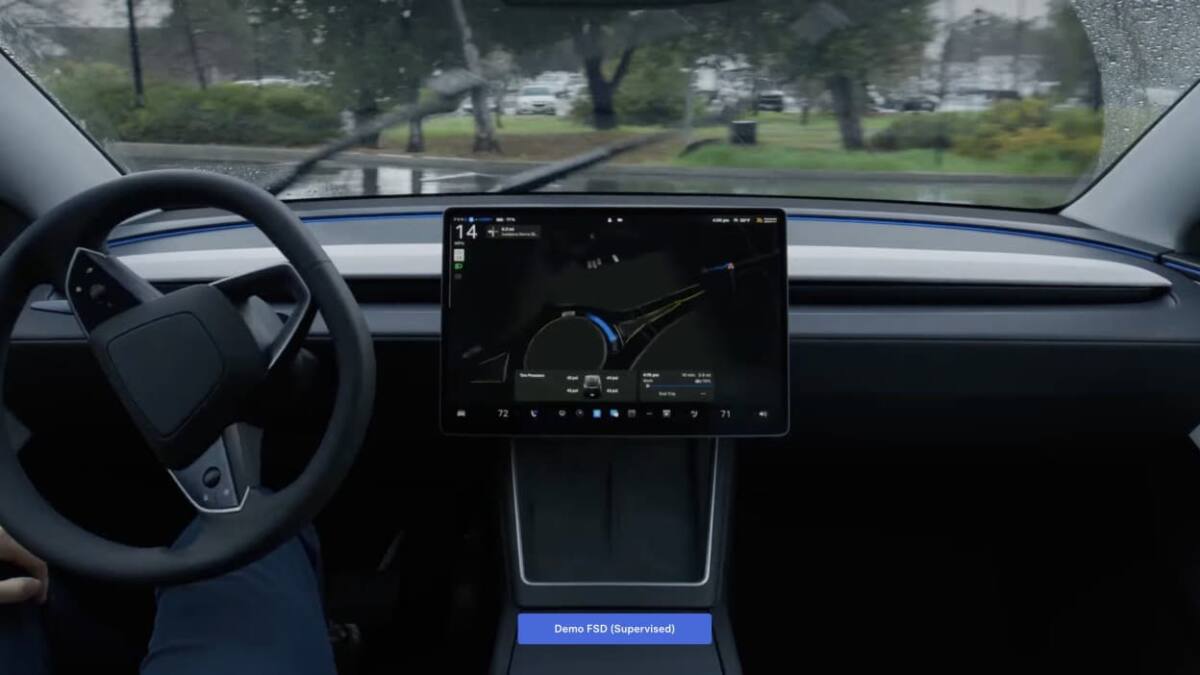
Tesla is preparing a small but telling Full Self-Driving upgrade: cars that remember where their owners like to park. Elon Musk says future versions of FSD will learn driver habits and automatically pick a preferred spot near the home, office, school, or other regular destination, while Grok is slated to bring more natural, taxi-style voice commands to the cabin within roughly three months.
That may sound trivial next to the grand promises around autonomy, but parking is where many drivers actually tap the brakes on FSD. If the system keeps making the wrong choice at the end of a trip, the most advanced software in the car still feels a bit like a very expensive intern.
FSD will learn parking preferences
Musk said the update will let Tesla vehicles remember a driver’s habits instead of forcing a fresh parking decision every time. The idea is straightforward: arrive at a familiar place and the car should know whether to stop by the entrance, tuck in farther away, or choose the same spot the owner usually prefers.
Tesla has not said when the feature will arrive or which models will get it. That uncertainty matters, because FSD updates often land first on newer hardware and then trickle outward, leaving older owners to watch from the curb.
Grok is coming for the passenger seat
The bigger play is Grok, Tesla’s in-car AI assistant. Musk says drivers will be able to speak to it more like a person or a rideshare driver, asking it to turn at the right place, drop passengers near an entrance, or park farther from a building without memorizing a rigid command list.
If that works as described, it pushes Tesla closer to the sort of conversational interface rivals have spent years chasing with assistants like Google Assistant and Alexa, only now attached to a moving car. The real test is not whether the demo sounds clever; it is whether the system can handle messy, impatient humans without turning a simple errand into a support ticket.
The next step for Tesla’s software pitch
For Tesla, this is less about parking than about the sales pitch. The company keeps trying to sell FSD as a learning system that gets more useful the longer you live with it, and remembered parking spots are a neat way to make that claim visible in daily driving.
The open question is whether Tesla can turn that promise into something reliable, not just impressive in a launch video. If it can, the car becomes less of a robot and more of a mildly opinionated assistant; if it cannot, owners will keep doing the same thing they already do: taking over at the exact moment the software tries to be clever.