

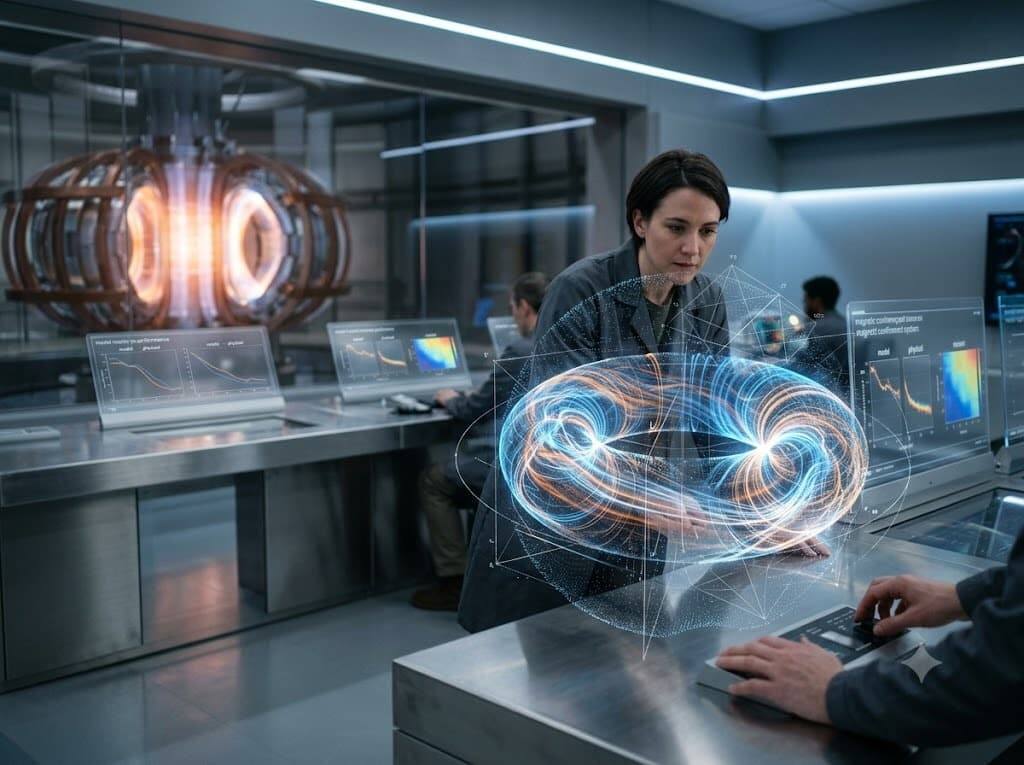
A Chinese startup says its FusionAlpha platform could help make fusion reactor design much faster, using an AI-driven simulator that models plasma and tokamak behavior thousands of times quicker than traditional code. The pitch is simple: if you can test reactor designs in software before building them, you may cut the brutal cost and delay that have kept fusion stuck in the ”someday” category for decades.
That promise comes from VeloAlpha, founded by fusion physicist Xie Huasheng. The company says FusionAlpha can speed up some modules by 100 to 10,000 times while keeping error below 5%, although those claims have not been independently verified. If that holds up, it would not replace fusion engineering – but it could change who gets to try, and how many dead-end designs get built in the first place.
What FusionAlpha says it can do
FusionAlpha is built around a problem every fusion team knows too well: the trade-off between speed, physical accuracy, and useful predictions. Conventional plasma models are accurate but expensive to run; simplified models are fast but can miss the physics; and many AI tools struggle once they leave the data they were trained on. The startup says its mix of machine learning and new mathematical methods is meant to break that deadlock.
The company is targeting the biggest bottleneck in fusion development: the need to repeatedly test tiny design changes in costly experiments. That matters because reactors have to keep superheated plasma stable inside magnetic fields, while also dealing with materials that can survive the heat, radiation, and engineering stress. In other words, the whole field has been waiting for better simulation tools because brute-force trial and error is a luxury nobody can afford.
Why fusion simulation is such a hard problem
Fusion energy is often described as a near-limitless clean power source because it mimics the processes that power stars and does not emit carbon while operating. The catch is that recreating those conditions on Earth means controlling plasma at temperatures hotter than the Sun’s core, then doing it inside very complicated machines. Tokamaks are the best-known approach, but stellarators, linear systems, and laser-based designs are also in the mix.
That engineering spread is part of the reason simulation has become so valuable. A small design tweak can trigger a costly round of hardware testing, so the industry has a strong incentive to push more of the search process into software. VeloAlpha is basically betting that fusion can follow the same path as chips, where electronic design automation turned chipmaking into a digital-first workflow long before the wafers were etched.
China’s strategic bet on fusion tools
The startup’s timing is not accidental. China treats fusion as a strategic field alongside quantum computing and neurotechnology, which helps explain why funding is available for companies pitching faster development tools rather than just new reactor hardware. VeloAlpha has already secured initial financing, and backers appear to be wagering that the software layer could matter almost as much as the machines themselves.
There is a familiar pattern here: in deep tech, the companies selling picks and shovels often move faster than the ones trying to mine the gold. Fusion has long attracted huge promises and painfully slow progress; a simulator that genuinely shortens the design cycle would not solve commercialization overnight, but it could narrow the field of viable concepts and save years of expensive guesswork.
The road to commercial fusion stays long
Even the most optimistic reading does not make commercial fusion a near-term business. But if digital models like FusionAlpha can reliably filter out weak reactor designs before anyone pours concrete or orders magnets, the economics of fusion research start to look less punishing. The real question now is whether the startup can prove that its speed claims survive outside the demo environment – because in fusion, physics has an ugly habit of ignoring marketing.