

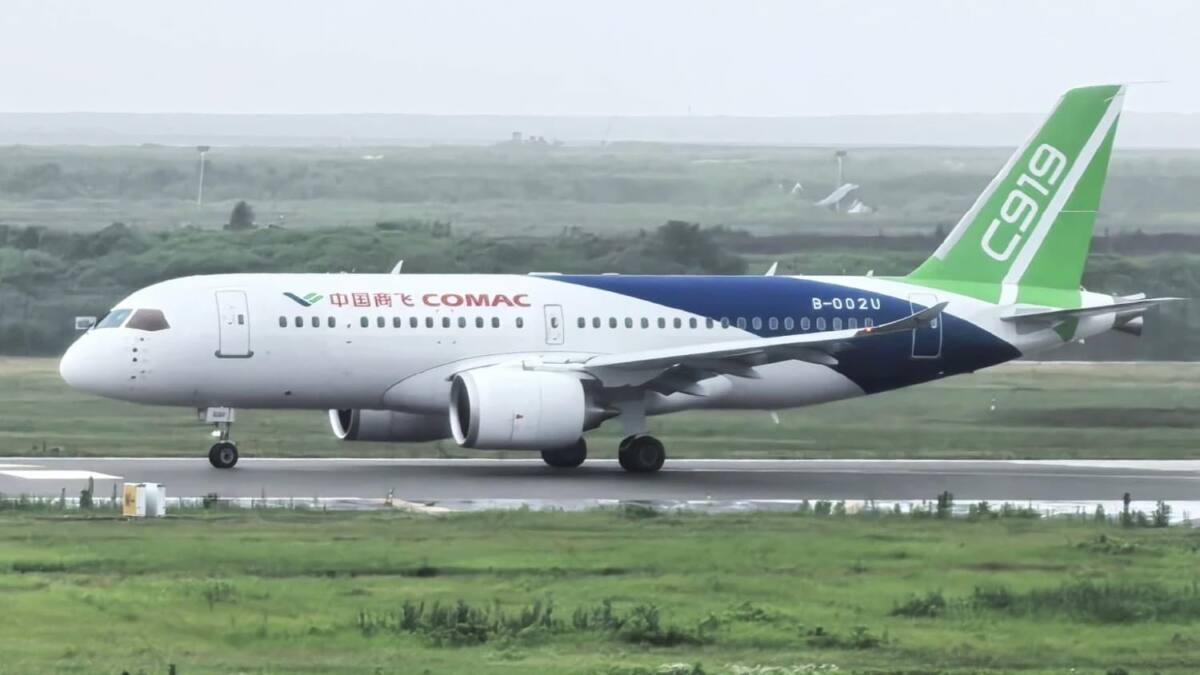
China’s COMAC has begun taxi tests of the C919-600, a shortened version of its narrow-body C919 designed for high-altitude airports. The move pushes the aircraft one step closer to flight testing and certification, while also giving COMAC a more specialized tool for routes where thin air and mountain terrain make takeoff and landing harder than they look on a brochure.
Photos of the aircraft surfaced on Chinese social media, with the tests reportedly taking place at COMAC’s Shanghai production site, where final assembly of the C919 family happens. The project is being developed with Tibet Airlines and is aimed at western China, especially the Tibetan Plateau, where airport performance requirements can be unforgiving.
A C919 variant built for thin air
The C919-600 is part of COMAC’s so-called plateau version of its flagship jet. That matters because high-altitude operations demand more than a standard airframe can always comfortably provide: engines lose effectiveness in thinner air, wings generate less lift, and nearby terrain leaves less room for error. Airlines serving these airports need aircraft that can cope without drama, and not every narrow-body is equally happy at elevation.
COMAC has not disclosed detailed specifications for the C919-600 yet, which leaves room for speculation but not much substance. What is clear is the strategy: instead of trying to make one airplane do everything, the company is carving out variants for specific domestic needs, a familiar playbook for airframers trying to build loyalty one route at a time.
Why Tibet Airlines is part of the story
Working with Tibet Airlines gives the program a practical use case, not just a marketing slogan. Western China is full of airports where altitude is a real operational constraint, so a dedicated version of the C919 could help COMAC deepen its footprint in a market where the company already wants to challenge Boeing’s 737 and Airbus’s A320 families on home turf.
- C919-600: shortened C919 variant
- Designed for high-altitude airports
- Taxi tests underway in Shanghai
- Developed with Tibet Airlines
What comes after taxi tests
Taxi testing is a modest milestone, but it usually means a program is moving from engineering drawings and factory-floor adjustments toward the messy reality of certification. The next question is whether COMAC can prove the C919-600 really improves performance in plateau conditions without adding too much complexity to a platform that is still building its reputation. If it works, COMAC gets a cleaner answer to one of its hardest domestic problems: how to serve the airports that sit too high for ordinary airliners to love.