

NASA has started testing a mobile waste-recycling system that could one day help keep people alive on the Moon and Mars. The NASA waste recycling tech, called the Divergent Deployable Wastewater Treatment Facility, turns wastewater and organic trash into water, fertilizer, and materials that could support both farming and manufacturing far from Earth.
The timing is no accident. For permanent outposts, every litre of water and every kilogram of spare parts shipped from Earth is expensive, slow, and a logistical headache. NASA is trying to shrink that dependence by building a closed-loop system that works more like a tiny industrial ecosystem than a basic treatment plant.
How the lunar and Martian waste system works
The hardware has been moved from the Kennedy Space Center to the University of North Dakota, where it will be tested in conditions designed to mimic life on another world. The trials are taking place inside the Integrated Lunar/Martian Analog Habitat, a simulated living module for future off-Earth crews.
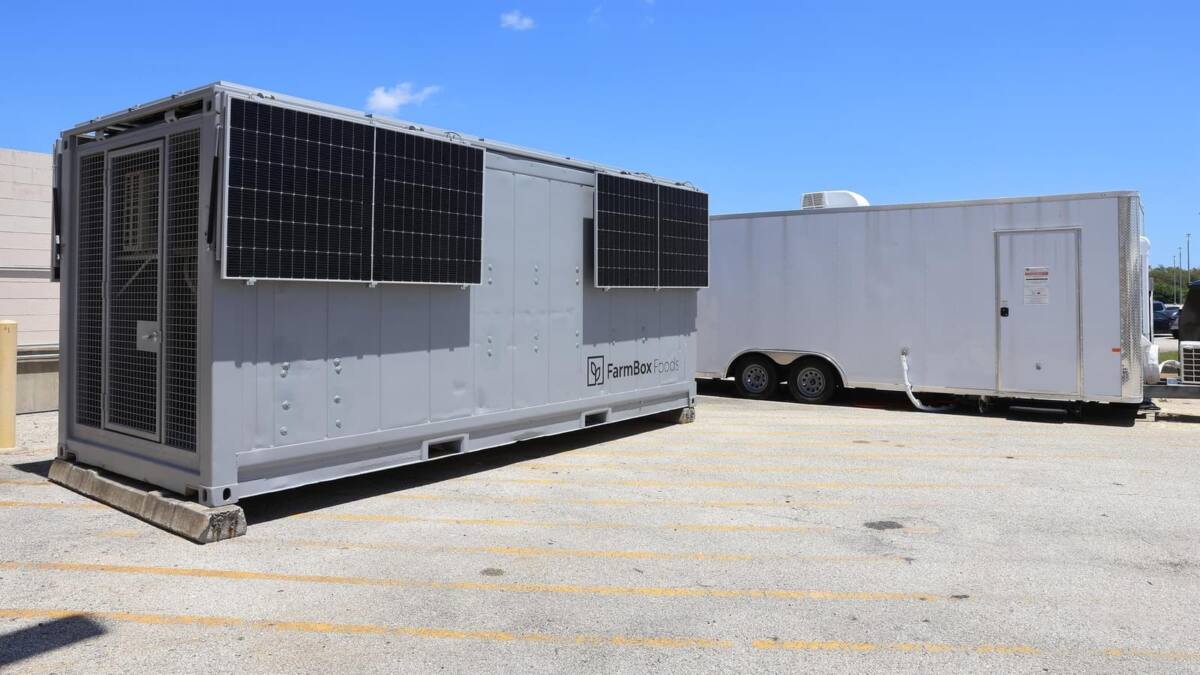
The system sits in a mobile trailer more than 7 metres long and combines three bioreactors, a vertical plant-growing farm, water-cleaning systems, environmental sensors, and software for autonomous control. Unlike many Earthbound treatment plants, it does not dump everything into one stream. Urine, shower and laundry water, food waste, and other wastewater are processed separately so the system can extract more useful material from each type.
- 3 bioreactors handle different waste streams
- A vertical hydroponic farm uses the recovered nutrients
- Environmental sensors and software support autonomous operation
Why NASA split the waste streams
That separation is not just an engineering flourish. It is tailored for small crews of four to eight people, where efficiency matters more than brute-force processing. One bioreactor turns food waste and feces into a nutrient-rich liquid for plants, another handles urine and technical water, and a third treats so-called grey water from hygiene and laundry.
The nutrients then feed a vertical hydroponic farm, where plants grow without soil. Researchers will compare those crops with plants grown using standard hydroponic fertilizers, which should give NASA a clearer picture of whether the closed-loop version is good enough for real missions rather than just elegant diagrams.
From sewage to 3D-printing feedstock
The project is part of Artemis, NASA’s long-term effort to maintain human presence on the Moon. But the agency is also looking beyond food production. One path under study would use waste-derived products to grow microorganisms that make lactic acid, which can then be turned into polylactide, a 3D-printing material that could help make parts and structural elements on the Moon or Mars.
That is the real bet here: not just cleaner water, but a circular economy in space. If NASA can make this work in an analogue habitat, the next step is far less glamorous and much harder – longer mission simulations, including year-long Mars-style tests, where systems have to survive the kind of boredom and breakdowns that real space travel loves to deliver.