

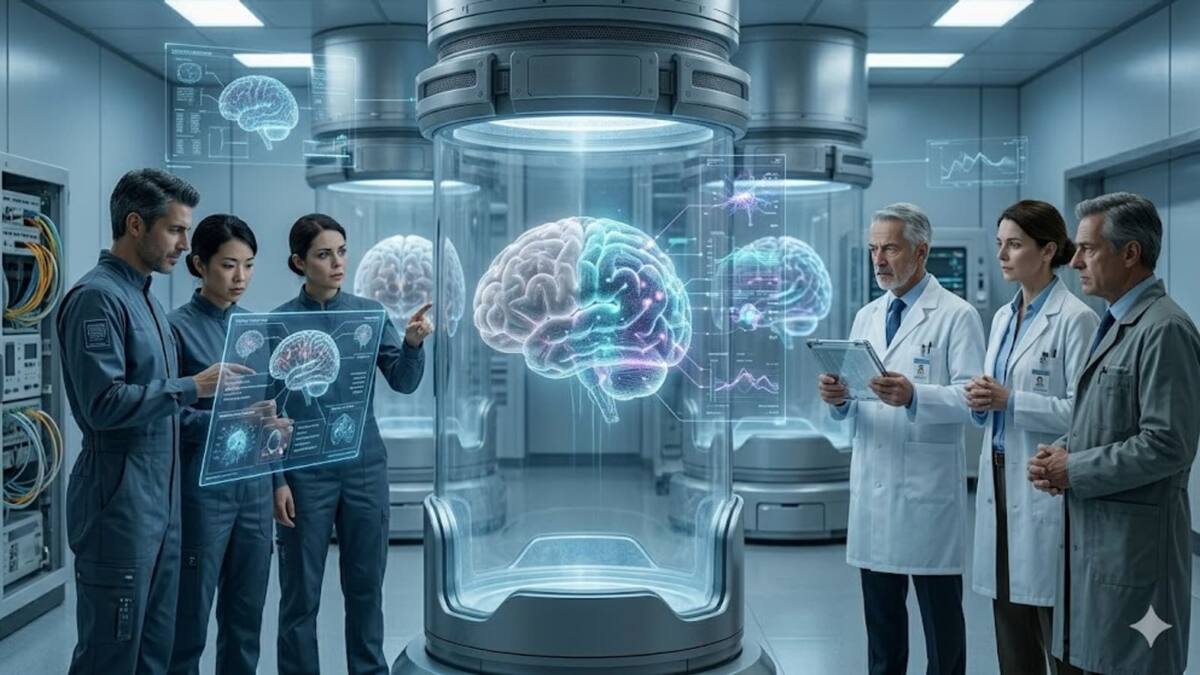
Neurosurgeons are much more willing than other doctors to entertain a future in which cryonics works. In a survey of more than 300 physicians, they were the most optimistic specialty about whether preserving a body or brain could one day lead to a person’s functions being restored, even though the wider medical field remained sharply divided.
The study, led by neurobiologist Ariel Zeleznikov-Johnston at Monash University, found a big gap between general caution and specialist enthusiasm. Across the full sample, only about 27.9% of respondents said that successful recovery after cryonic preservation was ”likely” or ”very likely,” while the median estimate among neurosurgeons reached 72%. That is a striking spread for a field that still sits somewhere between biomedical speculation and organized hope.
How doctors rated cryonics
The overall figure for successful restoration of ”critical psychological information” after full brain preservation and later resuscitation was about 25.5%. Almost half of the doctors in the survey, 47%, said that outcome was unlikely or very unlikely. Put bluntly: most physicians are not ready to call cryonics medicine, even if a sizable minority is no longer laughing it off.
- More than 300 doctors were surveyed across multiple specialties.
- Average response: about 27.9% saw cryonics as likely or very likely to work.
- Neurosurgeons: median estimate of 72%.
- Overall estimate for restoring critical psychological information: about 25.5%.
- 47% of respondents called the idea unlikely or very unlikely.
Why neurosurgeons are more open to the idea
The most obvious explanation is exposure. Doctors who work near neurosurgery and severe neurological disease spend their careers thinking about tissue damage, brain structure, and how much the brain can tolerate before function is gone for good. That does not make cryonics plausible by default, but it does make ”never” sound a little too absolute.
There is also a familiar pattern here: specialists closest to a technical problem often judge its long-term solvability more generously than outsiders. That has been true in other fields, from transplant medicine to artificial organs, where ideas once dismissed as fantasy slowly turned into regulated practice. Cryonics is nowhere near that point, but it is clearly winning a more serious hearing than it used to.
The ethics of cryonics are getting attention too
The survey did not stop at technical feasibility. More than 70% of doctors said anticoagulants could be used in terminal patients to improve later tissue preservation, while about a quarter opposed the idea. Nearly half also backed legalizing procedures that prepare a patient for cryonics while they are still alive, despite existing legal restrictions.
That is where the conversation gets uncomfortable fast. Once doctors start debating what should be allowed rather than whether the idea belongs in science fiction, the subject has already moved a few steps closer to mainstream medical ethics. The technology itself remains hypothetical, but the argument around it is getting more concrete by the year.
Biostasis is moving out of the fringe
The authors say there is still no clinical consensus on cryonics, and that is the honest answer. But the split between specialties suggests the topic is no longer just a punchline for late-night TV. It is becoming a serious debate about whether memory, identity, and brain structure can ever be preserved well enough to matter later.
The more interesting question now is not whether every doctor will come around. It is whether a small but credible professional minority, especially among brain specialists, is enough to push cryonics from speculative hobby into a more formal medical conversation.