

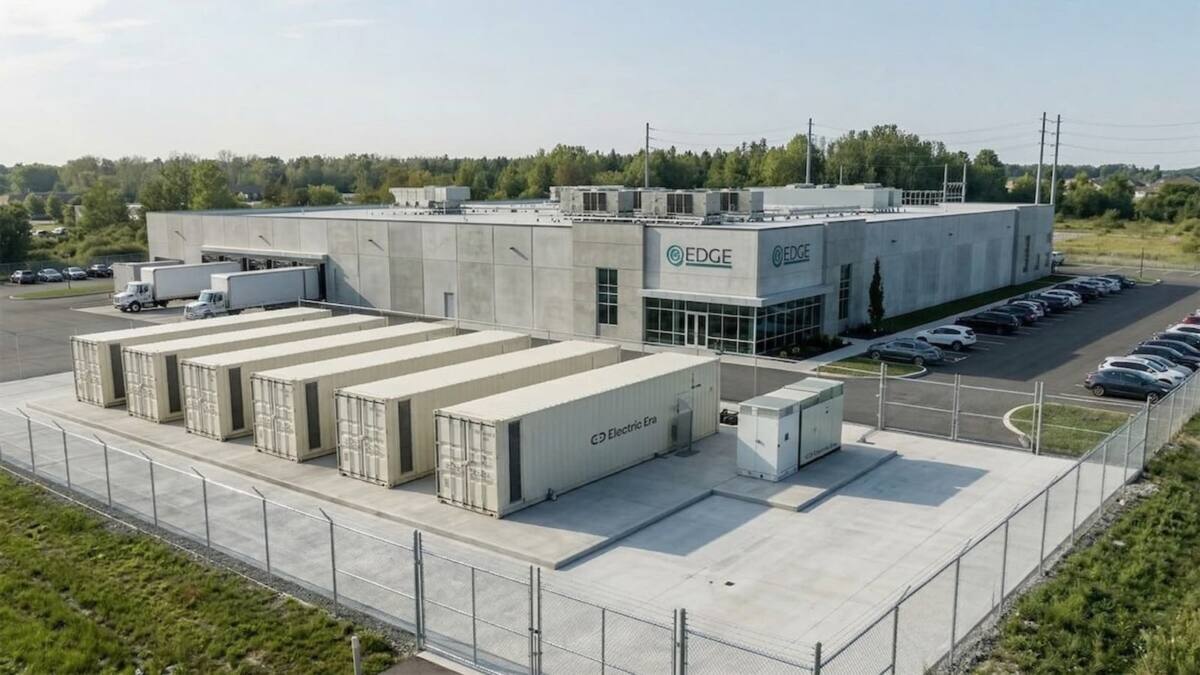
Electric Era is making a sharp pivot from electric-vehicle charging to a much hotter problem: powering AI data centers. The Seattle startup says its new CoPower platform can help data center operators sidestep years-long grid queues by pairing modular batteries with software originally built to manage fast-charging stations.
That move makes a lot of sense. EV chargers and data centers both punish the grid in bursts, and both need software that can smooth demand without forcing the utility to rebuild half the neighborhood. The difference is that AI facilities now have the bigger checkbook and the more urgent headache.
CoPower uses modular 2.5 MW battery blocks
CoPower is built around battery systems from LG Energy Solution and assembled in 2.5 MW modules. Electric Era says those blocks can be combined into installations above 100 MW, which puts the platform squarely in the range of serious data center expansion rather than backup power for a single building.
The company says it can deploy and tune the system in 12-18 months. That is a long time in consumer tech, but it is still a lot faster than the five years or more often associated with traditional utility upgrades. For operators staring at power constraints, that gap is the whole pitch.
Electric Era is selling power through PPA contracts
The business model is also designed to remove friction. Electric Era says it will finance, design, build, and operate the storage on customer sites, while the data center signs a long-term power purchase agreement to buy stored electricity at a fixed price. That is the same basic trick infrastructure developers have long used in renewable energy: turn a capex problem into a utility-style bill.
- Battery modules: 2.5 MW
- Planned system size: more than 100 MW
- Deployment timeline: 12-18 months
- Traditional grid upgrade timeline: five years or more
The startup has money, partners, and competition
Electric Era says it is working with engineering firm McKinstry on design and integration, and it already has a non-binding term sheet with Macquarie Asset Management for project financing. It will need both. The data center storage market is crowded, with rivals including Calibrant Energy, FlexGen, Schneider Electric, EnerSys, and Saft all chasing the same power-starved customers.
The company itself is no stranger to infrastructure. Founded in 2019 by former SpaceX engineers, Electric Era says it has raised $30 million and received about $48 million in government grants. It also reports 30 charging locations under management and a recent $5.05 million federal NEVI award for six fast-charging hubs in Washington state. If the data center bet pays off, EV charging may end up looking like the warm-up act.
What Electric Era is betting on
What Electric Era is really selling is speed, not just batteries. The AI buildout is being throttled by power access, and any company that can compress the wait from years to months has a shot at becoming more interesting than a charger specialist. The question is whether customers trust a newcomer to run energy infrastructure at data center scale, where mistakes are expensive and downtime is not a fun learning experience.