

Scientists have tracked the longest solar radio burst ever recorded: a signal from the Sun that lasted 19 days and kept changing as it faded and flared again. The event, first picked up on 21 August 2025, was not a one-off flare but a drawn-out chain of activity that NASA and ESA spacecraft watched from different angles, giving researchers a rare look at how the Sun can keep ”speaking” in radio for nearly three weeks.
Ordinarily, these bursts last hours or a few days. This one stretched on through multiple observing windows, which is exactly the kind of stubborn behaviour that makes space weather forecasters pay attention: the radio signal itself is harmless, but the magnetic machinery behind it is often the same machinery that can disrupt satellites and communications.
Four spacecraft caught the same solar radio burst
The timeline matters here. Solar Orbiter saw the burst first, Parker Solar Probe and Wind detected it 12 days later, and STEREO-A caught it in the opening days of September. Put together, those observations let scientists reconstruct a single extended event rather than a series of unrelated solar hiccups.
That kind of cross-mission stitching is increasingly important. The Sun does not perform neatly for one instrument at a time, and this was a good reminder that the clearest picture often comes from a small fleet rather than a single prized probe.
A type IV radio burst trapped in giant magnetic loops
By classification, the signal was a type IV solar radio burst, the sort linked to electrons trapped in huge magnetic loops in the solar corona. Those loops can hold plasma in place and keep radio emission alive far longer than a normal flare-driven burst.
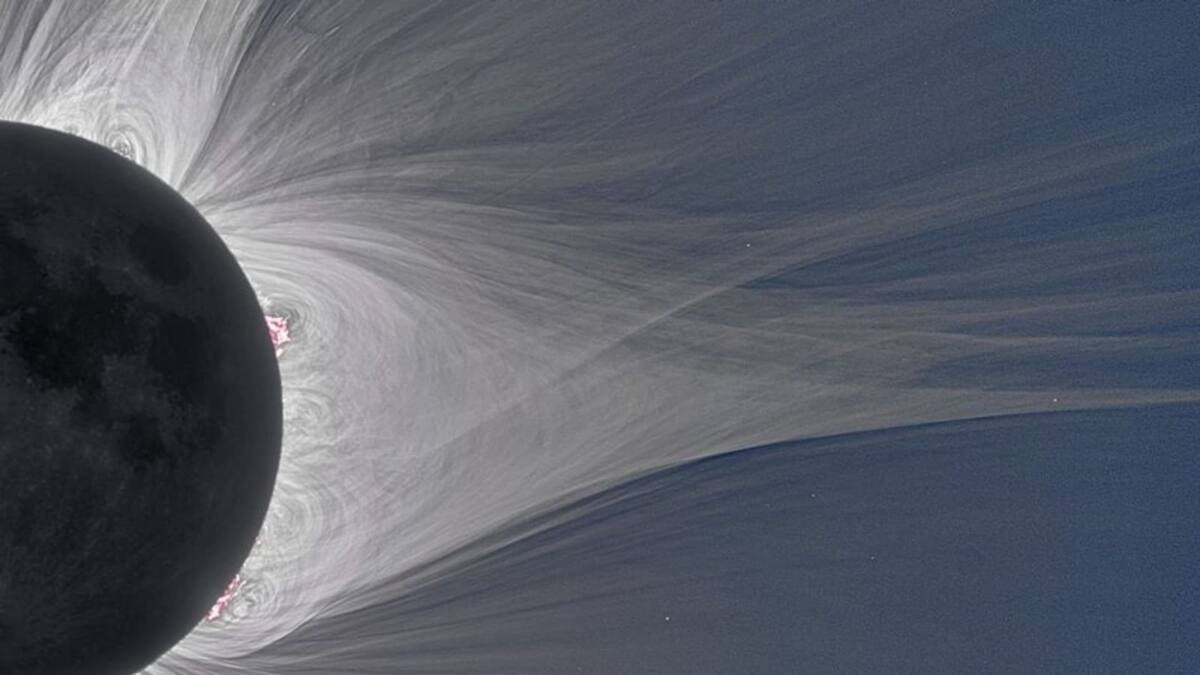
Using STEREO-A, the team triangulated the source and traced it to a large coronal structure shaped like a giant magnetic ”hood,” with plasma streaming out into interplanetary space. The leading idea is that the prolonged emission was powered by three coronal mass ejections from the same region, each helping to keep electrons accelerated and the radio signal going.
Why this solar record matters for satellites
No one on Earth needed to worry about the radio waves themselves. The bigger issue is what often comes with this kind of solar behaviour: intense activity that can rattle satellites, interfere with communications, and complicate operations for spacecraft in orbit.
That is why the record is more than a curiosity. Long-duration bursts like this help scientists test how magnetic structures in the corona store and release energy, and they improve the odds of spotting dangerous space-weather patterns before they reach technology we actually rely on.