

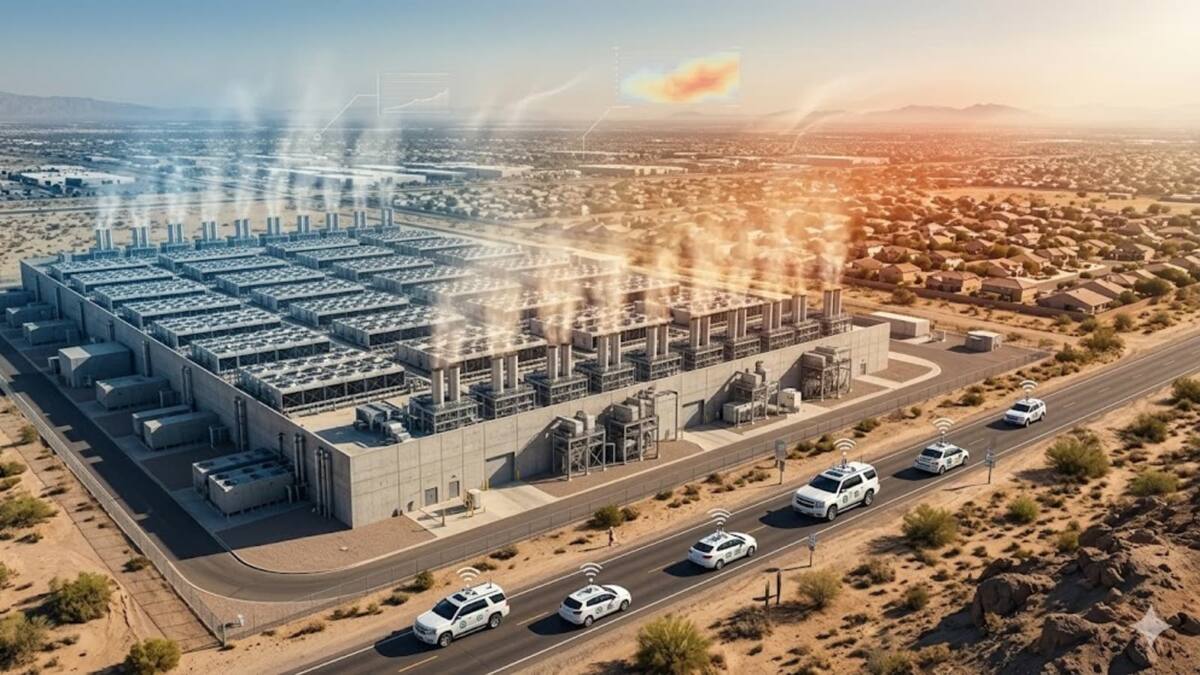
Large data centers are doing more than gulping electricity. A new Arizona data center study found that major facilities can raise air temperatures in surrounding neighborhoods by up to 2°C, with the strongest warming stretching as far as 500 meters downwind – a small number on paper, a nasty one in a city already fighting heat.
The timing is awkward, because the industry keeps promising efficiency while the physical footprint of computing keeps growing. With AI demand pushing more server farms toward urban edges, the hidden cost is no longer just power bills and grid strain; it is local heat pollution, the kind residents actually feel when they step outside.
What the Arizona data center study found
Researchers examined two Arizona data centers, one in Mesa with a capacity of 36 MW and another in Chandler at 169 MW. Using mobile temperature sensors mounted on cars, they tracked temperatures in upwind and downwind areas over several months and found that air on the downwind side was typically 0.7-0.9°C hotter, with some readings reaching 2°C.
That is not a rounding error in a place where summer heat already pushes infrastructure to the edge. The study says a single large data center can emit more heat than tens of thousands of homes, which helps explain why these buildings are starting to look less like invisible cloud boxes and more like industrial heaters with better marketing.
Air cooling is part of the problem
The researchers point to air-cooling systems as the main source of the warming they measured. Those systems push hot air out of the facility, and wind then carries that heat into nearby streets and residential zones, where it can deepen the urban heat island effect created by dense development and heat-absorbing surfaces.
There is a catch, though: the team says the measured effect may actually be understated because the observations covered only a limited set of weather conditions. Earlier studies have suggested heat impacts could extend several kilometers, which would make the planning challenge much messier for cities trying to host more computing capacity without cooking the neighbors.
What city planners will have to factor in next
The policy takeaway is obvious even if the industry would prefer not to say it out loud: local climate effects now belong in data center approvals, especially in hotter regions. If AI buildouts keep accelerating around places already vulnerable to extreme heat, the next debate will not be just where to plug in the servers, but how much extra warmth a neighborhood should be expected to absorb for the privilege.