

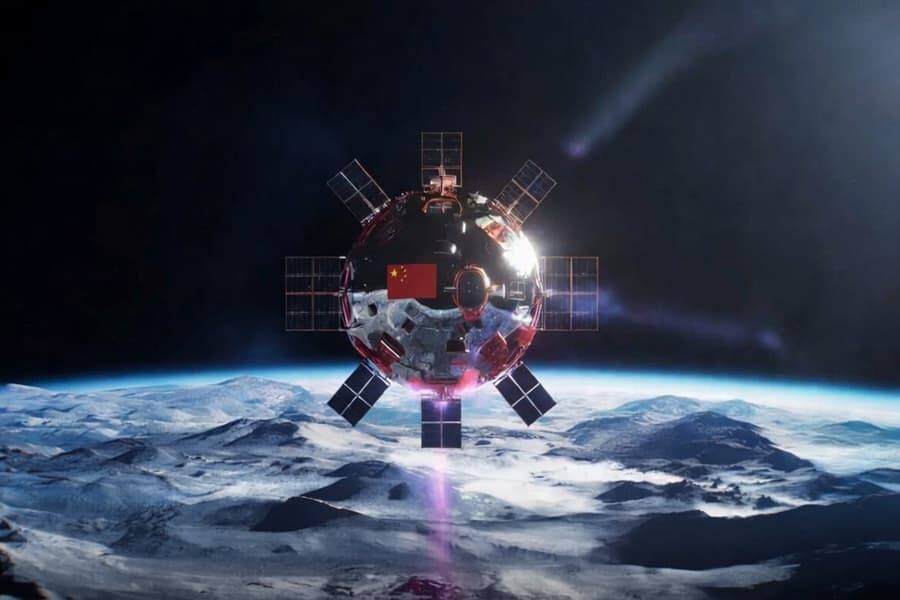
China says it is developing a next-generation crewed spacecraft for lunar missions, a sign that its human spaceflight program is moving beyond low-Earth orbit and into deeper space. A senior official from the Fifth Academy of the China Aerospace Science and Technology Corporation said the new vehicle is expected to give taikonauts a fresh platform for flights from Earth into space and, eventually, to the Moon.
The timing is still vague, which is usually how these things go before hardware starts leaving the lab. But the direction is clear: Beijing is building out the hardware stack for a Moon campaign while also pushing ahead with planetary exploration, including a planned Mars sample-return mission in 2031.
A new crewed spacecraft for lunar flight
Shao Limin said he expects the new generation of crewed spacecraft to eventually fly and provide a new transport platform for taikonauts. In plain English, China is not just talking about rockets and landers; it is working on the vehicle that carries people deeper into space and, eventually, toward the Moon.
China has been leaning hard into its crewed lunar exploration program for the past couple of years, according to Shao. That is not a subtle signal. The U.S. and its partners are also chasing a return to the Moon through Artemis, so the race is less about symbolism now and more about whose systems are reliable enough to keep people there and bring them back safely.
China’s lunar and Mars plans are moving in parallel
The lunar work is being paired with a separate deep-space goal: a mission called Tianwen-3, which China plans to use to deliver Mars soil samples to Earth in 2031. That combination matters because it shows China is building a broad exploration program instead of betting everything on a single prestige mission.
- New target: a next-generation crewed spacecraft for lunar missions
- Officially discussed by Shao Limin of the Fifth Academy of CASC
- Another goal: bring Mars soil samples back to Earth with Tianwen-3 in 2031
China also marks April 24 as its national Space Day, a date it has observed since 2016, which gives the announcement a neat bit of symbolism. If the hardware keeps advancing at this pace, the next question is not whether China wants a larger role in human spaceflight. It is whether its new spacecraft arrives soon enough to shape the next round of lunar competition.