

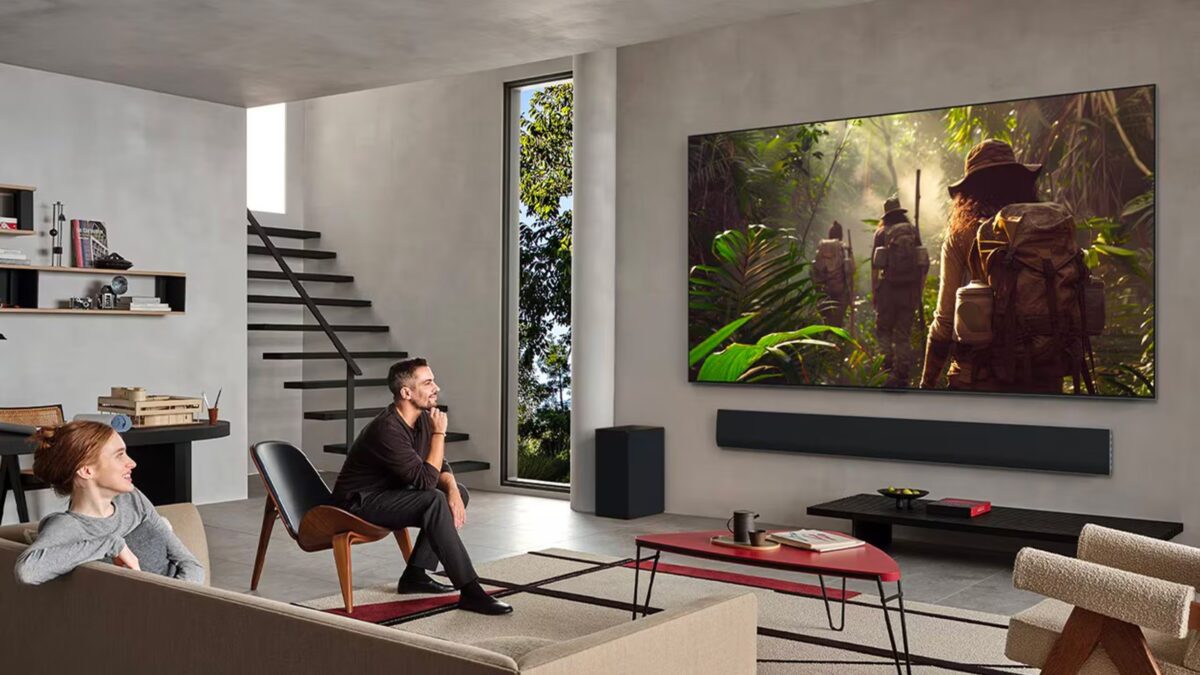
Buying a new TV in 2026 means navigating a crowded field where price, screen size, and picture quality all compete for your attention. Surprisingly, many 2025 models still hold their ground even as the first 2026 sets hit shelves. That’s because last year’s TVs often pack near-flagship features for noticeably less cash than the latest releases.
We’ve rounded up the top TVs worth your consideration this year – from OLEDs that blend price and quality perfectly, to bright Mini-LEDs that shine in daylight, plus standout budget options.
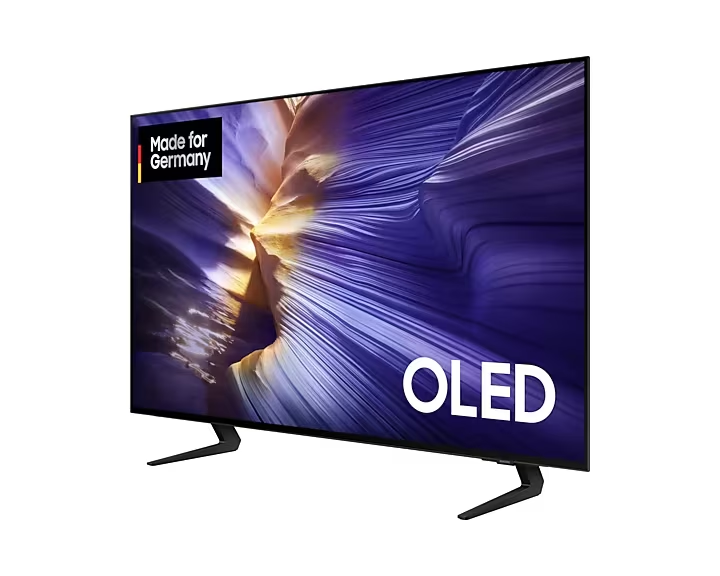
Samsung S90F – best OLED TV for value
Pros:
- Excellent picture quality
- Strong gaming performance
- Rich colors and deep blacks
Cons:
- Lacks premium anti-reflective coating found on Samsung’s higher-end models
- No Dolby Vision support
Samsung’s S90F ranks among the most successful OLED TVs in recent years. It strikes a solid balance with an accessible price, lightweight design, and easy setup, delivering a high-caliber image.
Gamers will appreciate its minimal input lag and vivid color palette. The OLED panel offers near-infinite black levels, and detailed shadow rendering gives movies a truly cinematic feel.
The main drawback is missing Dolby Vision support-Samsung sticks with HDR10+, which suffices for most users but might disappoint Dolby fans. Also, without the top-tier anti-glare coating seen on the pricier S95F, the S90F struggles a bit in bright rooms.
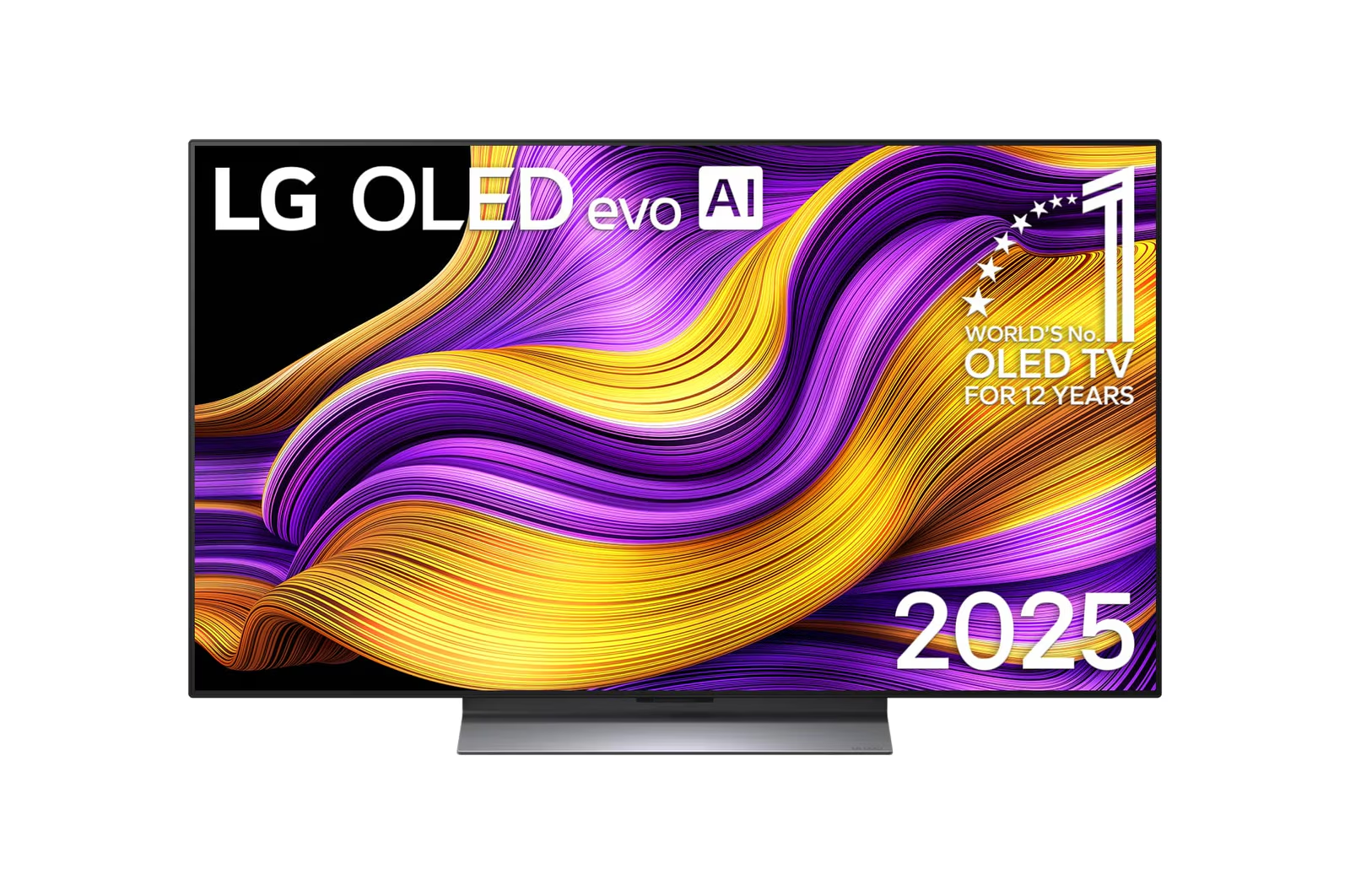
LG G5 – brightest OLED TV in 2026
Pros:
- Industry-leading brightness for OLED
- Outstanding color accuracy
- Top choice for gaming
Cons:
- Brightness gains aren’t always noticeable
- New remote control feels less intuitive
- Significantly more expensive than LG’s C5 model
LG’s G5 marks a major boost for their OLED lineup. Official figures claim a 40% jump in brightness, a claim verified by independent testing. This is rare territory for OLEDs, putting the G5 in direct competition with high-end LCDs for brightness.
It’s excellent for bright rooms, though in glare control it still trails behind Samsung’s S95F. If you want peak picture quality and don’t mind paying a premium, the G5 remains one of the best OLED TVs available.
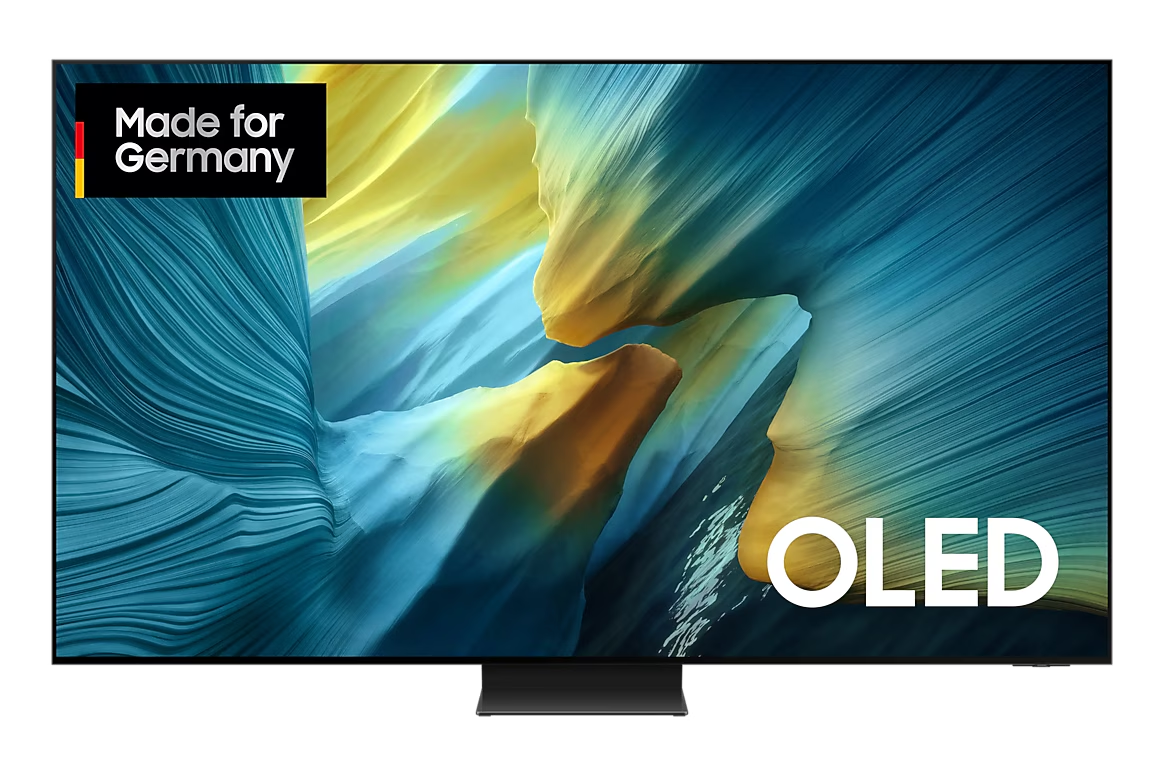
Samsung S95F – top OLED TV of 2026
Pros:
- Supreme picture quality in tests
- One of the best anti-glare systems
- Great contrast and wide viewing angles
- Ultra-thin design with separate connection hub
Cons:
- Very high price
- Shows slight contrast fade in very bright conditions
With fewer budget constraints, the Samsung S95F stands out as one of the year’s best OLED TVs. Building on last year’s S95D, it offers spectacular OLED visuals, excellent gaming performance, and near-total elimination of distracting reflections.
The anti-reflective coating is particularly impressive, maintaining image clarity even with windows or bright overhead lights nearby. Brightness is up about 30% over the previous model, matching LG’s G5 in this area.
Its hefty price tag is the main obstacle, but for cinephiles and serious gamers, the S95F ranks among the most compelling flagship TVs today.
TCL QM9K – record brightness Mini-LED TV
Pros:
- Extremely high peak brightness
- Picture quality approaches OLED levels
- Minimal halo effects around bright objects
- Strong gaming performance
Cons:
- OLED still edges it in overall picture quality
- Color calibration may be needed
- Dark scene details can sometimes be lost
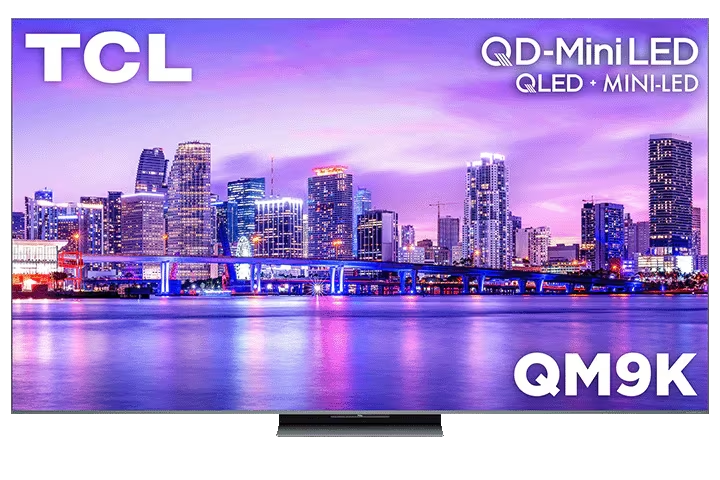
The TCL QM9K is officially among the brightest TVs you can buy, boasting a peak brightness of 4,520 nits-about 500 nits more than its closest competitor, the Hisense U8QG. This makes it especially useful if you watch TV in well-lit rooms or play demanding AAA games.
Crucially, the QM9K comes at a considerably lower price than premium OLED sets, appealing to anyone seeking brightness without breaking the bank.
Hisense QD7QF – best budget TV under $500
Pros:
- Great image quality
- Full Array Local Dimming backlight system
- High brightness
- Excellent for gaming
Cons:
- Hardly any significant downsides
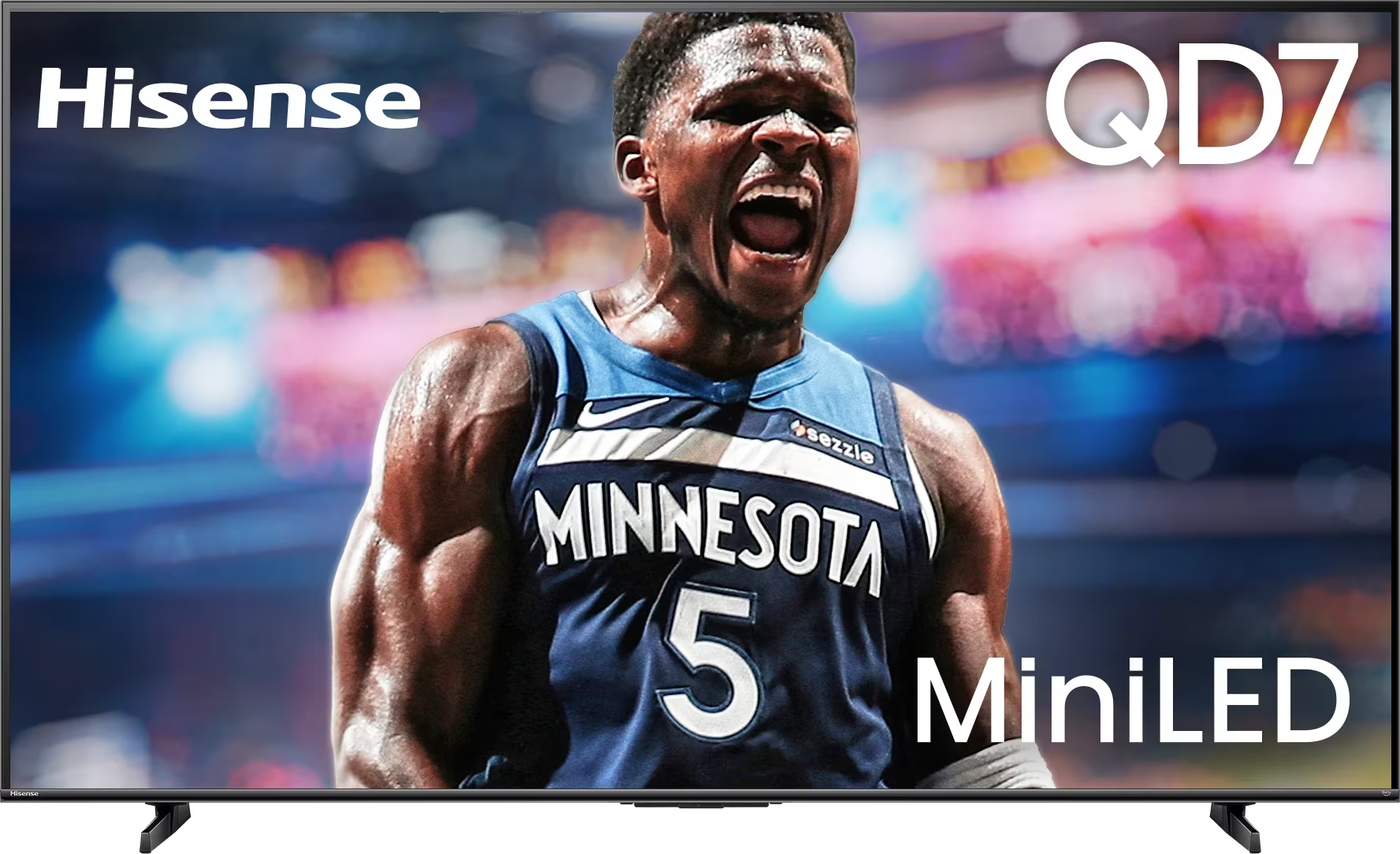
The standout feature of Hisense’s QD7QF is its full local dimming backlight, a feature usually reserved for pricier models. This enables impressive contrast and deep blacks rarely seen in budget TVs.
Its brightness also more than doubles that of many budget rivals. At around $300 for the 50-inch version at publication, it offers outstanding value.
TCL QM6K – best TV under $1000 in 2026
Pros:
- Very good image quality
- Deep black levels
- Great price-to-performance ratio
Cons:
- Could be brighter
- Color saturation is weaker than pricier models
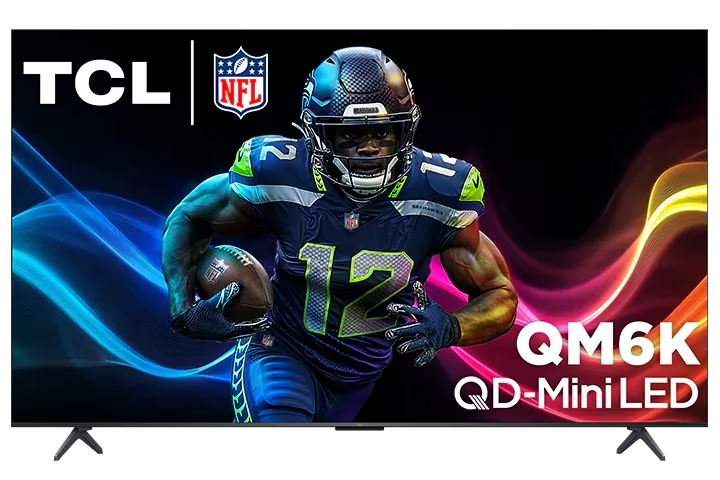
TVs under $1000 often deliver the best bang for the buck, and TCL’s QM6K fits this bill perfectly. It supports all major HDR formats including Dolby Vision and HDR10+, and its proprietary Halo Control System reduces halo effects around bright objects.
With a peak brightness of about 655 nits, it’s not the brightest on the block, but in darker viewing environments, this minor shortfall is barely noticeable.
TCL QM8K – best Mini-LED TV for home theater
Pros:
- Excellent color accuracy
- Black levels approach OLED quality
- Minimal backlight artifacts
- Updated Filmmaker Mode
Cons:
- Slightly less bright than its predecessor
- Somewhat increased input lag
- Available only in large sizes (65 inches and up)
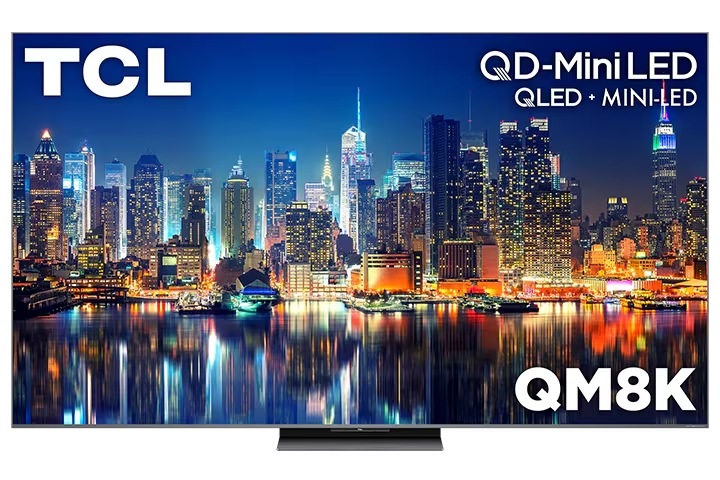
Thanks to Mini-LED tech and the Halo Control System, the QM8K delivers impressive contrast and nearly OLED-level black depth. It’s especially suited for home theater setups.
Gamers might note its slightly higher input lag compared to other models, and its availability is limited to larger screen sizes.
How to choose the right TV for you in 2026
- Best OLED TV for value: Samsung S90F
- Brightest OLED TV: LG G5
- Top OLED TV of 2026: Samsung S95F
- Brightest screen overall: TCL QM9K
- Best budget TV under $500: Hisense QD7QF
- Best TV under $1000: TCL QM6K
- Best Mini-LED TV for home theater: TCL QM8K
In a year packed with advancements in OLED and Mini-LED technology, no single model fits every need. Samsung’s S95F claims the crown for ultimate picture and anti-glare performance, but its steep price pushes some buyers toward last year’s S90F or LG’s ultra-bright G5. TCL and Hisense continue to push Mini-LED and QLED tech forward with options that challenge OLED at lower prices, offering impressive brightness and solid gaming chops. For anyone balancing cost and features, these picks highlight the diversity and progression TV technology has made for 2026.