

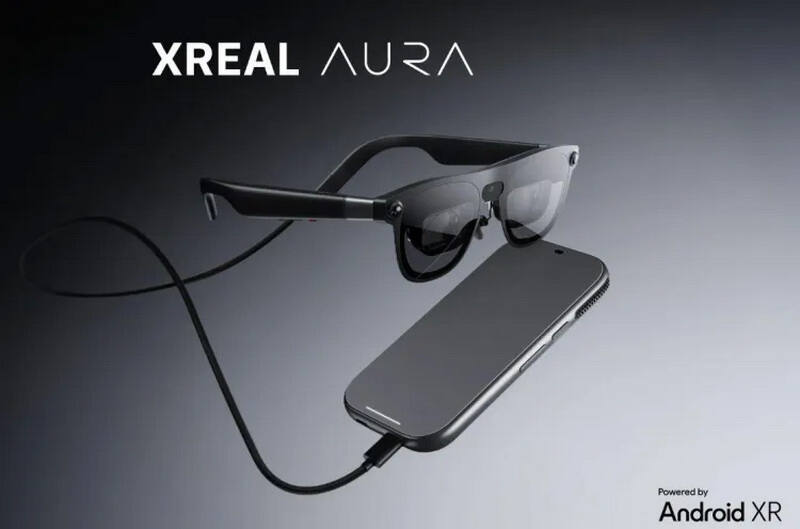
Xreal Aura preorders are now open, but Google and Xreal are still hiding the final price. Buyers can reserve the compact mixed-reality headset with a $99 deposit, while the actual sticker price remains under wraps for now.
The device is the second product to run Android XR, following Samsung’s Galaxy XR, which launched in October 2025 at $1,799. That puts Aura in a tricky spot: it is being pitched as a lighter, glasses-like alternative, yet Google is keeping the most important number secret until later this year.
Xreal Aura preorder details
The launch list is relatively short but strategically chosen. Full availability is planned for the United States, the United Kingdom, Japan, Canada, and South Korea in the autumn, and Best Buy is the first retail partner on board.
- Deposit: $99
- Launch window: autumn
- Initial markets: United States, United Kingdom, Japan, Canada, and South Korea
- First retail partner: Best Buy
Xreal is dangling an extra incentive for early buyers: preorder within the first two weeks and the company says you will get a $199 discount on a later purchase, described as saving $100 on the final price. That wording is doing a lot of work, which usually means the company would rather talk about momentum than margins.
What Xreal Aura is packing inside
Xreal Aura weighs less than 95 grams, which matters more than any marketing slogan. If XR is going to move beyond niche demos and into daily wear, weight is the first enemy, and these glasses are clearly aimed at looking and feeling less like a helmet.
Under the hood sits Qualcomm’s Snapdragon Reality Elite chip for XR devices. Qualcomm XR chief Ziad Asghar says the combination of that silicon and Android XR should deliver better immersion, stronger performance, more intelligence, and better power optimization – the standard keynote cocktail, but at least the hardware is being positioned around a concrete comfort advantage rather than another giant visor.
Google’s Android XR push gets a lighter partner
A second Android XR device arriving after Samsung’s bulkier Galaxy XR suggests Google wants the platform to work across both premium headsets and something closer to everyday glasses. That is the smart play: one ecosystem, multiple form factors, and a chance to avoid letting Samsung define the whole category by itself.
The missing price is the real story. If Xreal Aura lands near premium smartphone territory, it could still be a hard sell; if Google and Xreal manage something meaningfully below Samsung’s $1,799 headset, the preorder deposit starts to look like an early bet on a thinner, less intimidating version of XR. Either way, the final number will decide whether this is a broadening of the category or just another expensive prototype with better branding.