

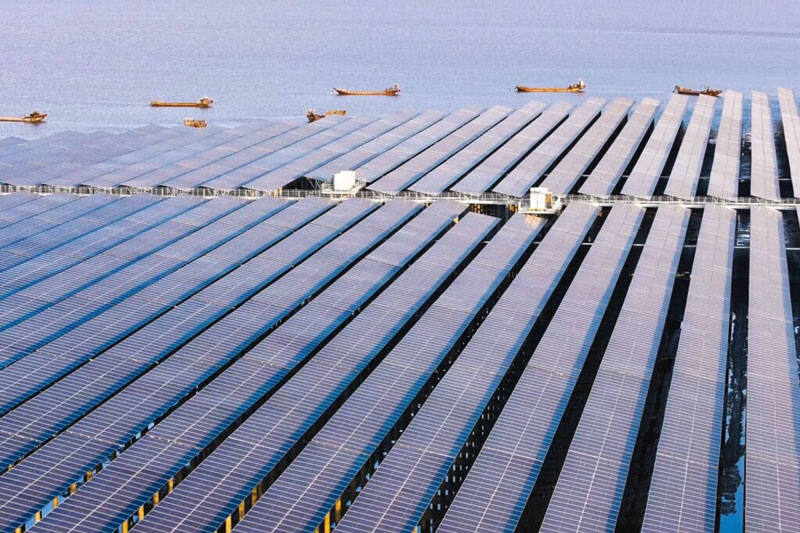
China has switched on a sprawling renewable-energy complex in Jiangsu that tries to solve three problems at once: solar power that rises and falls with the sun, grid stability, and the challenge of making hydrogen without fossil fuels. The Guohua Rudong project pairs a 400 MW coastal solar plant with batteries and a hydrogen facility, and it is already being billed as one of the most advanced green-energy installations in operation.
The China solar plant with batteries and hydrogen matters because the country is still wrestling with how to balance huge renewable buildouts with a grid that has to absorb them, and projects like this are becoming the template: generate electricity, store part of it, and divert the rest into industrial use before it ever becomes a headache for the broader network.
What Guohua Rudong includes
The project sits in a tidal zone near Yangkou port in Rudong county, Jiangsu province. Its power side includes a coastal photovoltaic station rated at 400 MW, a 220 kV onshore substation, and a battery storage system rated at 60 MW with 120 MWh of capacity.
According to CHN Energy, the solar plant should produce about 468 GWh of electricity a year, enough to cover the annual consumption of roughly 200,000 households. That is a serious output for a site that is also trying to act like a miniature grid balancer rather than just a power source.
- Solar capacity: 400 MW
- Battery storage: 60 MW / 120 MWh
- Expected annual generation: 468 GWh
- Households covered: about 200,000
Why the battery pack is doing more than backup
The batteries are not there just to smooth out cloudy hours. They also stabilize power delivery to the hydrogen electrolyzer, which is the kind of engineering detail that separates a flashy renewable site from one that can actually run reliably.
That hydrogen section is sized to produce 482 tonnes of high-purity ”green” hydrogen a year. The plant’s nominal output is 1,500 cubic meters of hydrogen per hour, while the associated fueling infrastructure is designed to supply 500 kg per day to customers.
One smart twist is the direct link between the solar plant and the electrolyzers via a dedicated underwater cable. That lets excess solar power feed water electrolysis without first bouncing through the public grid, which is cleaner technically and less wasteful electrically. During peak generation, roughly one-fortieth of the plant’s hourly output goes into hydrogen production.
The project is already half live
The solar station was connected to the grid on 29 April 2025. CHN Energy said full commissioning of the wider complex was completed on 10 June 2026, although the hydrogen plant is still in the final commissioning stage and is expected to begin operations in August 2026.
That staggered rollout is typical for hybrid clean-energy projects: electricity assets go first because they are easier to monetize, while hydrogen systems take longer to tune, certify, and integrate. The longer bet is obvious, though – China wants renewable power that can do industrial work, not just feed the grid on a sunny afternoon.
A renewable project with an ecological side job
Guohua Rudong also folds in environmental restoration. The site occupies about 2.9 square kilometers of tidal land, and the associated program to control the invasive perennial grass Spartina alterniflora and restore wetlands covers about 4.3 square kilometers.
That mix of power generation, storage, hydrogen, and habitat work is exactly why this project stands out. Plenty of countries can point to solar parks; far fewer can point to one that is trying to behave like a clean-energy utility, a fuel factory, and an ecosystem repair job all at once. The question now is how quickly this model gets copied beyond Jiangsu.