

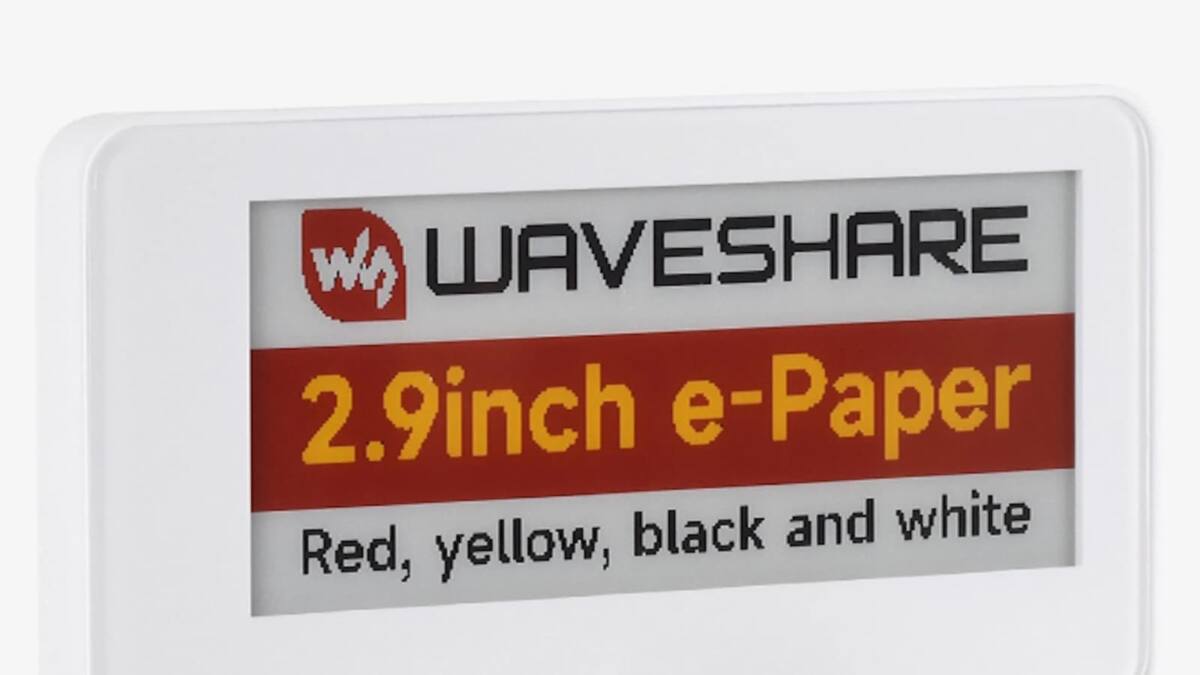
Waveshare has shown a 2.9-inch color E-Ink display that works without a battery or cable, drawing both power and data from a smartphone over NFC. The Waveshare NFC e-ink display is a little absurd and a lot clever, but the catch is equally E-Ink-shaped: the screen updates slowly, supports only four colors, and expects you to physically tap in with a phone every time you want to change what it shows.
That makes it a niche product, but not a pointless one. Battery-free displays have been inching into retail tags, inventory labels, and lightweight signage for years, and Waveshare is leaning into the same formula with a compact panel that can hold an image for weeks or months once it has been written.
Waveshare’s NFC-powered E-Ink panel
The display uses a 296 × 128-pixel panel measuring 87.5 × 47.7 mm. It shows black, white, red, and yellow, and it needs a smartphone with NFC plus a dedicated app to push both the content and the energy needed for each refresh.
In other words, this is not trying to be a mini monitor. It is closer to a smart label with ambition. The appeal is obvious: no charging, no cables, and no battery to replace, which is exactly why this kind of hardware keeps showing up in low-power commercial uses while far more power-hungry displays keep eating desks alive.
Where a battery-free screen actually makes sense
Waveshare says the screen can be used for electronic badges, price tags, information signs, object labels, and inventory marking. Those are the jobs where instant refresh rates do not matter much, but long runtimes and low maintenance do – the sort of boring enterprise problem that tends to produce the best gadgets.
The price helps too: about $28 is low enough to make experimentation plausible. The limitation is just as clear: updating an image takes about 16 seconds, so this is a display for static information, not anything that needs to react in real time.
The trade-off is the whole point
Battery-free NFC displays are still a compromise, and Waveshare is not pretending otherwise. The requirement to physically bring a phone close to the panel every time content changes will suit warehouses and retail back rooms far better than consumers, but that is probably the right audience anyway.
The more interesting question is whether this kind of hybrid between smartphone accessory and digital label becomes a small category, or stays a clever demo that buyers point at and admire before ordering the cheaper paper version.