

Physicists in Austria say they have moved closer to explaining one of the strangest tricks in modern materials science: the uranium-based superconductor UTe2 can lose superconductivity in a magnetic field, then get it back at much higher field strength. That kind of ”returns to life” behavior is rare enough to make even hardened condensed-matter researchers raise an eyebrow.
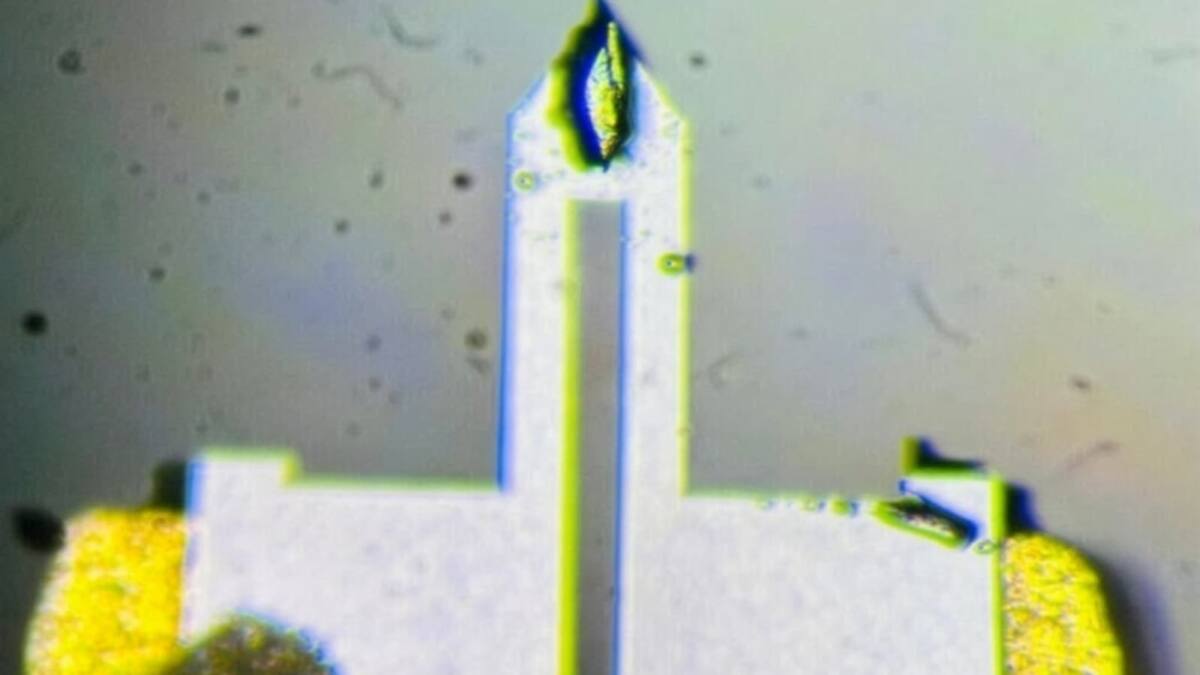
The team from the Institute of Science and Technology Austria studied UTe2 under extremely strong pulsed magnetic fields and used a new measurement approach based on controlled mechanical vibrations of a tiny sample. That let them probe transverse magnetic susceptibility, a property that has been notoriously difficult to measure under such brutal conditions. The headline result: a region of strong transverse susceptibility may be the missing piece behind UTe2’s weird second act.
Why UTe2 superconductivity keeps confusing physicists
In ordinary superconductors, magnetism is the villain. Push hard enough and superconductivity collapses. UTe2 follows that script only briefly: around 10 Tesla, superconductivity disappears, but between roughly 40 and 70 Tesla it returns again. That ”reentrant” behavior is the sort of thing that turns a clean theory into a mess, which is exactly why people keep poking at it.
The Austrian researchers think the answer may lie in how electrons pair up in ultra-strong fields. Their interpretation is that the susceptibility they measured helps create unusual bound states, allowing superconductivity to reappear instead of staying dead. Similar behavior has been reported only in a small class of exotic quantum materials, so UTe2 remains a valuable test case rather than a solved puzzle.
The new measurement trick
The clever part here is not just the magnet, but the measurement method. By reading out the material’s response through tiny vibrations, the team could work with microscopic samples – smaller than a grain of salt and about as thick as a human hair. That matters because many of the rarest and most interesting materials are available only in microscopic amounts, which has slowed research for years.
That also gives the method a life beyond UTe2. If it works reliably, it could become a useful tool for studying other poorly understood quantum materials, especially the ones that refuse to cooperate with conventional lab techniques. In a field where sample size often decides what can be learned, that is a practical advantage, not just a neat experimental flourish.
What comes next for exotic superconductors
The likely next step is more testing: does the same susceptibility-driven story hold up in other materials, or is UTe2 its own strange little kingdom? If the idea survives broader scrutiny, it could help researchers design experiments around the mechanism instead of merely observing the spectacle. For now, the material still looks like a physics problem wearing a magician’s cape.