

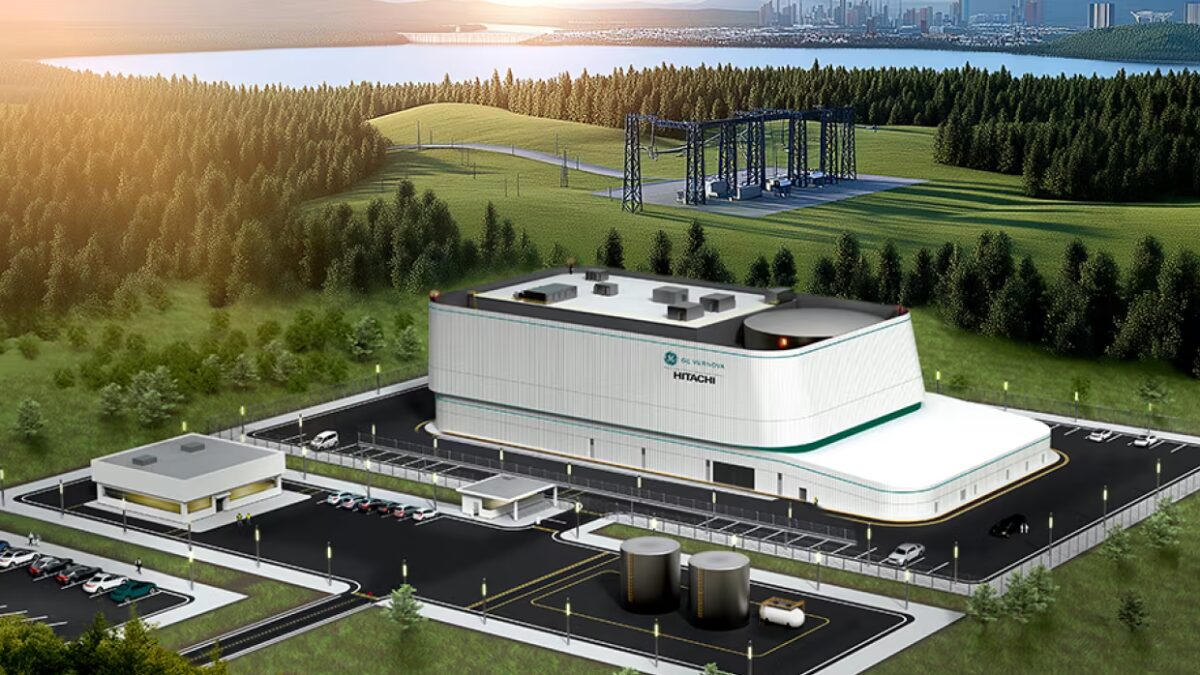
A private consortium led by European group SGE has unveiled one of Europe’s largest small modular reactor (SMR) plans, aiming to deploy 14 BWRX-300 reactors across the UK. The combined 4.2 GW capacity could supply electricity to nearly 8 million homes, covering around 11% of the country’s current power demand.
The proposal has been submitted under the UK’s Advanced Nuclear Framework, with a unique strategy of bundling the reactors into three large sites rather than spreading them out. The consortium wants six reactors on one site and four each on two others, all using identical GE Vernova Hitachi BWRX-300 modules. This serial approach is meant to speed up construction and avoid the delays of treating each reactor as a one-off project.
Each BWRX-300 unit is designed for at least 60 years of operation and delivers roughly 300 MW of electrical power. So, the 14-reactor setup sums neatly to 4.2 GW. For comparison, the UK’s under-construction Hinkley Point C nuclear plant will offer around 3.2 GW from two much larger reactors. This project’s modular design breaks the conventional giant reactor mold, focusing instead on smaller, scalable units.
The consortium includes major players like Samsung C&T, Laing O’Rourke, Aecon Group, Google Cloud, Fermi Development, and Etara, plus an existing nuclear plant operator. Funding is sought primarily from private investors, supplemented by the UK government’s Contracts for Difference scheme and the National Wealth Fund. This hybrid financing model positions the project as more than just technology development-it’s a business plan designed to reduce reliance on public budgets.
BWRX-300 small modular reactors in the UK’s nuclear revival
This SMR proposal fits into the UK’s broader ambition to boost nuclear power capacity to 24 GW by 2050, a key part of reducing dependence on natural gas and replacing aging power stations. Small modular reactors like the BWRX-300 are touted for potentially quicker, cheaper builds compared to traditional large reactors-a promise the industry is still testing in real-world conditions.
The BWRX-300 is viewed as one of the most advanced SMR designs. The first unit is currently being constructed at Ontario’s Darlington site in Canada. If that project maintains schedule and budget, it could sway UK regulators in favor of adopting this technology. In nuclear development, practical operation outweighs conceptual renderings.
The UK nuclear sector is already competitive, with the homegrown Rolls-Royce SMR program seeking backing and government support. What sets the SGE-led consortium apart is scale: proposing 14 reactors as a single package marks a shift from pilot projects to a serious attempt at shaping the UK’s nuclear power mix.
If approved, the first reactor could go online commercially by 2034. By then, the UK will have solid data comparing modular SMRs not only with Canada’s BWRX-300 experience but also with the prolonged timelines and budget overruns of large plants like Hinkley Point C and Sizewell C. The real question for UK energy policy has shifted from whether to build new nuclear to determining which approach can deliver power reliably without a decade-long construction saga.