

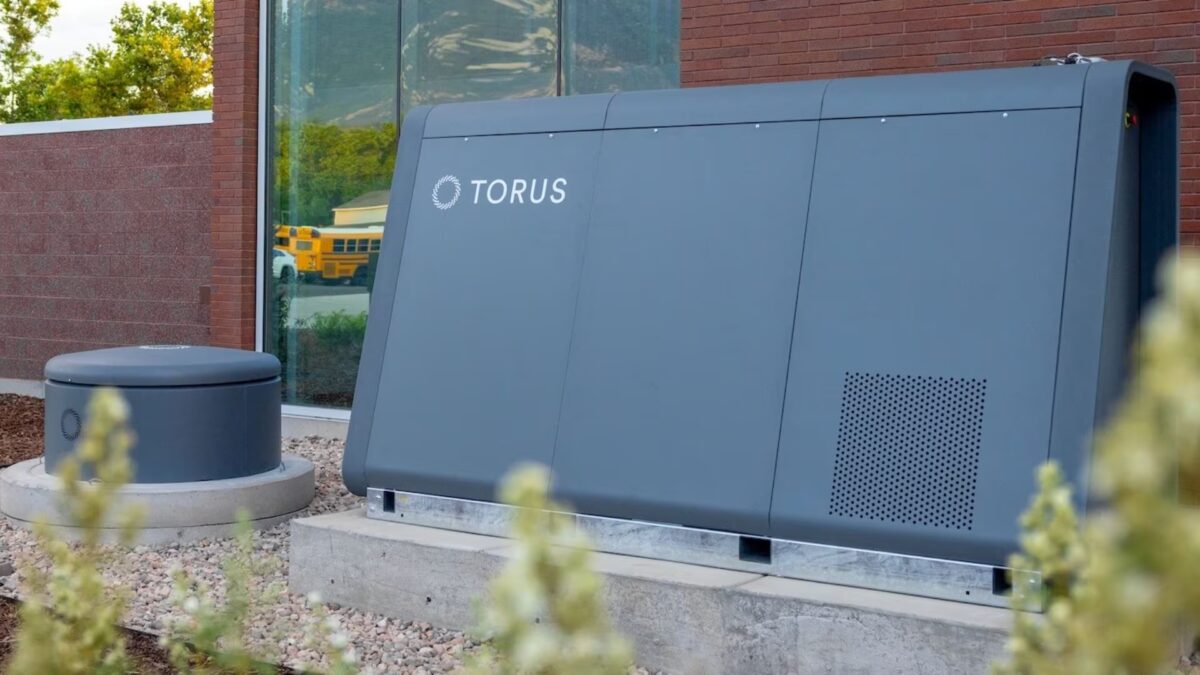
American company Torus has introduced a modular energy storage system for AI data centers that swaps out lithium-ion batteries for a heavy steel flywheel. Designed for environments like AI-driven data centers and power grids where power demand can spike in seconds, this flywheel energy storage system prioritizes rapid power delivery and longevity, avoiding the degradation that chemical batteries face, rather than providing long-duration energy reserves.
How the Nova Spin flywheel energy storage system works
The core unit, named Nova Spin, houses a steel rotor spinning inside a sealed vacuum chamber on magnetic bearings, creating a nearly frictionless environment. When the grid has excess energy, the flywheel speeds up. When demand surges or there’s a brief power dip, the rotor slows and feeds power back into the network. Torus claims this setup can deliver up to 20 times more power than conventional flywheel storage solutions, with a full discharge and recharge cycle taking about 12 minutes.
This approach fits well with the rapid, high-power changes seen in modern GPU clusters at data centers, which can swing power consumption by megawatts almost instantly-especially during task switches or computational peaks. Torus’s platform runs on an 800 V DC bus, a voltage architecture gaining traction in new high-density server racks. The system reduces intermediate power conversions, cutting losses, and simplifying integration between the power supply, uninterruptible power supplies (UPS), and the data center load itself.
Flywheel energy storage isn’t new technology; it has been part of UPS systems before, and companies like Beacon Power deployed 20 MW grid-scale flywheel systems for frequency regulation in the U.S. over a decade ago. But now, this technology is carving out a clear niche. Lithium-ion batteries dominate large-scale energy storage markets-according to the U.S. Department of Energy, they underpin most new big battery projects nationwide. Torus is targeting a segment where immediate response time, high cycling durability, and a lifespan of up to 25 years with minimal capacity loss are paramount.
If Torus’s claims hold up in real-world deployments, flywheel energy storage could position itself between traditional UPS units and large battery containers. This is particularly timely as AI data centers rapidly expand: Goldman Sachs projects U.S. data center power consumption could increase by tens of gigawatts by 2030. In such a context, even relatively unconventional mechanical energy storage suddenly becomes a practical, competitive tool.