

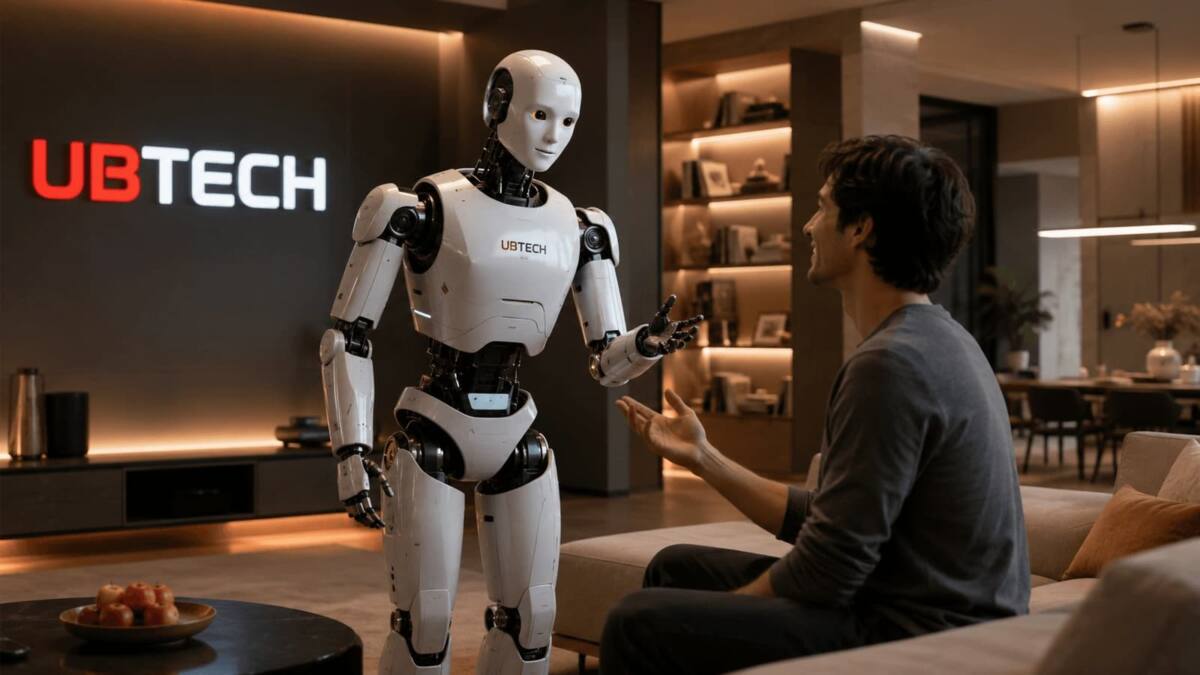
Ubtech Robotics has found something rare in humanoid robotics: actual consumer demand. Its Ubtech U1 companion robot drew almost 5,000 preorders in 17 days after sales opened on 2 June, with bookings passing 4,600 by 18 June and first deliveries set for 30 June. That is a sharp jump for a company that sold just 1,079 full-size humanoid robots across 2025, and it suggests the market is moving faster than the usual demo-heavy hype cycle.
The U1 is being sold as a full-size social robot for adults, not a toy and not a warehouse mule. Ubtech says it stands 183 cm tall, weighs about 42 kg, and has 88 degrees of freedom, which is the sort of spec sheet that sounds impressive until you remember the real test is whether it can do anything useful for more than a few minutes at a time.
What Ubtech is selling with the U1
Ubtech is leaning hard into the ”companion” pitch. The robot includes an ”emotional” AI assistant for conversation and personal support, supports Wi-Fi connectivity, and can be customized on the outside. The company is also making a point of saying the U1 is for adults only, and it is pitching the device to urban users dealing with social isolation, as well as niche aesthetic communities.
That is smart positioning, even if it feels a little desperate on paper. Consumer humanoids need a reason to exist before they can become status objects, and companionship is one of the few use cases that does not require perfect hands, industrial-grade lifting, or a robot dog that actually obeys.
- Height: 183 cm
- Weight: about 42 kg
- Degrees of freedom: 88
- Battery life: 2 to 4 hours
- First deliveries: 30 June
China’s humanoid robot race is heating up
Ubtech is not the only company trying to turn humanoids into a business. Unitree Robotics plans to ship 10,000 to 20,000 humanoid robots in the same period, AgiBot says it had produced about 10,000 general-purpose robots by March, and bigger names such as BYD, XPeng, and Tesla are also pushing into the category. When carmakers start treating humanoids as a real product line rather than a lab curiosity, the sector starts to look less like science fiction and more like a supply-chain problem.
Deutsche Bank has already responded by raising its forecast for 2026 humanoid deliveries from 17,500 to almost 50,000 units, with as many as 40,000 of those expected in China. That is still tiny by consumer-electronics standards, but it is enough to show where the first serious volume is likely to come from.
The catch for household robots
The problem is still the same one that has haunted humanoid robotics for years: capability lags far behind ambition. Short battery life, limited real-world usefulness, and high prices all make mass adoption awkward. For now, the market is moving from flashy prototypes toward something closer to actual household hardware, but the winners will be the companies that can make a robot helpful for longer than a coffee break.
Ubtech’s preorder spike is a good sign for the category, but it is not proof that the category has arrived. The next question is whether these early buyers are opening a door to a new consumer product class, or just paying early-adopter tax for an expensive conversation piece.