

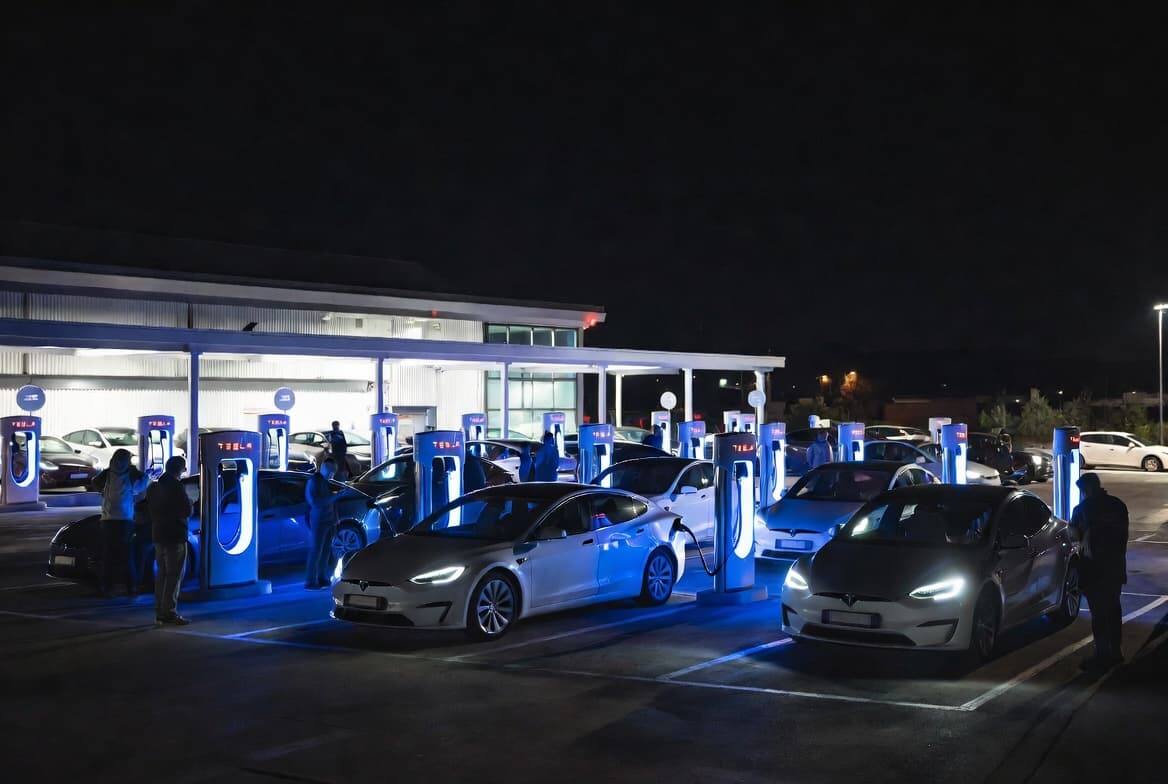
Tesla says its Supercharger network delivered 2 TWh of electricity in the second quarter of 2026, enough by the company’s own estimate to power more than 180,000 U.S. homes for a year. That was spread across about 60 million charging sessions, a pace that shows just how much Tesla Supercharger use has moved from a niche convenience to daily utility.
The bigger tell is efficiency. Tesla says each charging post handled an average of 266 kWh per day, while the share of times drivers had to wait for a free stall fell below 0.5% for the first time. In other words: the network is getting more use without visibly buckling, which is the sort of operational bragging right every charging company wants and few can claim.
Tesla Supercharger use keeps climbing
Compared with the same period a year earlier, energy delivered through Supercharger rose 17%. That growth matters because charging networks usually hit their bottlenecks in two places: station availability and power throughput. Tesla is saying it has pushed both in the right direction at once, helped by a global footprint that now tops 60,000 charging points.
For drivers, the headline number is less important than the experience behind it. A mature fast-charging network only really works if it can absorb surges without turning every road trip into a queueing exercise, and Tesla’s latest figures suggest it is still scaling faster than demand is stressing it.
What the numbers say about charging demand
- 2 TWh delivered in one quarter
- About 60 million charging sessions
- 266 kWh per charging post per day on average
- Below 0.5% of sessions involved waiting for a free stall
- More than 60,000 Supercharger points worldwide
The real question is whether rivals can match that combination of scale and reliability. Other charging operators have been expanding too, but Tesla still owns the strongest brand in fast charging and the most recognizable plug-and-go experience. If the company can keep utilization rising while keeping waits near zero, it will make the case that charging anxiety is becoming less about the network and more about the rest of the EV market catching up.
The next test is less glamorous: whether that growth can continue without the network becoming a victim of its own popularity. Tesla has set a high bar with this quarter’s numbers, and competitors will have to prove they can do more than add stalls on a map.