

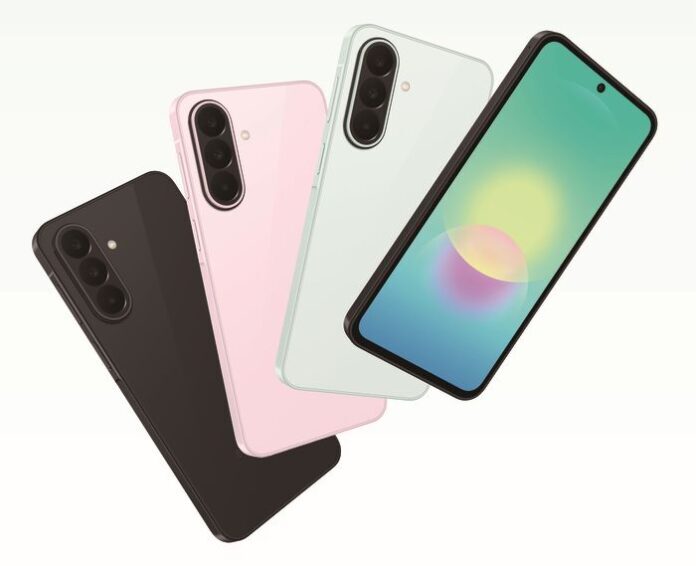
Samsung has launched the Galaxy Jump 5 in South Korea, pricing the new midrange phone at $350 and selling it exclusively through KT. The Samsung Galaxy Jump 5 brings a 120 Hz AMOLED screen, a 50 MP main camera with optical stabilization, 5G, and an unusually long software promise for this price tier.
That six-year update pledge is the real headline hiding behind the spec sheet. In a segment where many cheaper Android phones still get treated like short-term rentals, Samsung is leaning hard on longevity – and on the kind of carrier-exclusive model that lets it target buyers who want a safe, mainstream option rather than a spec-sheet oddity.
Galaxy Jump 5 specs and pricing
- 6.7-inch Super AMOLED display
- Full HD+ resolution
- 120 Hz refresh rate
- Snapdragon 6 Gen 3
- 6 GB RAM
- 128 GB storage with microSD support
- 5000 mAh battery with 25 W charging
- Android 16 with One UI 8.5
- Up to six major OS upgrades
- IP64 protection
- Side fingerprint scanner, face unlock, stereo speakers, 5G
Camera setup keeps the formula simple
The rear camera array is straightforward rather than flashy: a 50 MP main sensor with OIS, a 5 MP ultrawide, and a 2 MP depth sensor. Up front, Samsung has fitted a 12 MP selfie camera. That combination won’t scare off a rival flagship, but it does cover the basics without the usual low-end filler of pointless macro lenses.
There’s also a practical angle here. A 5000 mAh battery, IP64 resistance, and stereo speakers make the Jump 5 look designed for people who keep phones longer than a marketing cycle. Samsung knows that update support sells confidence, and at $350 this is clearly aimed at buyers who care more about staying current than chasing benchmark trophies.
Why Samsung’s Galaxy Jump 5 stands out in the budget segment
The Jump 5 sits in a crowded middle ground where Chinese rivals often win on raw hardware and aggressive pricing, while Samsung counters with software support, brand trust, and carrier distribution. That’s a sensible play in Korea, where KT exclusivity gives the phone a built-in sales channel and reduces the need for a dramatic headline-grabbing price cut.
The open question is how far Samsung wants to stretch this formula beyond its home turf. If the company can keep pairing long update support with decent displays, batteries, and IP ratings at this price level, the boring option may start looking very smart indeed.