
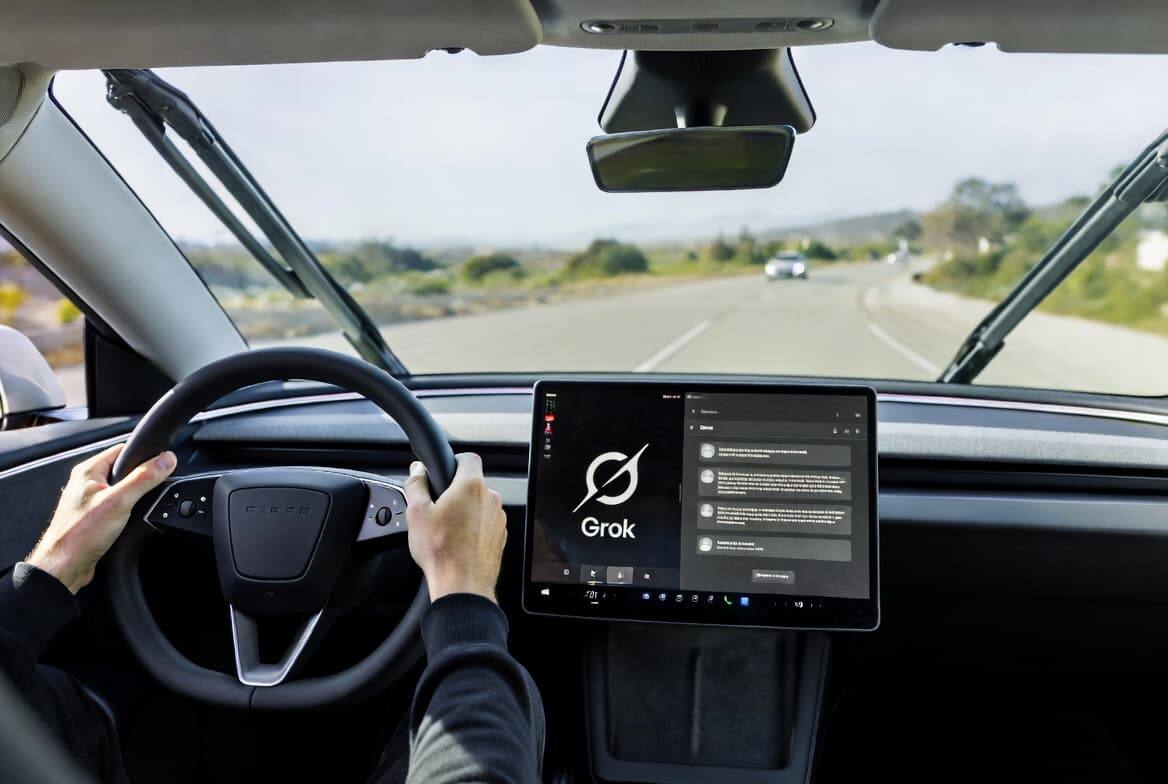
Tesla owners may soon be able to talk to their cars the way they talk to passengers. Elon Musk said natural-language voice control for Tesla’s Full Self-Driving should arrive in about three months, extending Grok from a voice helper into a more hands-on driving interface. The pitch is simple: say ”turn here,” name a drop-off point, or describe a parking scenario, and the system will try to interpret it on the fly.
Tesla has already moved Grok into the cabin with ”Hey Grok” in the spring 2026 software release, so this looks like the next step in turning the car into a conversational product instead of a menu-driven one. It also puts Tesla in the same conversational AI race that rivals are chasing through infotainment systems, except here the software is expected to influence actual driving behavior, which is either elegant or mildly terrifying depending on your trust in the machine.
What Grok will be able to do
Based on Musk’s description, the key promise is less about single commands and more about flexible intent. In practice, that could let a driver speak naturally instead of memorizing rigid phrases, which is exactly how voice systems should work but rarely do.
- Direct navigation-style instructions such as ”turn here”
- Drop-off point requests
- Parking-related scenarios and guidance
That kind of language understanding is where most in-car assistants still stumble. Tesla’s advantage is that it controls the software stack tightly, but the downside is obvious too: if the system misreads an ambiguous command at the wrong moment, there is no room for a charming little AI shrug.
Tesla’s voice assistant is becoming the interface
The move follows earlier changes that brought Grok into Tesla’s voice layer and made it part of the car’s interface rather than a novelty tucked away in settings. That matters because the best voice systems gradually disappear into the background, while the bad ones make you perform startup theater before doing basic tasks. Tesla seems to want the former, and it is betting that drivers will accept more AI in exchange for fewer taps on the screen.
Owners have already started floating their own use cases online, which is usually a sign that a product has hit a nerve. The bigger question is whether Tesla can make natural speech reliably useful in a moving car, not just impressive in a demo. If it works, the next step is obvious: more of the car will start listening, and drivers will have to decide how much control they are comfortable handing over.