

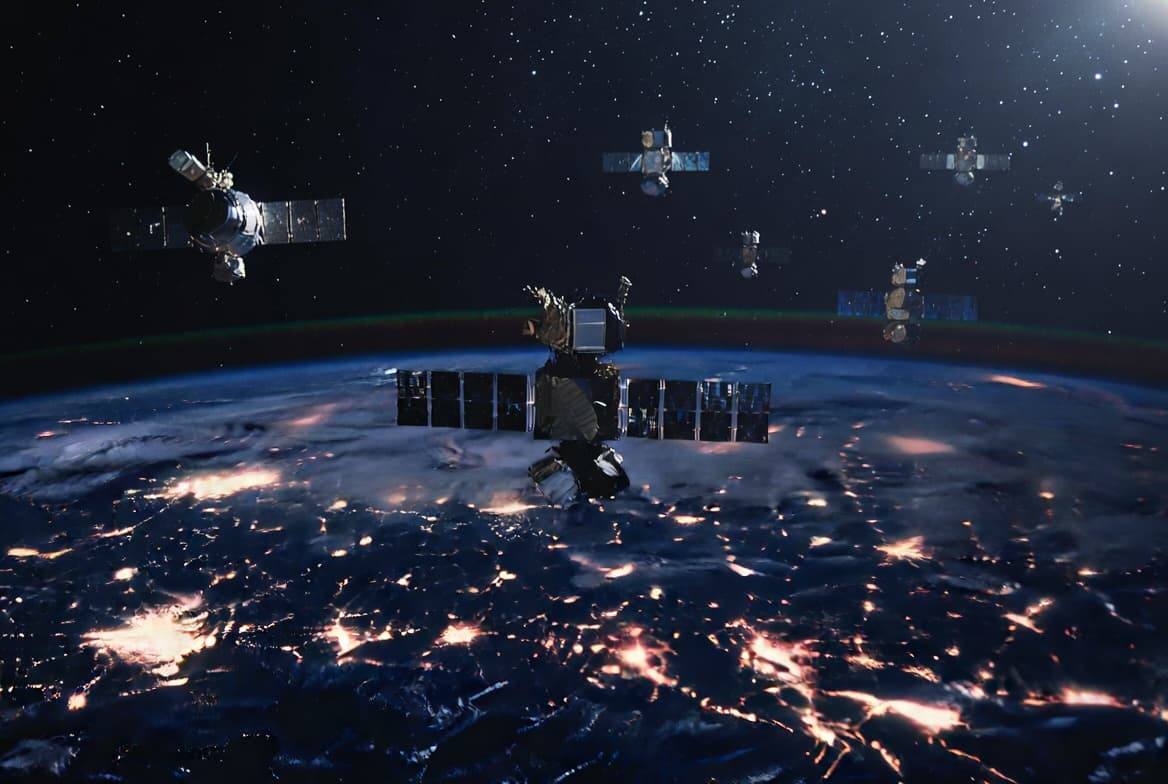
Starlink has turned low Earth orbit into a first-mover advantage, and the head of China’s Qianfan satellite internet project has effectively admitted it. Hu Haiying said Elon Musk’s constellation has already locked up a large share of the most valuable orbital and frequency resources, leaving Qianfan under heavy pressure to catch up.
The admission matters because orbital slots and spectrum are not something rivals can casually buy back later. Once the prime positions are occupied, building a competing broadband network gets harder, slower, and more expensive – a neat reminder that space may be futuristic, but scarcity is very old-fashioned.
Starlink’s head start on low Earth orbit
According to the figures cited, Starlink now has 12,400 satellites in orbit, more than 60% of all active satellites worldwide. Its planned constellation has also climbed to 42,000 satellites, a scale that makes rivals look tiny by comparison.
The company is also said to control almost 70% of the key positions in low Earth orbit and more than 70% of the optimal orbital resources for direct mobile connectivity at 500-600 kilometers. That is the sort of early mover advantage regulators love to debate and competitors quietly fear.
Where Qianfan stands now
Qianfan, also known as ”Qianfan” or ”G60 Starlink,” is China’s large low-Earth-orbit satellite internet project and a direct rival to Starlink. It is meant to be a national-scale answer to Musk’s network, but the numbers show how far behind it still is.
As of 5 June, Qianfan had 200 satellites in orbit. Its first-stage target is to complete a 324-satellite network by July 2026, which is progress, but not the kind that changes the balance of power overnight.
Why orbit and spectrum are so hard to win back
Hu described orbital positions and communication frequencies as non-renewable resources, and that is the blunt part of the story. In satellite internet, getting there first is not just a bragging right; it shapes who gets to serve users, where, and at what scale.
China is hardly alone in trying to build a Starlink alternative, but Qianfan’s challenge is sharper because the premium routes are already crowded. If Starlink keeps expanding at this pace, the real competition may shift from ”who can launch” to ”who can still find room to matter.”