

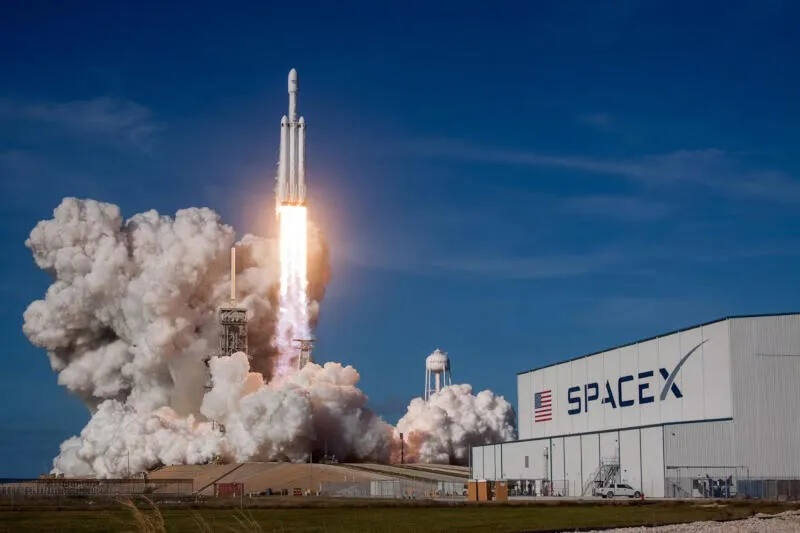
Elon Musk thinks SpaceX could be making $1 trillion a year by 2031. That is a spectacular number even by Musk standards, and it lands as SpaceX’s revenue target draws fresh attention from Wall Street.
The timing matters because SpaceX is still a much smaller business than its valuation suggests. It brought in $18.67 billion in 2025, up from $14.02 billion a year earlier, but also posted a net loss of $4.94 billion after a profit of $791 million in the prior year.
Musk’s $1 trillion revenue call
Musk made the forecast on X, saying he would be surprised if revenue did not exceed $1 trillion in 2031. He has every reason to talk big: SpaceX now ranks as the sixth-largest American company by valuation, and the figure has put him on track to become the world’s first trillionaire.
Still, the number is so large that it brushes against the sort of revenue currently associated with the biggest names in global tech and retail. For perspective, even at $18.67 billion in 2025, SpaceX is nowhere near the scale of companies with similar valuations such as Broadcom or Amazon, which is why Wall Street is not buying the dream at face value.
Wall Street is modeling a slower climb
Analysts are taking a more cautious path. Goldman Sachs sees more than $470 billion in revenue by 2030, while Morgan Stanley is closer to $330 billion. Those are still eye-watering forecasts, but they show how much growth SpaceX would need before Musk’s trillion-dollar figure stops sounding like a flex and starts looking like a spreadsheet.
The bigger question is what fills that top line. Launches alone will not get SpaceX there; the company would need a much larger mix of Starlink subscriptions, government contracts, and commercial space services. That is the same playbook that turned Tesla from an auto maker into a market phenomenon, except rockets are a little less forgiving than sedans.
What has to happen for 2031 to work
- Revenue would need to rise from $18.67 billion in 2025 to something approaching Musk’s target in just six years.
- SpaceX would also have to turn its loss-making years into durable profits, not just bigger sales.
- Market enthusiasm would have to stay hot enough to support a $2 trillion valuation while the business is still scaling.
That is a tall order, even for a company that has already rewritten parts of the space industry. If SpaceX keeps expanding Starlink and turns space infrastructure into a recurring-revenue machine, Musk’s number becomes less absurd than it sounds today. If not, 2031 may end up as another year in which the forecast was the headline and the math did the talking.