

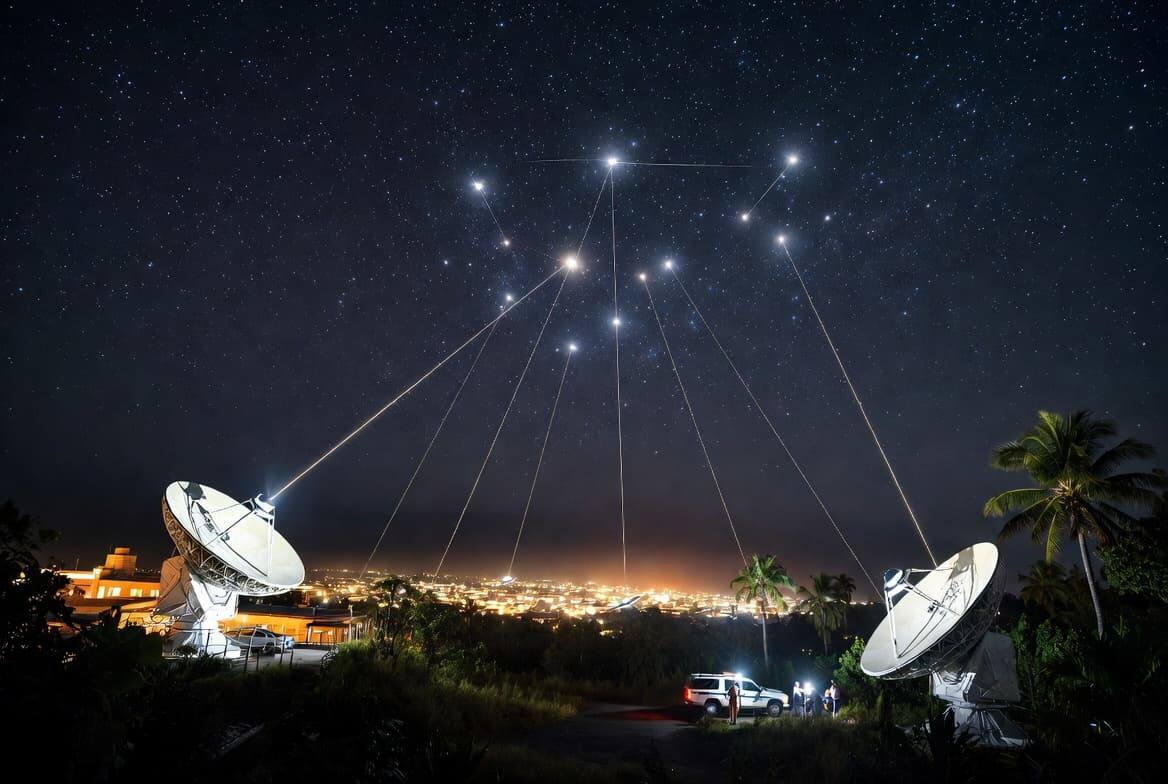
Starlink is moving from consumer broadband into disaster response in Puerto Rico, where the island’s government says the satellite network will help keep all 78 municipalities connected during hurricanes, blackouts, and other emergencies. Governor Jennifer González Colón said the system will be used as a backup communications layer for emergency services, a practical use case for a technology that has already become a fallback option in places where cell towers and fiber lines fail first.
The rollout will give emergency management units Starlink terminals and additional equipment, creating a channel that does not depend on local terrestrial infrastructure. That matters on an island repeatedly exposed to severe weather, because the problem is rarely a lack of phones – it is the collapse of the network they rely on.
Starlink terminals for all 78 municipalities
The plan covers every municipality in Puerto Rico, not just major population centers. In plain terms, that means the backup link is being designed as an islandwide emergency tool rather than a boutique setup for a few command centers, which is the more ambitious and more useful version of the idea.
For first responders, satellite internet is less about speed tests and more about coordination: dispatch, situational updates, logistics, and recovery work when the usual grid goes dark. Starlink’s appeal here is simple – low-latency service that can be deployed faster than rebuilding damaged terrestrial lines.
Why emergency agencies keep betting on satellite internet
Puerto Rico is not the first place to treat Starlink as public-safety infrastructure. The company has already been used to bring connectivity to schools and remote communities in Peru, Malawi, Kenya, Paraguay, and Bolivia, while SpaceX has also secured approval to launch Starlink in Ivory Coast. The pattern is hard to miss: where laying fiber is slow, expensive, or fragile, satellite internet is becoming the fast answer, whether governments like that dependency or not.
- Coverage: all 78 municipalities in Puerto Rico
- Use case: emergency services during hurricanes, disasters, and major outages
- Equipment: Starlink terminals plus additional hardware for emergency units
A backup network, not a replacement
This is the smart part of the plan: nobody is pretending satellites will replace mobile networks or fiber. They do something narrower and more valuable, which is stay alive when everything else is down. The open question is how well that backup layer performs under the exact conditions it is meant for – and whether other storm-prone regions follow Puerto Rico’s lead.