

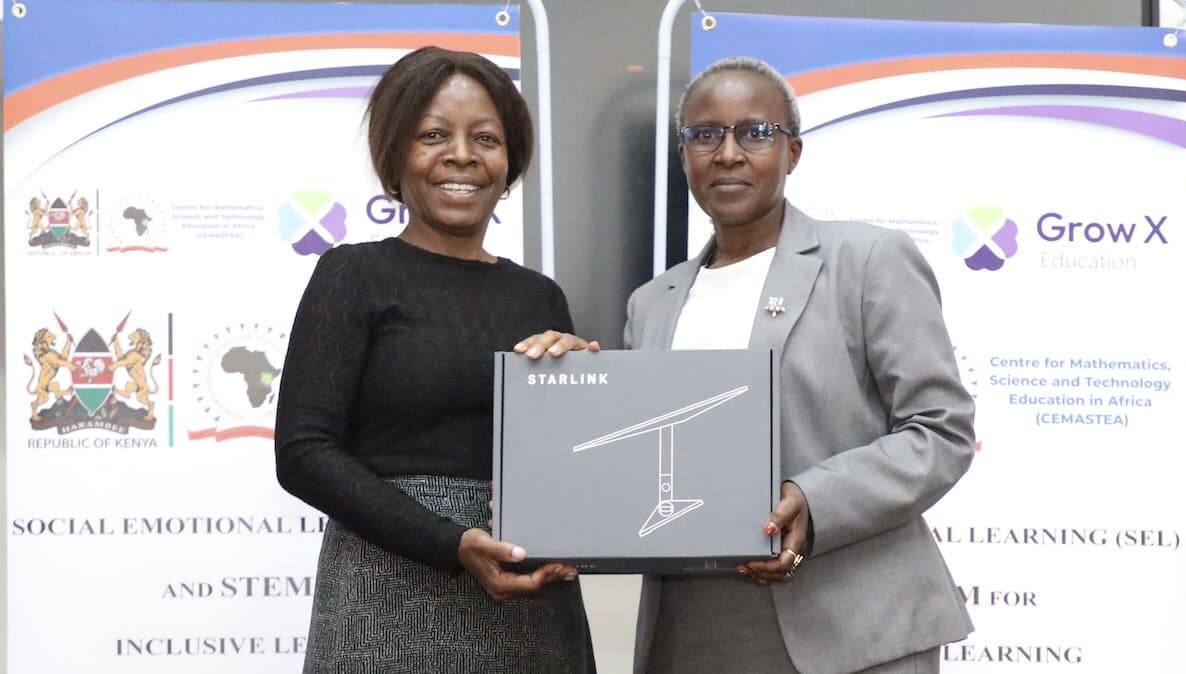
Starlink is quietly becoming one of the most practical tools in education policy, and Kenya is the latest proof. The SpaceX satellite network has connected 30 schools across different counties, giving more than 32,000 students and 1,000 teachers stable internet for the first time. The early results suggest the bottleneck was never a lack of software or ambition – it was the connection itself.
That matters because digital education projects often stall at the ugliest possible step: the classroom can have devices, platforms, and training, but if the signal drops, the whole plan turns into a PowerPoint exercise. In regions of Africa and South Asia, where about 75% of the world’s schoolchildren live, that gap is still one of the biggest reasons education quality diverges so sharply.
Teacher use jumped after Starlink connectivity arrived
Grow X Education has been working in Kenya with CEMASTEA on curriculum reform and social-emotional learning programmes, but even that kind of groundwork hit a familiar wall in 2025: schools with digital platforms still could not rely on broadband. Once Starlink entered the picture, the numbers moved fast. Within a month, the share of teachers using digital tools rose from 57% to 82%, while the number of students completing online assignments doubled from 18% to 36%.
That is the kind of lift satellite internet is trying to sell everywhere: not flashy speeds for urban users, but usable connectivity where terrestrial networks are patchy, expensive, or simply absent. Bolivia has already seen a similar rollout, with more than 1,000 students and teachers in 14 remote schools getting high-speed internet through Starlink.
Starlink satellites and school connectivity expansion
The scale is expanding quickly. Starlink now has more than 10,000 satellites in orbit, more than 12 million subscribers, and service in 160 countries. That footprint gives SpaceX a stronger claim that satellite broadband is shifting from a niche fallback into a mainstream access layer, especially for schools, clinics, and other institutions that can’t wait for fibre to arrive.
The next test is whether that momentum holds once the novelty wears off. Starlink’s first V3 launch is expected in 2026 on Starship, and if those satellites deliver the capacity jump SpaceX is promising, remote schools may stop being the exception in digital education and start becoming the template.