

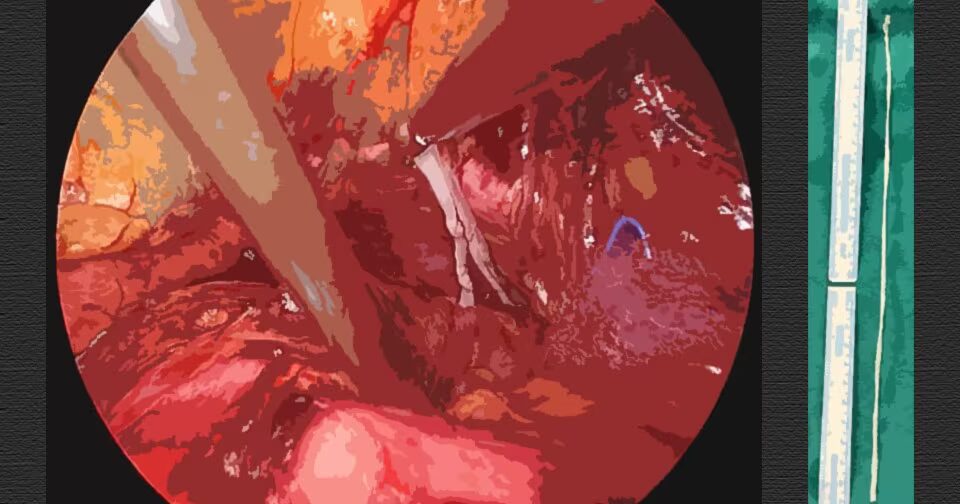
A 71-year-old South Korean underwent routine surgery for an inguinal hernia, only for doctors to discover a striking 26-centimeter tapeworm lodged between his bladder and pubic bone. Even after removal, the parasite remained wiggling. This rare case was detailed by South Korean physicians in The New England Journal of Medicine.
The surgery itself was straightforward. The patient’s only complaint beforehand was a painless bulge in his right groin. Blood tests showed no eosinophilia, a common marker for parasitic infections, giving doctors no early clues. The full story emerged in the operating room. Four years prior, he had undergone hernia repair on the left side, where surgeons removed an 18-centimeter tapeworm. However, he never received antiparasitic treatment then.
During this recent hospitalization, doctors performed PCR testing that identified the parasite as Spirometra erinaceieuropaei. The patient was diagnosed with sparganosis, a rare tapeworm infection primarily found in East and Southeast Asia. While wild carnivores like dogs, cats, and foxes are the parasite’s natural hosts, humans become accidental carriers.
Humans typically contract sparganosis in one of two ways: by eating undercooked or raw snake or frog meat, or by drinking water contaminated with tiny crustaceans carrying the larvae. Unlike typical tapeworm infections where the parasite matures in the gut, spargana migrate through tissues and can remain hidden for decades. Often, they are only discovered incidentally during surgeries or after removing suspicious lumps.
When doctors pressed for more history, the patient recalled eating raw snake meat during his military service roughly 50 years ago. After the latest surgery, he was prescribed antiparasitic medication and felt well at a follow-up visit 45 days later.
In comparison to other parasitic infections, sparganosis is extremely rare outside endemic regions and can easily go undiagnosed for years. Unlike the common tapeworms or flukes familiar to Western medicine, Spirometra’s tissue-migrating larvae pose unique diagnostic challenges. This case highlights the importance of detailed patient histories, especially in areas where traditional diets and exposure to wildlife increase parasitic risks.
Looking ahead, physicians must stay vigilant for persistent, unexplained masses in patients with possible exposure to raw or undercooked exotic meats. As global travel and culinary trends bring unusual food practices beyond their traditional borders, infections like sparganosis could emerge in unexpected places – demanding awareness and improved diagnostic tools.