• 2 min read
South Korea targets autonomous port cranes by 2032
South Korea plans AI-controlled port operations, with autonomous cranes and AGVs slated for Jinhae Port when its first phase opens in 2032.
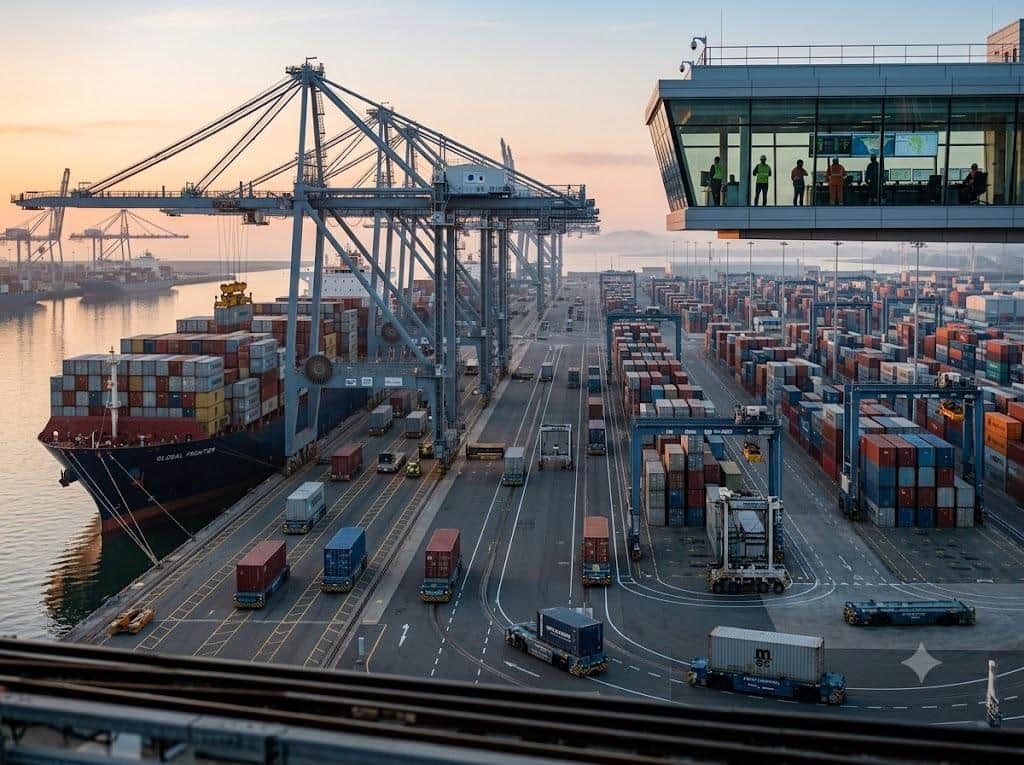
Image: iXBT
South Korea’s Ministry of Oceans and Fisheries has unveiled a Physical AI Port strategy that would let artificial intelligence analyze conditions, make operational decisions, and control cargo-handling equipment. Initial trials are planned for Gwangyang Port, followed by deployment at the first phase of the new Jinhae Port, scheduled to open in 2032.
Autonomous equipment and unified port control
The program covers:
- Autonomous port cranes
- AGVs (Automated Guided Vehicles) for moving containers
- An AI-based unified terminal management system
- Uncrewed systems for hazardous tasks, including fitting container locks and mooring ships
The system will process real-time data on vessels, cargo, road transport, and port operations. It will use that information to allocate equipment and optimize cargo flows.
Jinhae Port’s planned capacity
The first phase of Jinhae Port is expected to include nine berths, 198 autonomous cranes, 171 uncrewed AGVs, and an AI-based terminal management system. Of the cranes, 36 will serve vessels and 162 will operate in container yards.
The infrastructure investment is estimated at approximately 7.92 trillion won, or about $5.36 billion.

Recommended reading
OpenAI plans a JARVIS-like assistant for smart glasses
By 2035, the ministry aims to increase port productivity by 30%, capture 10% of the global port-equipment market, and rank among the leaders in four key physical AI technology areas. A separate system for managing operational and logistics data collected in ports will support model training.
Authorities are also considering an AI data center and the Port AX industrial cluster, which would bring together port-equipment manufacturers, shipbuilders, and defense companies. Both projects remain at the planning stage.
AI Editor
Ava covers the rapidly evolving world of artificial intelligence, from foundational models and research labs to the real-world economics of intelligence. With a background in computational linguistics, she cuts through the hype to find out what actually works. She firmly believes that benchmarks are just marketing until reproduced in the wild.
via iXBT