

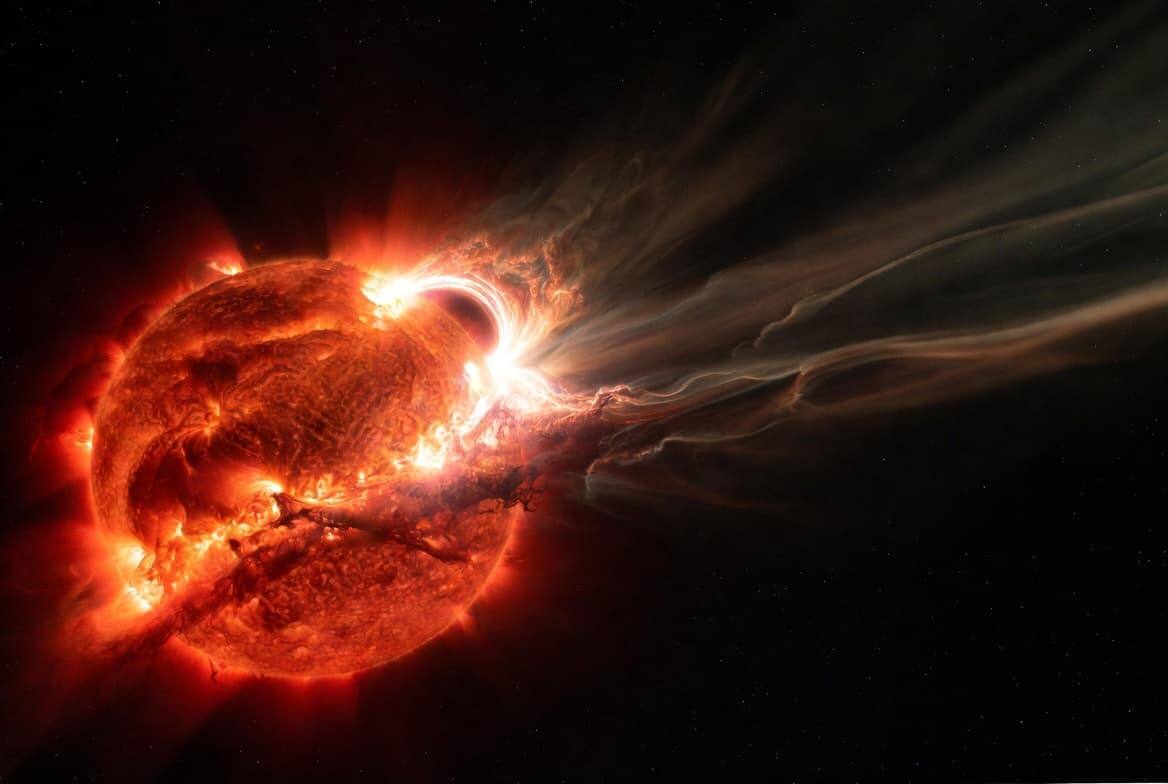
Scientists in Russia are warning that the Sun could switch up a gear on 26 June, with a chance of high solar flare activity and even X-class events – the strongest category in the standard solar scale. That matters because the headline is not the flare itself, but what often follows: coronal mass ejections that can shove charged plasma toward Earth and stir up geomagnetic trouble.
The forecast comes from the Institute of Applied Geophysics, which expects activity ranging from moderate to high. Solar flares are ranked from A through X, and each step up means roughly ten times more radiation output than the one before it. So ”X” is not a cosmetic label. It is the class that tends to make satellite operators, radio engineers, and space weather watchers sit a little straighter.
Why X-class flares get attention fast
Not every flare leads to a geomagnetic storm, and not every storm causes obvious disruption. But if the plasma cloud is launched in Earth’s direction, the effects can include interference with radio links, satellite systems, and other sensitive electronics. That is why space-weather alerts often sound abstract until they are suddenly not.
The timing also fits a broader pattern: solar activity tends to come in waves, and forecast agencies typically flag periods of elevated risk before the most energetic events actually happen. In practice, the real question is not whether the Sun flares – it always does – but whether one of these eruptions lines up with Earth.
What an Earth-directed eruption could disrupt
- Satellite navigation and communications
- Radio transmission quality
- Other vulnerable electronic systems
For most people, a solar flare warning is more curiosity than crisis. For the infrastructure behind everyday connectivity, though, it is a reminder that the space environment is not exactly decorative. If the Sun does produce an X-class flare on 26 June, the follow-up will be less about the flash itself and more about whether any plasma cloud arrives in Earth’s direction.