• 2 min read
Shield AI tests Hivemind swarm with Taiwan drone boats
Shield AI’s Hivemind software coordinated SeaShark 600 and 800 drone boats in its first open-water swarming test off Taiwan.
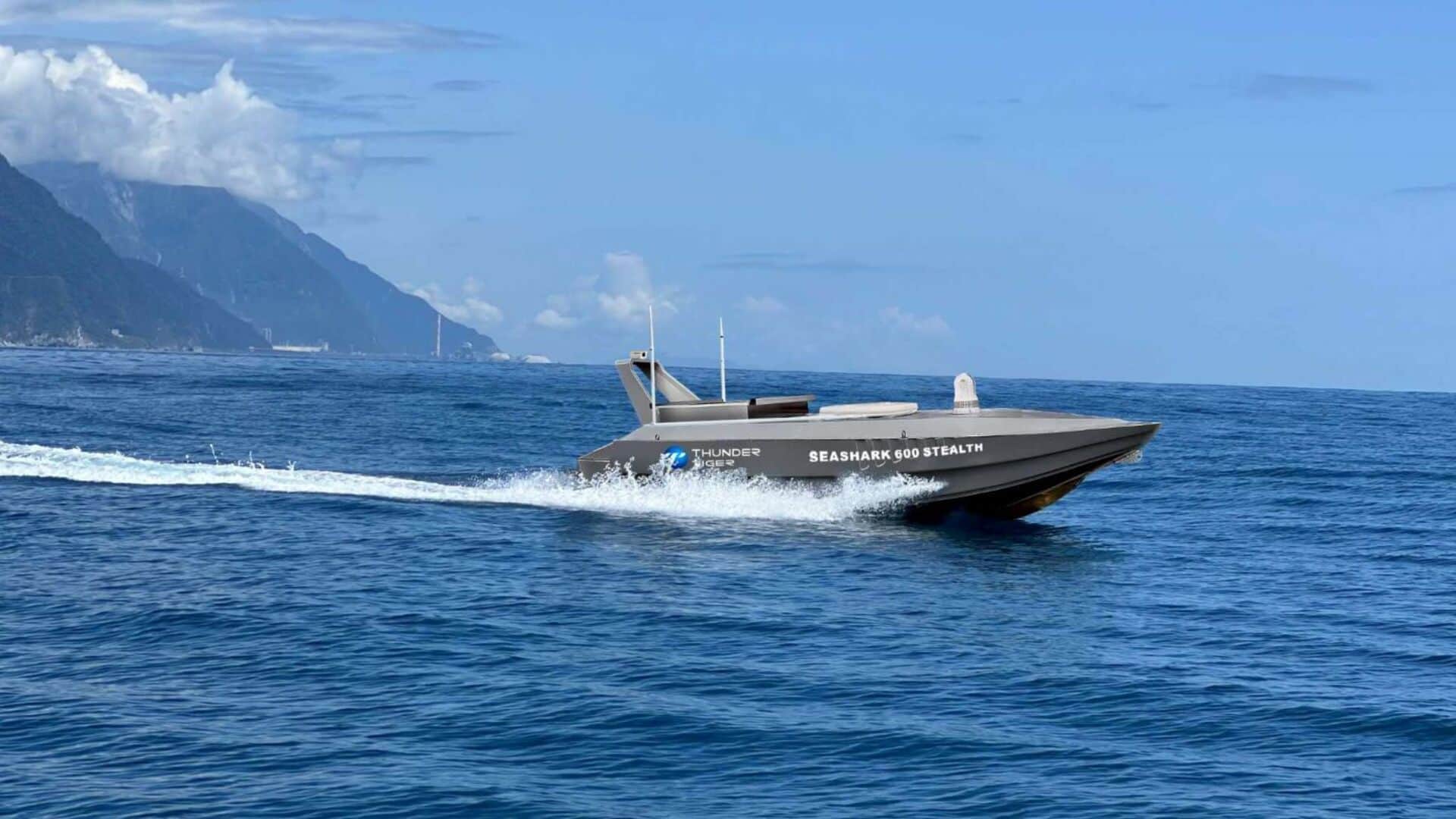
Image: TechRadar
Shield AI’s Hivemind autonomy software has completed its first open-water swarming mission, directing two different unmanned surface vessels through a coordinated surveillance exercise off Pingtung, Taiwan.
The demonstration used Thunder Tiger’s SeaShark 600 and SeaShark 800 boats. Instead of following fixed routes, Hivemind generated navigation paths in real time from radar, camera imagery, and ship-tracking signals. The system independently located the search area, identified an object for investigation, and coordinated the boats as they guided another vessel away from the monitored zone.
How Hivemind coordinated the drone boats
The trial was designed to test whether a single autonomous system could manage multiple boat types as one operational unit. Hivemind handled the mission-level coordination while the SeaShark vessels performed the reconnaissance work, allowing the fleet to respond to a contact without relying solely on pre-programmed waypoints.
That makes the exercise more significant than a demonstration of a single autonomous boat. The companies were testing distributed behavior: multiple vessels sharing a task, reacting to sensor data, and organizing their response around a newly detected object.
Recommended reading
Framework discloses customer data breach
“Hivemind continues to prove that true mission autonomy can scale across domains, platforms, and functional assets, unlocking new capabilities for distributed intelligence and maritime security missions.”
Shield AI and Thunder Tiger are working under a strategic agreement to integrate Hivemind across maritime and airborne unmanned systems. The companies say they plan to add sensors, improve swarm coordination, and move toward open-ocean deployments for future US and allied military applications.
From Taiwan demonstration to open-ocean operations
Thunder Tiger said the exercise also examined how unmanned surface-vehicle fleets could detect, classify, and identify contacts during maritime security missions. Its stated goal is to give operators a broader picture of activity at sea while allowing them to respond with greater speed and scale.
“By integrating AI pilots into our portfolio, we can enable distributed, networked teams that coordinate dynamically to build a more complete understanding of the maritime environment … while helping operators respond with greater speed, scale, and effectiveness.”
The Taiwan test establishes that Hivemind has directed a coordinated mission on water, extending Shield AI’s autonomy work across multiple platforms. It does not establish how many boats the system can control, how well the vessels perform in rough open-ocean conditions, or whether the technology has been independently evaluated. The companies also did not provide a deployment date, operational range, or details of the engagement rules used during the staged exercise.
The facts support a measured conclusion: this is a meaningful integration milestone, not yet proof of a combat-ready maritime swarm. Its value will depend on whether Shield AI and Thunder Tiger can carry the same sensor-driven coordination from a controlled Taiwan exercise into larger, open-ocean fleets.
Security Editor
Sophia unpacks the invisible wars happening on our networks. Covering cybersecurity, privacy legislation, and cryptography, she exposes how our data is weaponized and defended. Before joining for(geeks), she spent years as a penetration tester. She's the reason the rest of the team uses physical security keys.
via TechRadar