• 3 min read
Seagate books HDD capacity through 2028 as 50TB drives near
Seagate expects 50TB HAMR hard drives to ship in 2028, with most 2027–2028 HDD capacity already committed to AI and cloud customers.
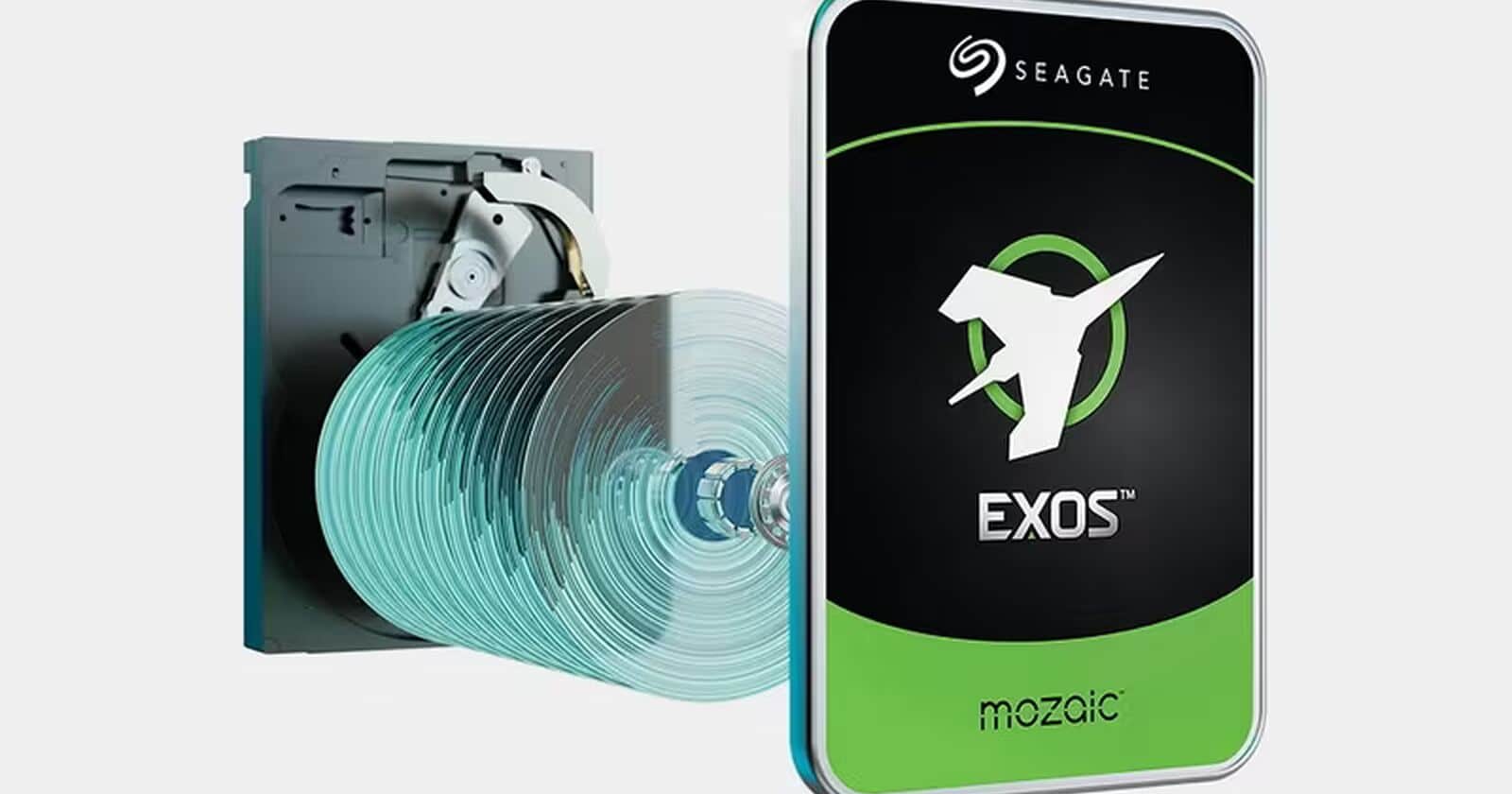
Image: 3dnews
Seagate says its 50TB hard drives will enter certification testing in late 2027, with shipments scheduled to begin in 2028. The company also acknowledged that almost all of its future HDD production is already allocated through long-term contracts, driven by demand from AI data centers and cloud services.
The outlook was presented during Seagate’s investor report. CEO Dave Mosley identified Mozaic 5 as the company’s next HDD platform generation, following Mozaic 3 and Mozaic 4. The platform is designed around disk platters with capacities above 5TB—a foundation that can support both maximum-capacity 50TB drives and more conventional CMR models for customers prioritizing speed and predictable operation.
Mozaic 5 and Seagate’s HAMR roadmap
Mozaic 5 will be Seagate’s third commercial HDD generation based on heat-assisted magnetic recording, or HAMR. The technology uses localized heating during the writing process, allowing the company to increase recording density beyond what conventional approaches can support.
Seagate said HAMR products accounted for 40% of its future shipments by early July. The company expects that share to rise to 70% by July 2027. It also expects Mozaic 4 40TB drives to represent half of the lineup in the next generation.

Recommended reading
Verizon lands $1 billion Google dark fiber deal
The 50TB products are not scheduled for an immediate broad-market launch. Seagate expects them to reach certification testing only at the end of 2027, followed by deliveries in 2028. That timeline reflects the qualification process required by enterprise and cloud customers rather than a simple retail release schedule.
Cloud contracts are filling Seagate’s production plans
According to Seagate, most of its planned HDD shipments for 2027 and 2028 are already reserved under long-term agreements. Some customers are reportedly evaluating capacity as far out as 2029.
Certification can take several months after a drive completes the manufacturer’s internal testing. Server-equipment makers typically require two to six months, while hyperscale cloud companies can test new drives for up to a year. As a result, starting certification in late 2027 and shipping in 2028 is consistent with a product being developed for already-committed customers.
Seagate’s high-capacity roadmap comes as server operators expand both flash storage and large HDD pools. SSDs remain subject to continuing changes in 3D NAND and storage pricing, while hard drives are being used for colder data where very high capacity is the priority. The company’s comments indicate that demand for this capacity has moved ahead of its production plans.
Western Digital and Toshiba are also promoting high-capacity enterprise HDDs. However, the transition to HAMR is progressing unevenly across the market, in part because cloud customers require extended certification before deploying new drive platforms at scale.
Seagate leaves room for higher prices
The company is not promising lower pricing for the new drives. Seagate described its approach as value-oriented pricing and said prices could increase outside long-term contracts.
That distinction matters because much of the available production is already tied to agreements covering 2027 and 2028. Customers without those commitments may face different pricing as demand for exabytes of storage continues to exceed the company’s planned output.
Image source: 3dnews.
Seagate’s 2026 financial results
Seagate’s financial results reinforce the strength of the current storage cycle. Revenue for the company’s fourth fiscal quarter of 2026 reached $3.629 billion, up from $2.444 billion a year earlier. Net income rose to $1.294 billion.
For the full 2026 fiscal year, Seagate reported $12.195 billion in revenue and $3.184 billion in net income. The company is therefore moving toward its next capacity milestone while demand is already reserving much of the production that will support it.
Enterprise Editor
Marcus follows the money. He covers enterprise software, cloud architecture, and the tectonic shifts in Big Tech strategy. He translates dense earnings calls and complex M&A activity into actionable insights about where the industry is actually heading. If a tech giant makes a silent pivot, Marcus is usually the first to notice.
via ITzine