

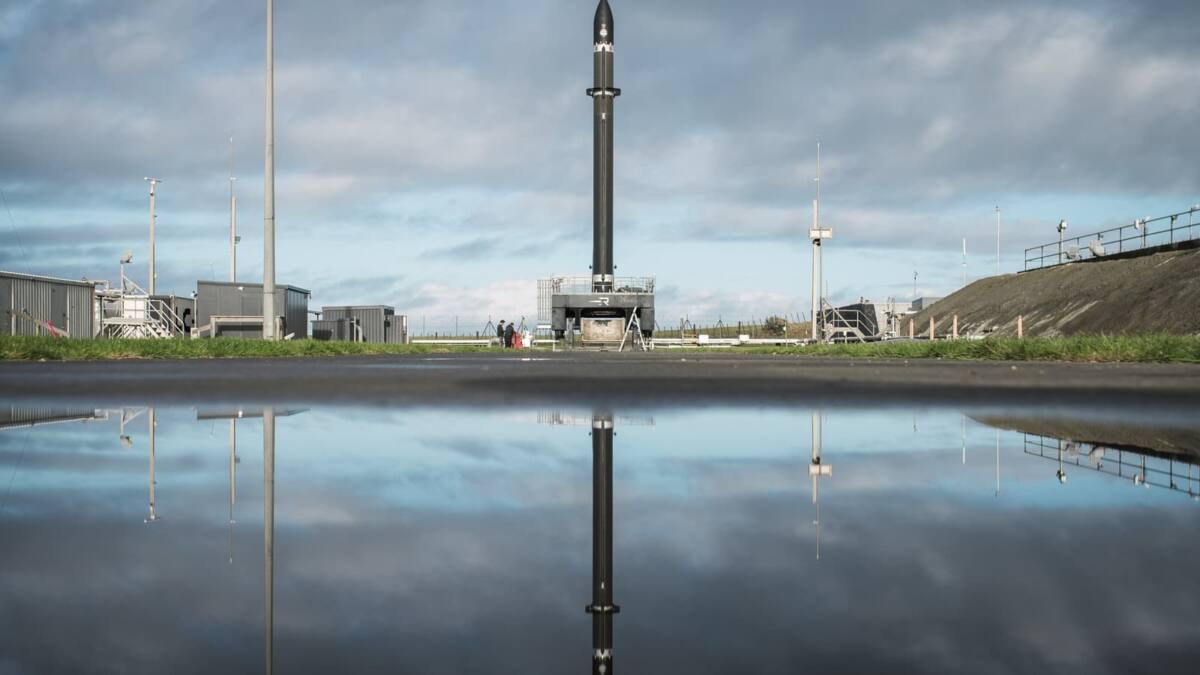
Rocket Lab scrubbed the 92nd launch attempt of its Electron rocket at the very last moment, stopping the mission known as ”The Grain Goddess Provides” just after the engines lit. The rocket was set to carry the QPS-SAR-13 Earth-observation satellite for iQPS from Launch Complex 1 in New Zealand, but an automatic safety shutdown kicked in at T-0 and ended the countdown before liftoff. Rocket Lab said backup launch windows are available in the next few days, with a fresh date to follow separately.
The abort is a setback, but not an unusual one for small-launch providers that build schedule flexibility into their missions. For customers, a scrub is frustrating; for a damaged rocket or a bad safety call, it would be far worse.
Electron’s latest scrub at Launch Complex 1
Rocket Lab did not describe the exact trigger beyond the safety system, but the sequence was clear: brief engine ignition, automatic cutoff, no ascent. For Electron, which is designed around frequent, relatively quick-turn missions, this is less a drama than an operational reset – though one that still leaves the payload waiting on the pad.
The mission itself was straightforward. QPS-SAR-13 is a synthetic aperture radar satellite, part of iQPS’s expanding Earth-imaging fleet, and Electron has become a familiar ride for these compact spacecraft. Companies in this corner of the market are increasingly competing on reliability and timing as much as raw lift capacity, because customers buying small-satellite launches usually care more about hitting an orbital slot than about headline-grabbing thrust numbers.
NASA’s VADR deal keeps Electron busy
Rocket Lab’s manifest is not getting any lighter. NASA has already signed with the company for two science missions under the VADR program: PolSIR, the Polarized Submillimeter Ice-cloud Radiometer, and TSIS-2, both slated to ride on Electron. That adds another layer of pressure, because repeat government work is where launch providers try to prove that they can do more than just get a rocket off the ground once in a while.
Electron’s appeal has always been the same: a dedicated small-launch option from a company that also builds spacecraft systems and broader orbital infrastructure. The business model is sensible, if unromantic – win enough precise, modest missions, keep the cadence high, and let bigger rockets fight over the glory shots.
What happens next for the mission
If Rocket Lab clears the issue quickly, the next launch attempt should follow within the reserve windows it has already identified. If not, iQPS gets another reminder of the small-launch tradeoff: more control over schedule than a rideshare, but also more exposure when a single vehicle decides to stay put.