

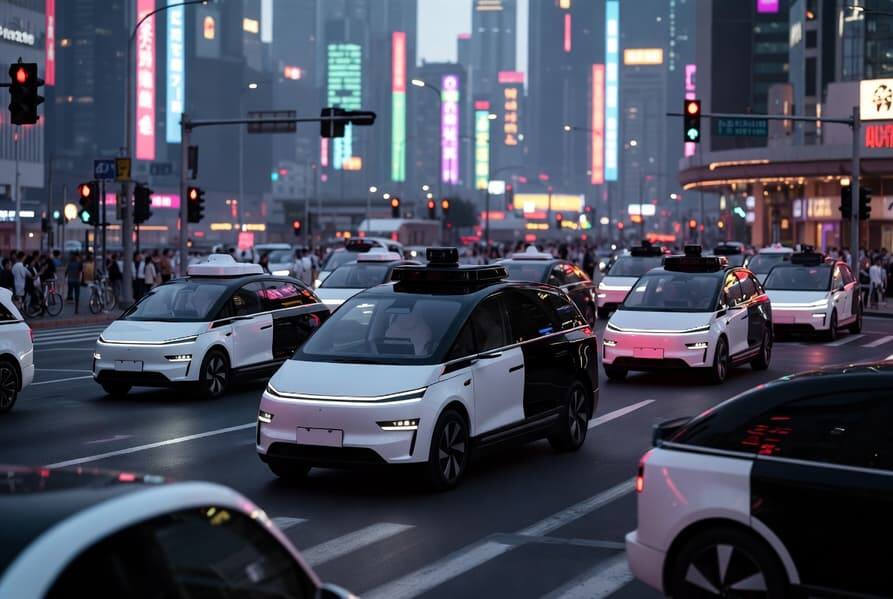
China has paused new robotaxi licenses after a high-profile Baidu Apollo Go incident left passengers stranded and traffic disrupted in Wuhan. The move signals that Beijing is still willing to slow the rollout of autonomous driving when a public failure looks messy enough to attract attention.
According to people familiar with the situation, dozens of Apollo Go vehicles suddenly stopped in the street last month, triggering a review by regulators. The suspension affects new permits for driverless cars, which means companies cannot add more robotaxis to fleets, start fresh pilot programs, or push into new cities while the freeze is in place.
What the license freeze blocks
The pause is more than a paperwork hiccup. It stops the next wave of commercial expansion at exactly the point when Chinese robotaxi companies would normally be trying to scale from controlled pilots to broader urban deployments.
- Adding new robotaxis to existing fleets
- Launching new test projects
- Expanding into new cities
China robotaxi regulation tightens after Baidu incident
Three agencies, including the Ministry of Industry and Information Technology, held a meeting earlier this month with officials from cities already running robotaxi or autonomous-driving pilots. They urged local authorities to carry out full self-checks and strengthen safety oversight, which is bureaucrat-speak for ”we do not want another public embarrassment.”
That caution is hardly surprising. China has spent years treating autonomous driving as a strategic industry, but every large-scale stumble makes regulators more conservative, not less. The current freeze also buys time for cities to tighten operational rules before companies chase bigger deployments again.
How long the freeze lasts is the real question
Officials have not said how long the suspension will last, and that uncertainty matters more than the incident itself for developers planning their next move. If the pause is brief, the sector will likely shrug and keep pushing; if it drags on, China’s robotaxi race could slow just as rivals in other markets try to prove they can scale safely.