

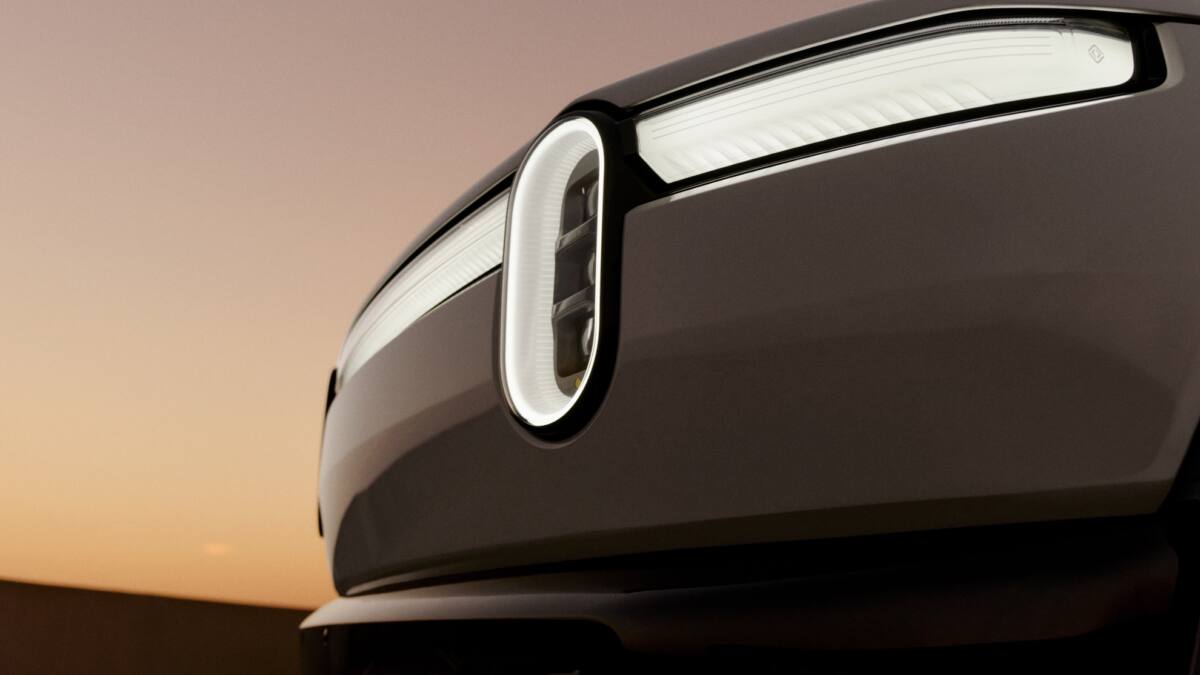
Rivian is asking for less federal money and building a bigger factory. The EV maker now expects to borrow $4.5 billion from the Department of Energy for its Georgia plant, down from the $6.6 billion originally set aside, while also planning to raise the site’s initial capacity to 300,000 vehicles from 200,000. Rivian says the plant will help support production of the R2 SUV, which is also moving toward production in Illinois.
That is a neat little summary of where Rivian thinks the business is heading: fewer borrowed dollars, more output, and more confidence in the R2 SUV. It also suggests the company wants lower per-unit costs without waiting for a second act to squeeze scale out of the plant.
Georgia plant capacity jumps to 300,000 vehicles
The company said Thursday that the expanded target gives it more room for future growth in later phases, not just a bigger opening day. Rivian broke ground on the site outside Atlanta late last year and says it is now in early vertical construction. Vehicle production is still slated to begin by the end of 2028.
Some of that capacity will be reserved for Uber-branded R2 robotaxis. That is the sort of deal automakers love to announce because it sounds like instant scale, even if the hard part is still years away.
Uber’s Rivian bet is still loading
Uber has agreed to make an initial $300 million investment in Rivian and expects to buy 10,000 fully autonomous R2 robotaxis ahead of a planned 2028 rollout in San Francisco and Miami. Rivian says that first payment should close in the second quarter, with another $250 million investment due later this year. Uber also has the option to buy up to 40,000 more autonomous R2 SUVs starting in 2030, and it has said it could invest as much as $1.25 billion through 2031 if Rivian clears a set of milestones.
The timing is interesting because Rivian is still building the Georgia site while producing R2 SUVs at its Illinois factory in Normal. The company recently started R2 production there despite tornado damage at the plant, and Thursday it said it has made initial deliveries to employees. Customer deliveries are expected to begin in the coming weeks.
Rivian’s first-quarter numbers show progress, not profit
The loan update landed alongside Rivian’s first-quarter 2026 results. Revenue came in at $1.38 billion, including $908 million from vehicle sales and $473 million from software and services. Automotive revenue fell about 2% from a year earlier, partly because regulatory credits dropped, while the company’s net loss narrowed to $416 million from $541 million in the same period last year.
That’s better, but not victory-lap better. Rivian is still spending heavily to get the R2 to market and to fund a larger Georgia footprint, and the real test is whether the cheaper, higher-volume factory plan helps it avoid the trap that has swallowed so many EV startups: too much ambition, not enough margin.
What Rivian still has to prove
For now, the company is signaling discipline in one place and expansion in another. If the R2 can generate enough demand to fill a 300,000-vehicle plant, the smaller DOE loan starts to look prudent rather than cautious. If not, the extra capacity may sit there like expensive optimism.