• 3 min read
Prentis seeks $100M for computer-use AI lab
Prentis is reportedly seeking $100 million at a $1 billion valuation for computer-use agents, with contracts worth up to $50 million.
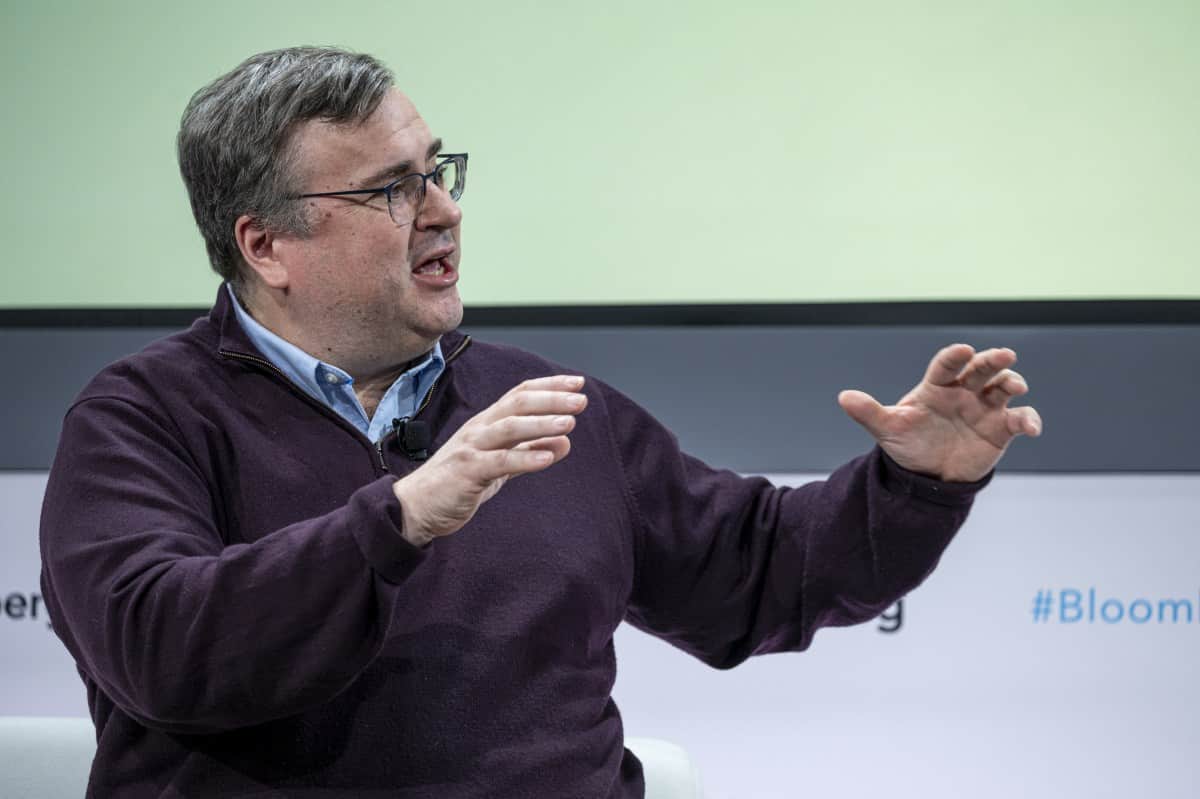
Image: TechCrunch
Prentis, a new AI research lab focused on computer-use models, is in talks to raise $100 million at a $1 billion valuation, according to two people familiar with the discussions.
The company was launched in April by serial entrepreneur Ritankar Das, LinkedIn co-founder Reid Hoffman, and Zynga founder Mark Pincus. It is training models to learn how office workers move through routine workflows across documents and software systems, with the aim of building agents that can control computers and automate those tasks.
Prentis says its agents could handle specialized work such as processing insurance claims or automating customs-duty refund exceptions without requiring employees to search for paperwork manually.

Recommended reading
AMD targets CUDA’s edge with ROCm.AI
Prentis contracts and projected revenue
The startup has signed contracts worth up to $50 million with several customers, including a healthcare management service organization, a manufacturer, and goods and clothing manufacturers, the sources told TechCrunch.
Investor materials obtained by TechCrunch project an estimated $75 million annualized run rate by the third quarter of this year. The pitch deck says that figure represents estimated annualized value based on a contracted fee equal to 20% of realized savings, rather than recognized revenue. It also describes the projection as “performance-dependent and subject to final execution.”
Prentis has already hired more than 25 employees, according to its website. The team includes researchers who previously worked at OpenAI, Google DeepMind, Meta, Tencent, and Alibaba.
Hive-32B benchmark claims
Prentis says its Hive-32B model outperforms OpenAI’s GPT-5.4 and Anthropic’s Claude Opus 4.6 on two computer-use benchmarks:
- WindowsAgentArena, which measures end-to-end task completion in real Windows applications.
- ScreenSpot-v2, which tests whether a model can locate the correct on-screen control.
The company attributes its claimed advantage to using a much smaller and less expensive model. Its pitch deck claims roughly 10 times lower cost per task than frontier APIs, making the system more economical for everyday workflows. TechCrunch said it has not independently verified the benchmark results.
Prentis is betting that automating routine office work will soon become a larger AI use case than coding. The market is already crowded: Anthropic, OpenAI, and Mira Murati’s Thinking Machines Lab are also developing computer-use agents, according to one of the sources.
Anthropic has separately acquired talent in the category. Earlier this year, it bought Seattle-based computer-use startup Vercept, bringing in its founders and shutting down the product.
Founders and Titan connections
Das, 31, is also the founder of Titan, a holding company that builds and operates AI businesses. He was UC Berkeley’s youngest University Medalist in more than a century, graduating at 18 with a double major in bioengineering and chemical biology before earning a master’s degree in biomedical engineering at Oxford.
He founded Titan in 2014 after leaving an AI PhD program at Cambridge, where he had been a Gates Cambridge Scholar. Das has described Titan as a return to an old-fashioned holding-company model similar to Berkshire Hathaway, funded by its own exits rather than outside limited partners.
Titan’s other businesses include AI-powered virtual-care provider Tala Health, which raised a $100 million seed round last year, and autism-care startup Forta Health, which raised $55 million led by Insight Partners in 2024. Titan-founded disease-prediction company Dascena was acquired by CirrusDx in 2022.
Prentis is a side project for Hoffman and Pincus. Hoffman said last month that he was stepping down from Microsoft’s board after nearly a decade to go “founder mode” on Manas AI, an AI drug-discovery startup he is also backing. He was an early OpenAI investor and co-founded Inflection AI with Mustafa Suleyman before Microsoft absorbed most of that team in 2024.
Pincus now runs investment firm Reinvent Capital, with Hoffman as a senior adviser. He also published the memoir “Life at the Speed of Play” last month. Prentis did not respond to TechCrunch’s request for comment.
AI Editor
Ava covers the rapidly evolving world of artificial intelligence, from foundational models and research labs to the real-world economics of intelligence. With a background in computational linguistics, she cuts through the hype to find out what actually works. She firmly believes that benchmarks are just marketing until reproduced in the wild.
via TechCrunch