• 5 min read
The workers training AI that may replace them
AI is reshaping the Philippines' $40bn outsourcing industry, putting 1.9 million jobs under pressure as workers train systems that may replace them.
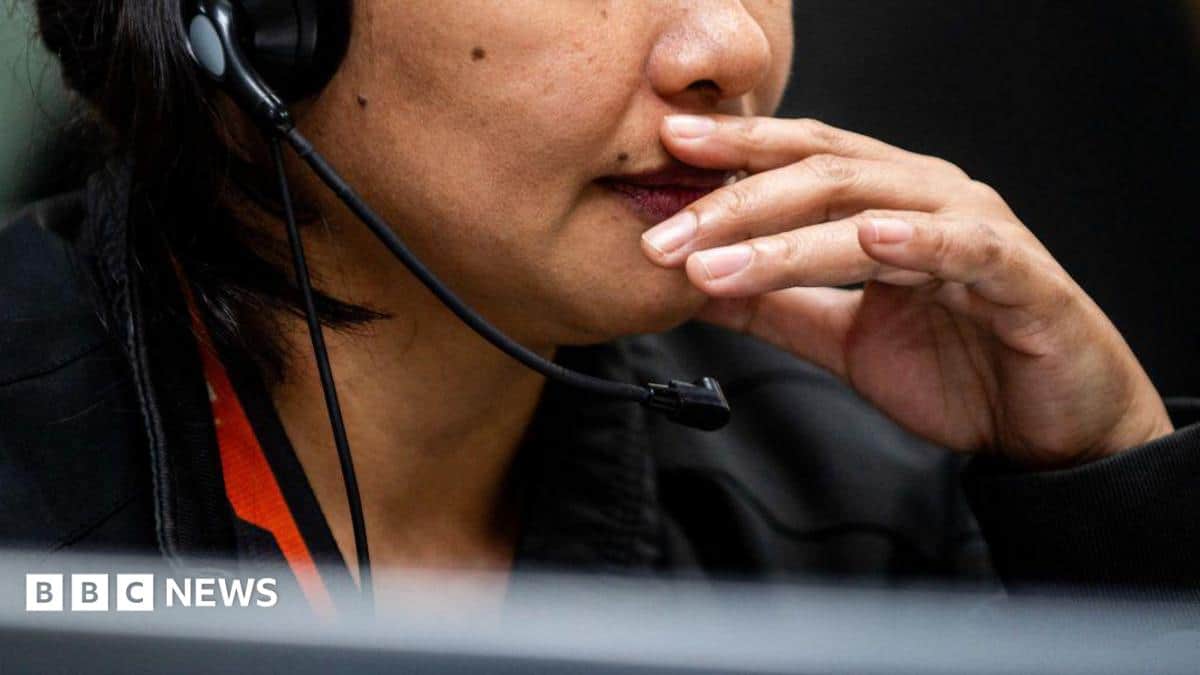
Image: BBC News
For 15 years, Lisa built a career writing content for companies in the Philippines' booming outsourcing industry. Then, after helping edit AI-generated material and training a system on her employer’s writing style, she was made redundant one month before her latest role was due to become permanent.
Lisa is not her real name. She and several other former outsourcing workers spoke to the BBC anonymously after signing confidentiality agreements in return for severance pay. They fear that speaking publicly could damage their chances of finding another job in an industry whose professional network is relatively small.
“I feel like I dug my own grave. We were the ones who trained the artificial intelligence that replaced us.”
Her experience captures the tension now facing the Philippines: AI is being introduced into an industry that has helped lift millions of people into the middle class, but the workers most exposed to the technology may be the ones who helped make it effective.

Recommended reading
Court lifts Amazon’s block on Perplexity shopping bot
The Philippines' $40bn outsourcing industry
The country’s business-process-outsourcing sector began expanding in the early 2000s, when the Philippines was promoted as an English-speaking alternative to India. Government tax incentives, infrastructure investment and multinational expansion turned districts such as Cubao in Manila into major employment hubs.
Companies including Accenture, Concentrix and Teleperformance built large operations covering call centres, accounting, software development and marketing services. Today, the industry employs roughly 1.9 million people and generates $40bn (£30.1bn) in annual revenue—about 10% of the Philippines' economy.
The International Labour Organization estimates that 12.7 million Filipinos, or more than one in four workers, are employed in occupations exposed to generative AI. That is the highest share in Southeast Asia. The ILO expects many jobs to change rather than disappear, but the Philippines' concentration in routine service work makes the country particularly vulnerable.
Jack Madrid, president of the IT and Business Process Association of the Philippines, says more than two-thirds of the group’s members are already running AI pilots.
“Agentic AI has the potential to automate at a much more accelerated pace. Obviously, there’s a layer of jobs that are automatable or have been automated.”
Madrid says most affected workers have been redeployed within the same organisations. He also argues that weaker hiring reflects slower global demand and uncertainty over how companies will use the technology, not AI alone. Still, he acknowledged the scale of the preparation required: “We cannot do enough to be prepared.”
AI can add work before it removes jobs
Mary, another former content writer whose name was changed, said her employer presented AI as a productivity tool. Instead, she was required to edit more heavily and fact-check inaccurate outputs.
“Technically it was more work for us,” she told the BBC. She was later made redundant, like Lisa.
The operating model described by major outsourcing companies is less direct replacement. Teleperformance says AI will handle routine interactions while human agents move into more complex roles, and has said it plans to retrain employees. Accenture says generative AI will reshape almost every job rather than eliminate positions, while promising billions of dollars for AI capabilities and workforce training. Concentrix says its AI systems should remain under human oversight and has committed to training employees in the technology.
But Filipino managers are under pressure from overseas clients to adopt AI as a cost-cutting measure, according to Paul Quintos of the University of the Philippines-Diliman. Philippine outsourcing providers compete with companies in India and elsewhere, and multinational customers increasingly expect them to integrate AI rather than simply supply lower-cost labour.
Quintos also warned that companies may be overstating AI’s role in some layoffs. He called this “AI washing”: presenting redundancies as the result of technological progress when they may instead reflect weak demand or broader economic conditions. The BBC report found no independent evidence establishing how much productivity the workplace AI tools are delivering.
Retraining without a clear worker voice
Philippine labour law covers redundancy, but labour groups told the BBC that existing rules provide little guidance on how companies should introduce AI or consult employees about its use. The sector is also non-unionised, leaving workers with limited formal influence over deployment decisions.
The government has committed to upskilling more than 300,000 outsourcing workers. Leandro Aguirre of the Department of Information and Communications Technology said the Philippines is behind competitors such as India and Singapore and needs to build local talent and companies capable of creating higher-value jobs.
“The benefits of AI have to trickle down to people. It can’t just benefit employers.”
Aguirre rejected calls for sweeping new AI legislation, saying existing labour, privacy and consumer-protection laws could be adapted more quickly through regulatory guidance. The government has not provided a timetable in the BBC report for the retraining programme, nor did it explain how workers will be involved in decisions about workplace automation.
The Philippines' outsourcing model is not disappearing overnight. But the combination of 1.9 million jobs, accelerating AI pilots and limited worker representation makes the transition unusually consequential: even where companies promise redeployment, the first people asked to make AI useful may be the first to lose their jobs.
Enterprise Editor
Marcus follows the money. He covers enterprise software, cloud architecture, and the tectonic shifts in Big Tech strategy. He translates dense earnings calls and complex M&A activity into actionable insights about where the industry is actually heading. If a tech giant makes a silent pivot, Marcus is usually the first to notice.
via BBC News