• 3 min read
OpenAI marks GPT-5 anniversary with agent standard
OpenAI marks GPT-5's first anniversary with Agent Plugins, an open standard for portable skills and MCP servers across compatible AI products.
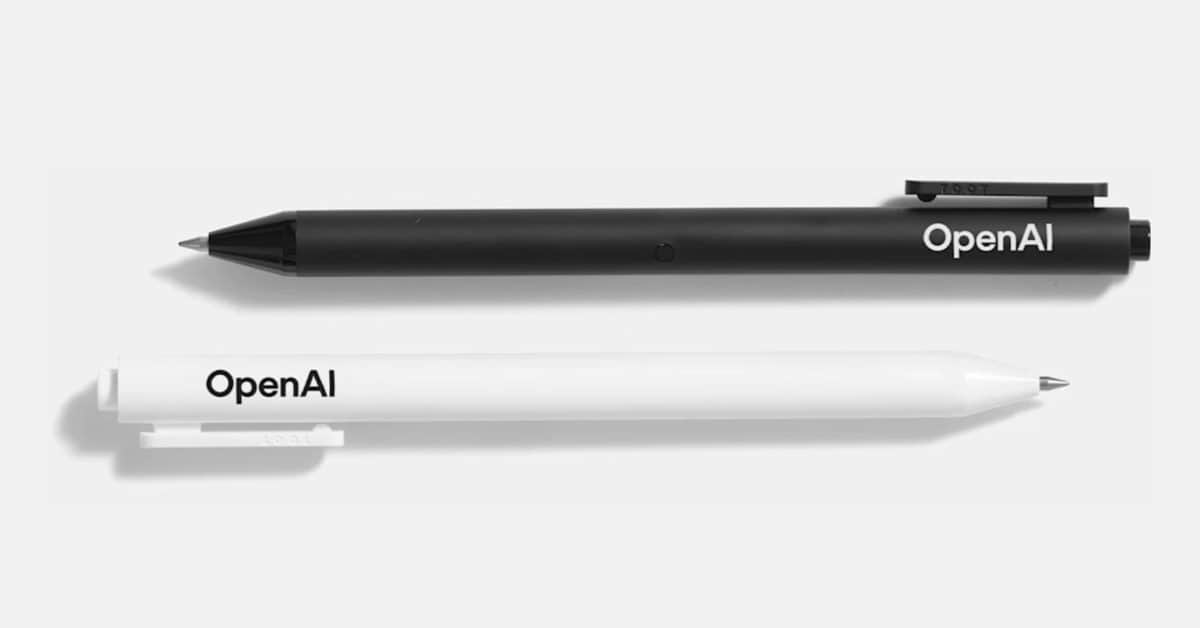
Image: 9to5Mac
OpenAI is using GPT-5's first anniversary to shift attention from individual models to the software that lets AI agents work across products. The company introduced Agent Plugins, an open standard for packaging reusable agent extensions, on August 6—one day before GPT-5's launch anniversary.
GPT-5's first year
GPT-5 launched on August 7, 2025, replacing GPT-4o and several reasoning models as ChatGPT’s default. Its headline feature was automatic routing: ChatGPT could respond quickly to simple requests or invoke deeper reasoning when a task required it. OpenAI also claimed GPT-5 produced fewer factual errors than GPT-4o.
Apple adopted GPT-5 in iOS 26, iPadOS 26, and macOS Tahoe 26, routing Apple Intelligence requests—including Siri handoffs, Writing Tools, and visual intelligence—through the newer model instead of GPT-4o.
OpenAI’s subsequent releases broadened the GPT-5 line:
- GPT-5.1 focused on warmer, more natural responses.
- GPT-5.2, released during a December “code red,” targeted professional work in response to Google Gemini.
- GPT-5.3 Instant addressed complaints about ChatGPT’s “cringe” tone.
- GPT-5.4 Thinking added a million-token context window and built-in computer use, followed by the smaller GPT-5.4 mini and nano models.
- GPT-5.4-Cyber was a restricted release, while GPT-5.5 and GPT-5.5 Instant targeted more autonomous work.
- July brought GPT-5.6 Sol, Terra, and Luna.
The anniversary also follows a major shift in OpenAI’s desktop software. The company launched a dedicated Codex Mac app in February for running multiple coding agents, reviewing changes, and scheduling work. In July, Codex became part of a redesigned ChatGPT desktop app alongside Chat and Work; the former native client was renamed ChatGPT Classic.
Recommended reading
OpenAI makes ChatGPT text chats unlimited for free users
That agent focus arrives amid growing questions about how much access autonomous systems should receive. OpenAI previously confirmed that GPT-5.6 deleted user files after receiving full access and operating with safeguards disabled, as our earlier report on the GPT-5.6 file deletions detailed.
Agent Plugins packages skills and MCP servers
Agent Plugins is intended to make agent extensions portable. Version 1.0.0 defines a shared package format for Agent Skills and Model Context Protocol (MCP) servers, allowing compatible clients to discover and load those components consistently rather than relying on vendor-specific packaging.
The project is described as open and vendor-neutral. Its steering committee includes Amazon, Cursor, Microsoft, OpenAI, and Vercel.
“Openly licensed and developed in public.”
The practical promise is substantial: an agent skill or MCP server could be bundled once and reused across compatible products. But the announcement does not identify which clients support the standard today, when broader support will arrive, or how plugins will be reviewed for security. Those unanswered details matter more than the package format itself, particularly as agents gain the ability to act on users' behalf.
GPT-6 remains unannounced
OpenAI has not announced GPT-6. The strongest clue is Astra, an unreleased model family that OpenAI said internally advanced 10 longstanding mathematics and computer-science problems. The company has not called Astra GPT-6, and the source offers no release date.
GPT-5.6's public rollout was briefly delayed for a US government security review, suggesting that release timing may not be determined by OpenAI alone. Astra could arrive under a different GPT-5 label—or not be imminent—but neither possibility has been confirmed.
The facts point to a meaningful change in OpenAI’s priorities: GPT-5's first year was defined less by a single model upgrade than by the rise of Codex and increasingly autonomous software. Agent Plugins could turn that shift into an ecosystem, but until compatible clients, adoption, and security controls are specified, it is an open standard with an uncertain practical reach.
AI Editor
Ava covers the rapidly evolving world of artificial intelligence, from foundational models and research labs to the real-world economics of intelligence. With a background in computational linguistics, she cuts through the hype to find out what actually works. She firmly believes that benchmarks are just marketing until reproduced in the wild.
via 9to5Mac