• 3 min read
AI autonomy can increase mental workload, study finds
A Lingnan University study found autonomous AI handovers can preserve performance under pressure but increase fatigue and hurt situational awareness.
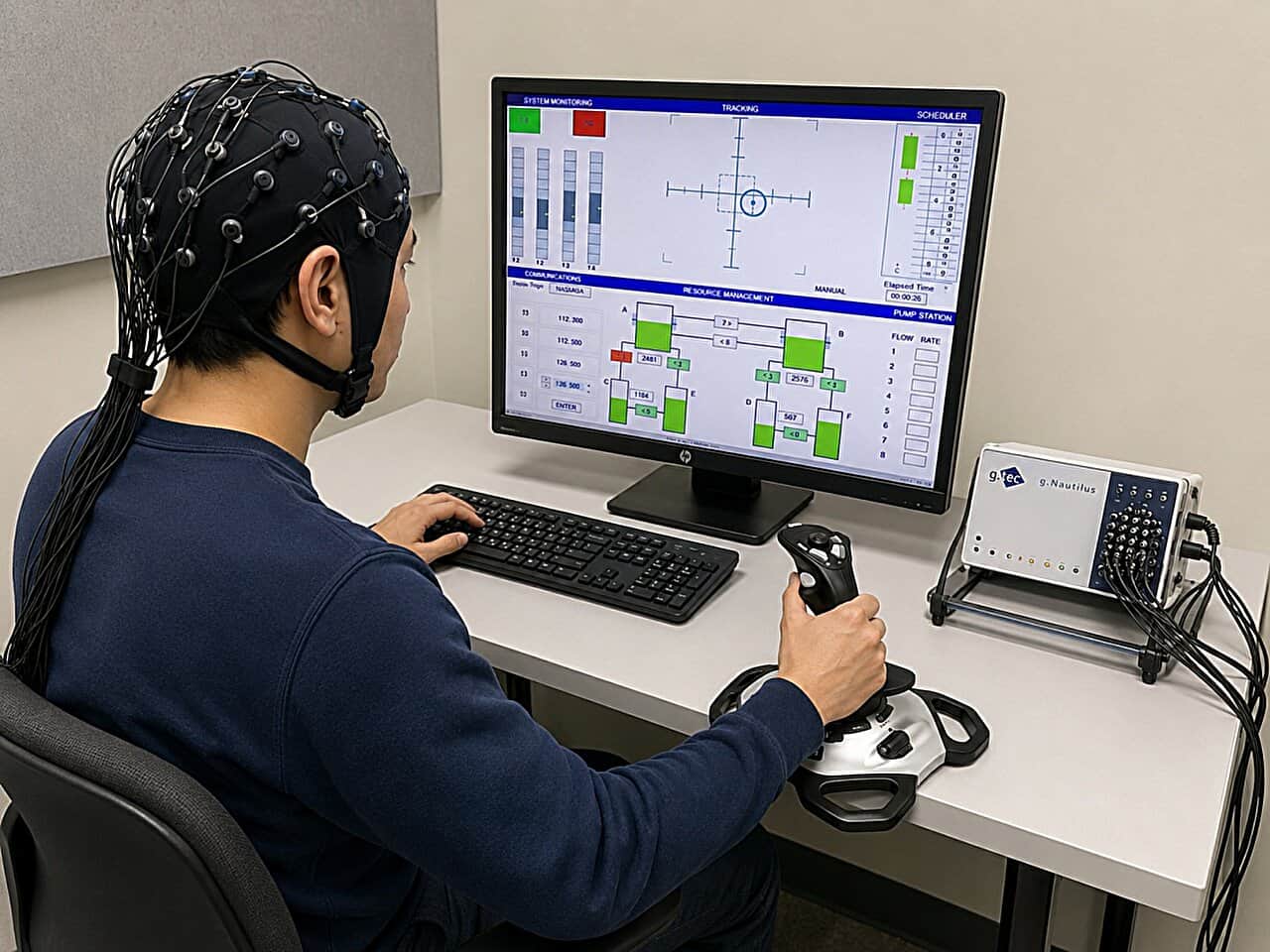
Image: TechXplore
AI taking over tasks autonomously may leave employees more mentally fatigued, not less, according to a Lingnan University study that tested human–machine collaboration under simulated aviation workloads.
The research found that automation helped operators maintain performance when workloads suddenly surged. But when an intelligent system decided for itself when to take control—and when to hand it back—participants had more difficulty rebuilding situational awareness. That transition increased fatigue and could create conflict between the human and the machine.
The findings, published in the International Journal of Human–Computer Interaction, challenge the assumption that greater automation automatically means easier work. They also reinforce the human-oversight problem raised in our earlier report on AI agents shifting programmers toward supervision.
Flight simulator test used three simultaneous tasks
Led by Professor Jie (Jay) Xu, director of Lingnan University’s Cognitive Science Research Center and an associate professor in its Department of Psychology, the team recruited 92 university students for two rounds of testing.
Participants used flight simulators running NASA’s Multi-Attribute Task Battery (MATB). They had to perform three tasks at once:
Recommended reading
OpenAI marks GPT-5 anniversary with agent standard
- Tracking with a joystick
- Monitoring system status
- Managing resources
The first round established baseline performance. When workload increased, tracking accuracy dropped from 76% to 55%, while monitoring and resource-management performance remained largely stable. The researchers said this suggests operators prioritize discrete, response-based tasks over continuous monitoring when pressure rises.
The second round compared two ways of allocating authority:
- Human-led authority allocation (HLAA): the operator decides when to delegate work and when to reclaim control.
- Shared authority allocation (ShAA): the intelligent system detects workload changes and proactively takes over or returns tasks.
Automation helped during peaks but hurt during handovers
ShAA was effective when workload suddenly peaked or an emergency occurred. By taking over parts of the tracking task, the system reduced pressure and helped participants maintain stable performance.
The advantage reversed when workload fell. Participants using HLAA performed better because they retained control over when tasks were handed off. With ShAA, operators could become detached from the operation while the system was in charge, then struggle to regain situational awareness when control returned.
That was not the only cost. During the longer scenarios, participants in the ShAA group reported substantially higher fatigue in the later stages than those in the human-dominant group. The result suggests that supervising an autonomous system can itself become a demanding task: operators must track what the system is doing, understand why it took control and anticipate what it might do next.
“If an intelligent system fails to explain the rationale behind authority transfer to the user clearly, it is easy to create a cognitive gap between the human and the machine, which impairs collaboration. Future intelligent system design should place greater emphasis on transparency and human-machine communication mechanisms.”
Xu said the research has implications for flight-deck design, remote operations, intelligent transportation and other settings involving high-risk decisions. His proposed direction is not simply more or less automation, but systems that clearly communicate their status and reasoning while allowing authority allocation to change with the work context.
The study’s practical limit
The evidence comes from a controlled simulator experiment involving university students, not operating crews or employees performing real-world jobs. The reporting therefore does not establish whether the same fatigue and handover effects would appear at the same magnitude in deployed aviation or other workplaces.
The position from these results is nevertheless clear: autonomous task handovers are useful during workload spikes, but human-controlled delegation is the stronger default once pressure falls. Until systems can explain authority transfers clearly and keep users oriented during handovers, adding autonomy may shift mental workload rather than remove it.
AI Editor
Ava covers the rapidly evolving world of artificial intelligence, from foundational models and research labs to the real-world economics of intelligence. With a background in computational linguistics, she cuts through the hype to find out what actually works. She firmly believes that benchmarks are just marketing until reproduced in the wild.
via TechXplore