

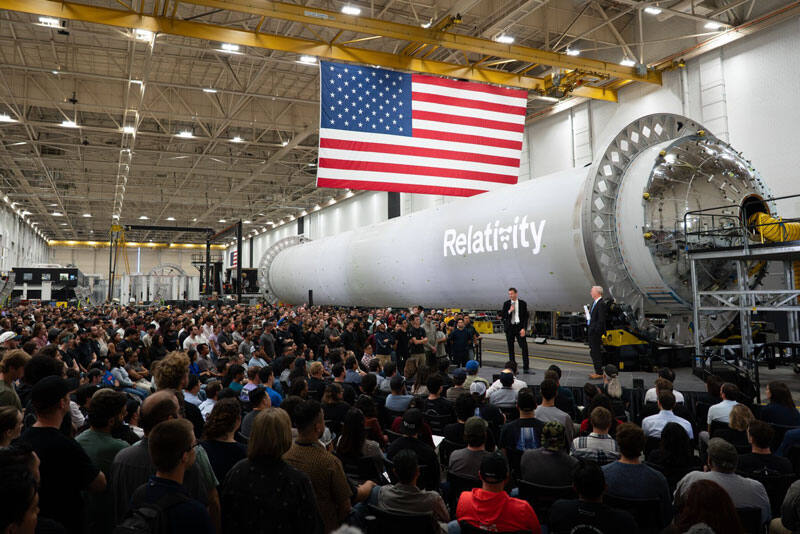
NASA has picked Relativity Space to carry a set of four science instruments to Mars orbit in the Aeolus mission, a rare vote of confidence in a company still building its first heavy-lift rocket. Aeolus is meant to create the closest thing Mars has to a global weather station, with daily readings on temperature gradients, clouds, dust behavior, and wind at different altitudes.
The deal fits a broader shift at NASA toward commercial partnerships under its new head, billionaire Jared Isaacman. It also gives Relativity Space a high-stakes assignment before its Terran R rocket has reached orbit for the first time, which is a bold way to learn whether a newcomer can handle interplanetary logistics.
Aeolus is designed for future Mars landings
NASA says the four-instrument payload will study the Martian atmosphere up to 60 km, tracking the factors that matter most for landing hardware safely on the planet. That sounds academic until you remember that Mars does not forgive bad weather guesses; dust, wind, and temperature swings can turn a neat mission plan into expensive wreckage.
The data is intended to help future robotic and human missions pick safer landing windows and sites. In other words, this is infrastructure for the next wave of Mars exploration, not a one-off science stunt.
Relativity Space still has to prove Terran R
Relativity Space is aiming Terran R at the same general class of launch capability as SpaceX’s Falcon 9 and Falcon Heavy, but the company has already had a rough start: an early prototype launch in 2023 failed. The first Terran R launch is expected this year, which means NASA is effectively buying a promise wrapped inside a deadline.
- Mission: Aeolus
- Payload: four NASA science instruments
- Destination: Mars orbit
- Launch vehicle: Terran R
- Target delivery year: 2028
That 2028 target matters because Mars will be in a favorable position for sending spacecraft then, making the timing of the contract part of the challenge. If Relativity Space makes the schedule, NASA gets a fresh commercial ride to Mars; if it slips, the agency gets another reminder that space ambition is easy to announce and hard to fly.
Eric Schmidt’s company gets a marquee NASA job
Relativity Space is now backed and led by former Google chief Eric Schmidt, who took control and invested in the company about a year ago. That alone makes the deal unusual, but the real story is NASA’s willingness to place a complex Mars science package with a firm that is still trying to turn a new rocket into a reliable product.
For NASA, the upside is speed and access to private capital. For Relativity Space, this is the kind of contract that can change a company’s standing overnight – assuming the rocket shows up on time and in one piece.