

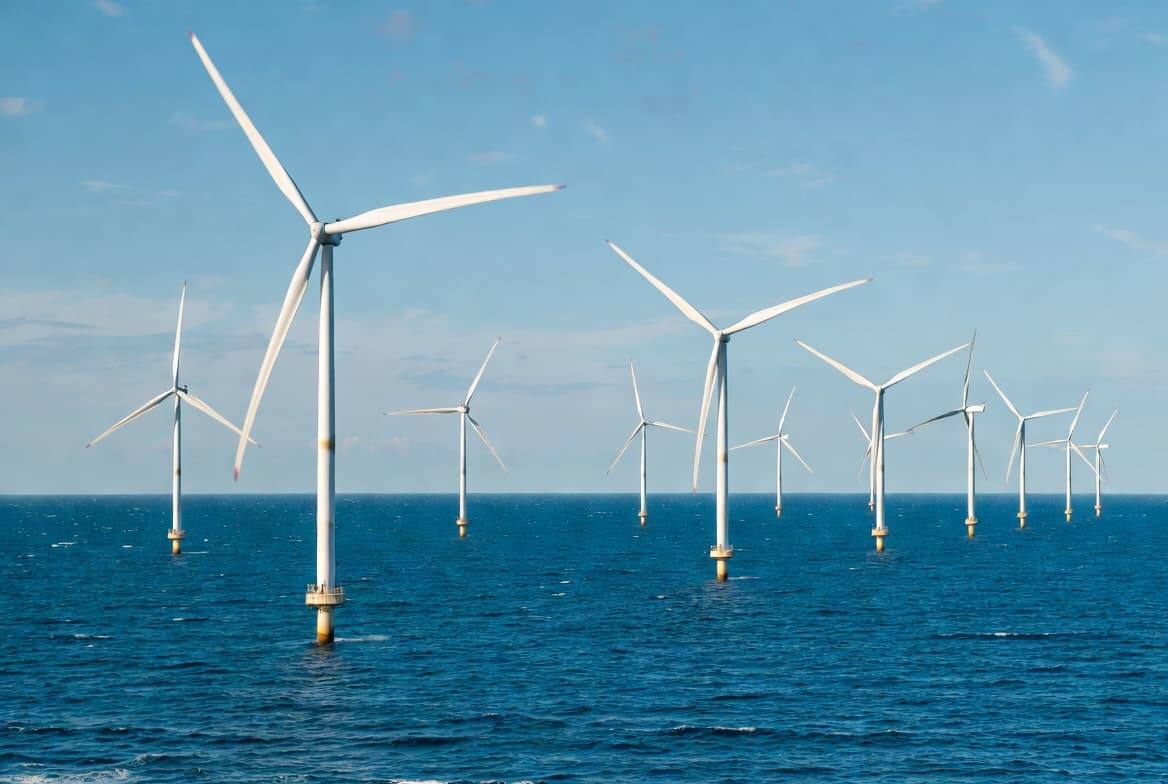
China now controls more than half of global offshore wind capacity, turning offshore wind from a regional technology race into a one-country showcase. By the end of 2025, it held 56% of the world’s grid-connected offshore wind capacity, and it accounted for 78% of new additions in that year – a level of dominance that would make most energy markets blush.
The numbers show a sector that is still growing, but with China doing most of the heavy lifting. Global grid-connected offshore wind capacity reached 92.475 million kilowatts, while China alone contributed 52.042 million kilowatts. That means the rest of the world is collectively chasing a leader that has already built a very large head start.
Global offshore wind capacity reached 92.475 million kilowatts
According to CCTV Finance, via mydrivers, worldwide offshore wind capacity connected to the grid reached 92.475 million kilowatts by the end of 2025. China’s share was 56%, which was enough to keep it in first place after overtaking the United Kingdom in 2021. That matters because offshore wind is no longer just about turbines at sea; it is about ports, supply chains, grid access, and the industrial base needed to keep building at scale.
For comparison, China’s weight in offshore wind looks even stronger on the annual buildout side. In 2025, global new grid-connected offshore wind installations totaled 9.252 million kilowatts, up 16% from the previous year. China supplied 7.192 million kilowatts of that, a 78% share that explains why it has now led the world in annual offshore wind additions for eight straight years.
China’s 2025 offshore wind buildout dwarfed the rest of the market
- Global grid-connected offshore wind capacity: 92.475 million kilowatts
- China’s installed grid-connected capacity: 52.042 million kilowatts
- China’s share of global capacity: 56%
- Global new offshore wind capacity in 2025: 9.252 million kilowatts
- China’s new offshore wind capacity in 2025: 7.192 million kilowatts
- China’s share of new additions in 2025: 78%
The scale gap is the real story here. Other markets are still adding capacity, but China is adding it at a pace that keeps resetting the baseline. Unless Europe, the US, and newer Asian markets accelerate project approvals, grid upgrades, and port investment, the global offshore wind chart is going to keep looking suspiciously like a Chinese chart with some supporting actors.
Eight years at the top gives China a structural advantage
The more interesting question is not whether China leads – it obviously does – but how long that lead can stretch. Offshore wind tends to reward countries that can standardize procurement, finance large projects, and keep domestic manufacturers busy, and China has been doing all three. That helps explain why its annual growth share is so much larger than its already dominant installed base.
The rest of the world still has room to grow, especially as more countries use offshore wind to diversify power supplies and support industrial decarbonization. But if current trends hold, the headline for the next few years may not be whether China stays ahead. It may be how far ahead it gets before anyone else catches up.