

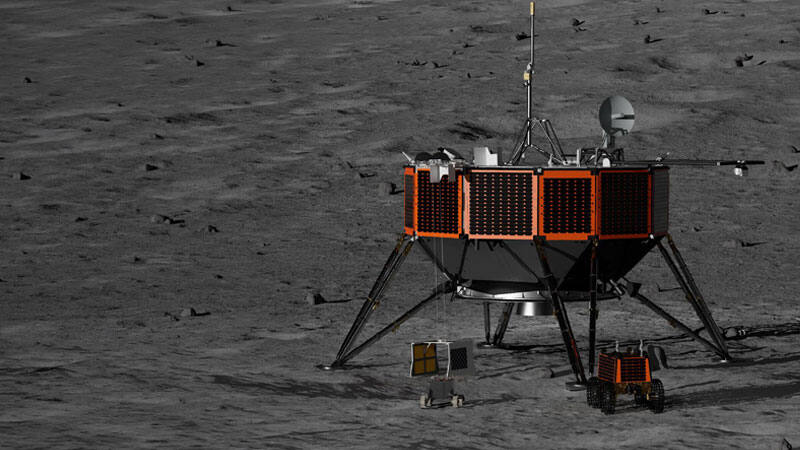
NASA is putting more money behind private lunar delivery, raising the ceiling on its Commercial Lunar Payload Services program, or CLPS, to $4.2 billion as it races to build the logistics layer for a permanent presence on the Moon. The agency is betting that if it wants hardware on the surface faster, cheaper, and more often, it needs companies to do the hauling – and it needs to pay them enough to make that worth the trouble.
The move lifts CLPS funding from $2.6 billion to $4.2 billion, an increase of $1.6 billion, or about 61.5 percent, and is meant to support the full chain of lunar operations: payload integration, launch, transport, landing, surface operations, and return systems. That is a clear sign NASA is treating commercial landers less like experiments and more like infrastructure. The subtext is simple: without a reliable delivery service, the agency’s lunar ambitions turn into PowerPoint with rocket engines.
What the expanded CLPS budget covers
CLPS is NASA’s contract vehicle for sending scientific and technology payloads to the Moon aboard private landers, and the new funding cap is designed to increase launch cadence in 2027-2029. That matters because NASA wants infrastructure in place for long-duration missions, including work toward a sustained human foothold near the Moon’s south pole. In other words, the agency is funding not just a delivery service, but the beginnings of a supply chain.
- Previous CLPS funding cap: $2.6 billion
- New CLPS funding cap: $4.2 billion
- Increase: $1.6 billion, or about 61.5 percent
- Planned focus: payloads, launch, landing, operations, and return support
Firefly, Intuitive Machines and the rest of the club
Thirteen American companies are eligible to compete for CLPS contracts, including Firefly Aerospace, Intuitive Machines, Blue Origin, SpaceX, and Lockheed Martin. Some have already delivered real results: Firefly’s Blue Ghost has successfully carried payloads to the Moon, while Intuitive Machines has kept flying its Nova-C line despite a few awkward landings. NASA now wants more of that, not less, because repetition is how a lunar logistics market becomes a lunar logistics system.
That push also reflects a broader shift in how space agencies buy capability. Rather than owning every lander itself, NASA is leaning on commercial hardware the way it already leans on commercial cargo services in low Earth orbit. Europe and China have been building their own cislunar plans, too, so the U.S. is clearly trying to avoid arriving late to a Moon that other players are already treating like strategic territory.
The next CLPS missions NASA is counting on
Several missions are already on the books, including Intuitive Machines’ IM-3 in the second half of 2026 and a mission from Blue Origin. NASA also expects more than ten deliveries to the Moon starting next year, or more if the schedule cooperates, which is a polite way of saying the agency needs the private sector to stop missing beats. The expanded budget suggests the U.S. is finally funding the part of lunar exploration that sounds boring and is therefore absolutely essential: logistics.
The open question is whether money alone will be enough to accelerate the pace NASA wants. The agency has not yet issued a fresh set of offers under the expanded CLPS plan, and the companies have not publicly responded with a broader mission slate either. That gap should close soon if the Moon timetable is real; otherwise, China may get the cleaner runway while NASA keeps shopping for landers.