

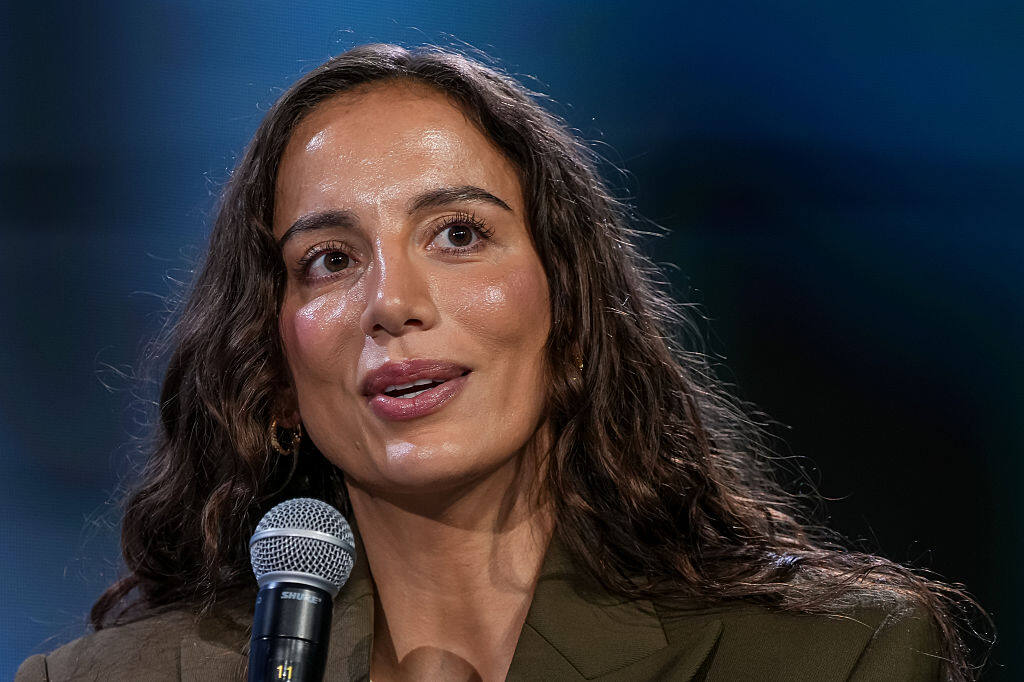
Mira Murati has spent most of her post-OpenAI life out of view. That made her first major media appearance in roughly 18 months feel like a deliberate signal: Thinking Machines Lab wants attention, but on its own terms. The company is still early, with one product in hand and a crowded field around it, yet Murati used the moment to sketch a different kind of AI interface and to revisit the OpenAI board chaos that briefly put her at the center of the industry.
The headline idea is ”interaction models,” Thinking Machines’ term for AI that listens and responds to continuous streams of audio, text, and video in 200-millisecond intervals. That is a cleaner pitch than the usual chatbot routine, where humans poke a box and wait for it to answer. If it works, this AI interface could make systems feel less like software and more like a very attentive participant in a conversation.
Thinking Machines wants to move beyond prompt and response
Murati described the idea as a first step rather than a finished product, and she declined to give a release date. That caution makes sense: the AI market is already littered with grand interface promises that arrived as demos, not products. Still, the direction is telling. OpenAI has been racing toward richer multimodal experiences, Anthropic has been winning praise for practical enterprise use, and Elon Musk’s xAI has become impossible to ignore through its ties to SpaceX and the public markets nearby.
- Thinking Machines has shipped Tinker, an API for fine-tuning open-source AI models.
- The company has spent about a year and a half mostly on fundraising and hiring.
- Its new pitch is AI that processes audio, text, and video in 200-millisecond intervals.
Murati revisits the OpenAI ”blip”
She also addressed the five-day stretch in November 2023 when OpenAI’s board fired Sam Altman and she became interim CEO. Murati said her choices were guided by protecting the mission and the team, but she also admitted that, looking back, she would have pushed for more information, a better transition plan, and more transparency. That is a more useful answer than a polished loyalty speech, even if she stopped short of saying whether the episode had a good outcome.
Her bigger point was structural, not personal. The industry, she suggested, has concentrated too many consequential decisions in too few hands, with too much faith placed in individual virtue and too little in governance. That is hardly a fringe complaint in AI anymore; the race to build ever-more-powerful systems has made board design and accountability look less like corporate housekeeping and more like product safety.
Talent churn and AI salary inflation are the subtext
Murati also downplayed recent departures of high-profile researchers from Thinking Machines. Building a frontier lab from scratch, she said, compresses years of ordinary organizational turbulence into a few months. She added that the eye-watering compensation packages now common in AI matter, but they are not the whole story. Translation: money buys a lot, but it does not buy organizational patience.
That tension is familiar across the sector. Startups are now competing not just with each other, but with giants that can offer distribution, research prestige, and giant paychecks in one neat bundle. So if Thinking Machines wants to stay relevant beside OpenAI, Anthropic, and xAI, it needs more than a quiet hiring spree and a product page. It needs a narrative, and Murati just started telling one.
Who keeps control of AI?
Murati was also careful when asked about the human side of AI’s future, from job loss to the risk of misuse for things like chemical weapons. She pushed back on the idea that the outcome is fixed in advance, arguing that this stretch of the industry’s development will shape whether AI becomes broadly useful or broadly dangerous. Her warning was simple enough: if humans take their hands off the wheel too soon, the result will not be prettier for anyone.
That is probably the sharpest reading of her appearance. This was not a comeback tour, and it was not a product launch in disguise. It was a reminder that Murati is still in the game, that Thinking Machines is building something different, and that the hardest fight in AI may end up being less about model quality than about who gets to make the decisions around it.