• 2 min read
Mahakbot debuts with six arms for parallel factory work
A new industrial robot with six independent arms has made its debut in Shanghai, and the pitch is simple: let one machine do the work of several stations at once. Shanghai Sazhi Intelligent Technology says Mahakbot can m
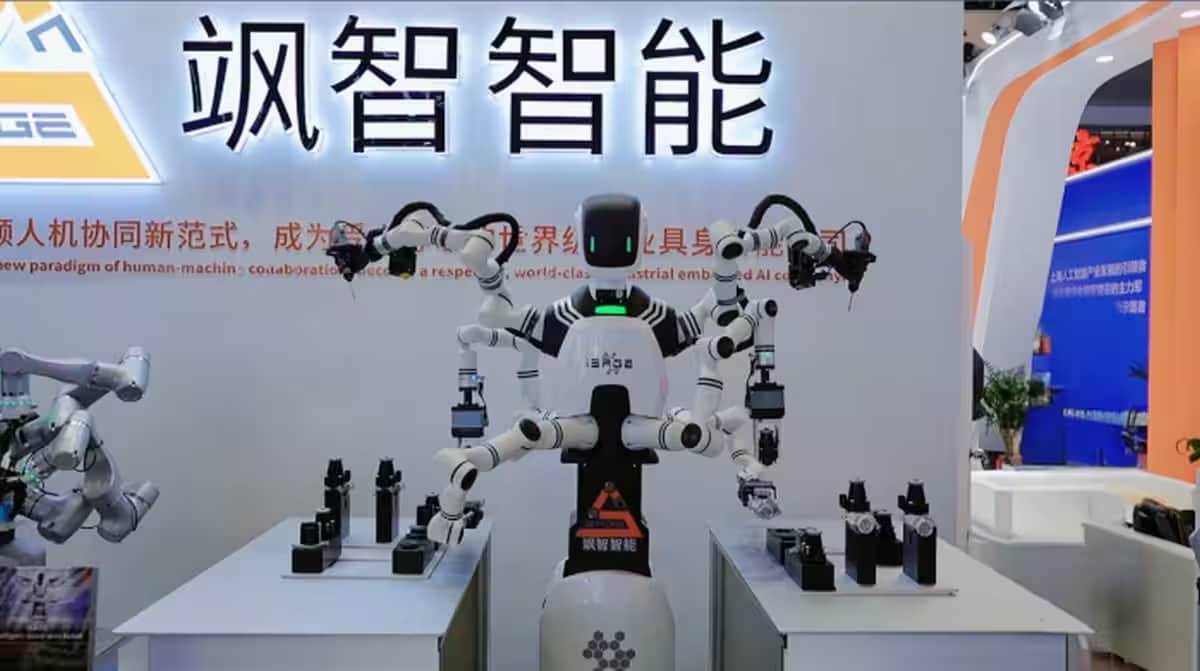
Image: ixbt.com
A new industrial robot with six independent arms has made its debut in Shanghai, and the pitch is simple: let one machine do the work of several stations at once. Shanghai Sazhi Intelligent Technology says Mahakbot can move, position, assemble, and inspect parts in parallel while avoiding collisions, a promise that lines up neatly with factories' long-running obsession with squeezing more output from less floor space.
The company unveiled Mahakbot at the Shanghai International Technology Exhibition, describing it as the first intelligent robot of its kind with spatial interaction and simultaneous multi-arm operation across different work zones. That is bold branding, of course, but the underlying idea is easy to understand: instead of one arm waiting for another to finish, all six can keep busy under the guidance of a large AI model that coordinates the choreography.
How Mahakbot splits industrial tasks
According to the demo, Mahakbot handled automotive component assembly, with each manipulator assigned a separate role in the process. That matters because modern production lines are increasingly bottlenecked by handoffs, not raw robot speed, and a system that can share work across multiple stations without tripping over itself could be useful in more complex manufacturing setups.

Recommended reading
Amazon’s Matter plug brings Apple Home support under $10
There is also a practical reason this kind of machine gets attention now: manufacturers are under pressure to automate more flexibly, not just more aggressively. In recent years, Chinese industrial robotics has moved beyond simple repeat-task arms toward smarter systems that can coordinate multiple motions, and Mahakbot looks like another step in that direction rather than a clean break from it.
More than 100 orders at the Shanghai exhibition
Shanghai Sazhi Intelligent Technology said it received more than 100 orders on the first day of the exhibition, with several multinational companies among the buyers placing requests for similar robots. That kind of early demand suggests the company has found a receptive audience, even if the real test will come when the machine has to prove itself on a noisy factory floor instead of a polished trade-show stage.
- Six manipulators work independently
- AI model coordinates parallel tasks
- Designed for assembly, positioning, transport, and quality checks
- Demo focused on automotive parts
The open question is whether six arms are the future of factory automation or just a very photogenic answer to a specific production problem. If Mahakbot can keep its promise of synchronized, conflict-free work, competitors will have to respond with something more than a faster single arm and a nicer brochure.
Frontier Editor
Dan is our resident futurist, covering electric mobility, space exploration, and the smart home. He's interested in atoms just as much as bits. Whether it's a new battery chemistry, a reusable rocket, or a protocol that finally makes IoT devices talk to each other, Dan breaks down the engineering that pushes humanity forward.
via ixbt.com