

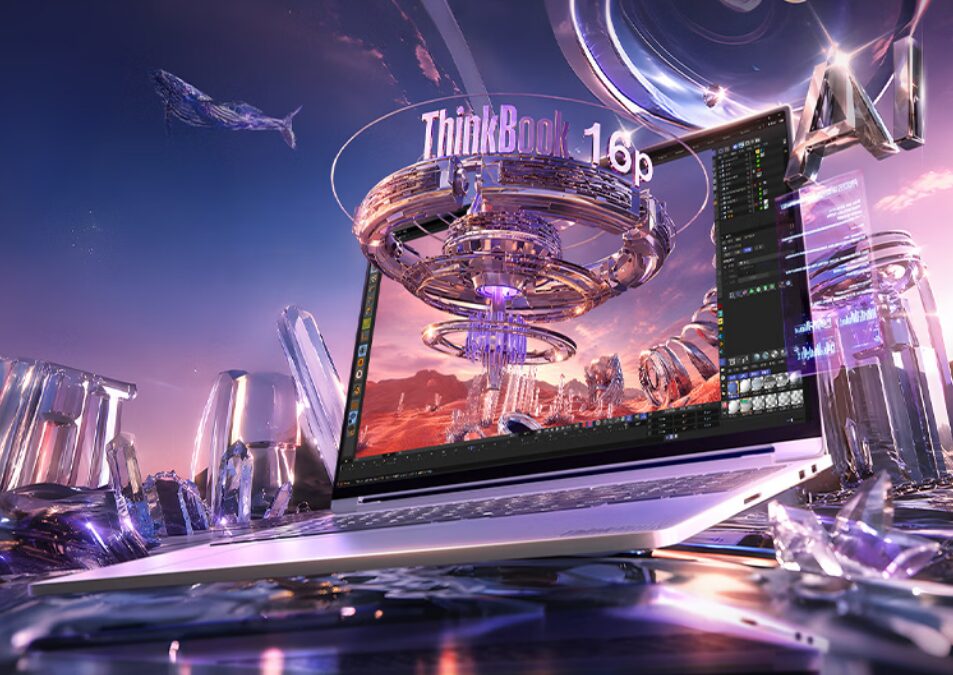
Lenovo has broadened the ThinkBook 16p 2026 lineup with a cheaper creator-friendly model, swapping in Intel’s Core Ultra 7 251HX and Nvidia’s GeForce RTX 5060 while keeping the same high-end display, upgradeable internals, and chunky metal build. At 15,999 yuan in China, the Lenovo ThinkBook 16p 2026 is clearly aimed at buyers who want a serious content machine without paying for the top Core Ultra 9 trim.
The move is pretty standard for Lenovo: launch the halo model first, then come back with a version that looks less intimidating to the wallet. That usually works because the expensive parts of a creator laptop – the screen, cooling, ports, and chassis – are often the things users actually care about after the spec-sheet adrenaline wears off.
Lenovo ThinkBook 16p 2026 display and performance details
The new Lunar Gray configuration keeps the 16-inch 3.2K panel with a 16:10 aspect ratio, 165Hz refresh rate, and 500 nits peak brightness. Lenovo says it covers 100% of the DCI-P3 color space, ships with X-Rite factory calibration, and averages Delta E under 1.0, which is the sort of spec list that makes design teams nod approvingly and everyone else pretend they can see the difference.
Nvidia G-Sync and Dolby Vision are both included, so this isn’t just a spreadsheet machine with a fancy badge. That’s part of a broader pattern in premium Windows laptops this cycle: more panels are being tuned for both color work and smoother gaming, because the line between ”creator laptop” and ”do-everything laptop” keeps getting blurrier.
Upgradeable memory, storage, and cooling
Lenovo is also leaving the door open for future upgrades. The motherboard has two DDR5 slots supporting up to 64GB of RAM and two M.2 PCIe slots for up to 4TB of storage, which is refreshingly sensible in a market that too often treats upgradeability like a fossil from a less monetizable era.
Cooling comes from a dual-fan system with copper heat plates and an aluminum die-cast structure, and Lenovo says the laptop can sustain up to 200W of total power draw in its highest-performance mode. The metal chassis weighs 2.1kg and measures 17.9mm thick, so this is not a featherweight machine, but that was never the assignment.
Ports, battery, and Magic Bay accessories
Connectivity is unusually generous: two Thunderbolt 4 ports, three USB-A ports, HDMI 2.1, a full-size SD card reader, and a headphone jack. The laptop has also passed MIL-STD-810H durability testing, and it keeps Lenovo’s Magic Bay connector at the top of the display for optional add-ons such as an LTE/4G module, a secondary HUD smart display, or a Studio speaker module.
An 85Wh battery powers the system, with Lenovo claiming a 50% charge in roughly 30 minutes using the included adapter. Add a 1080p webcam with IR for Windows Hello, a fingerprint reader in the power button, and a four-speaker Harman Kardon setup, and the ThinkBook 16p 2026 starts to look less like a scaled-down flagship and more like Lenovo’s attempt to make ”mid-tier” sound a lot more premium than it used to.
The open question is whether this configuration will stay China-only or become the version that actually gives the 16p lineup its volume. If Lenovo pushes it wider, the Core Ultra 7 and RTX 5060 combo could end up being the sweet spot the pricier model never fully was.