

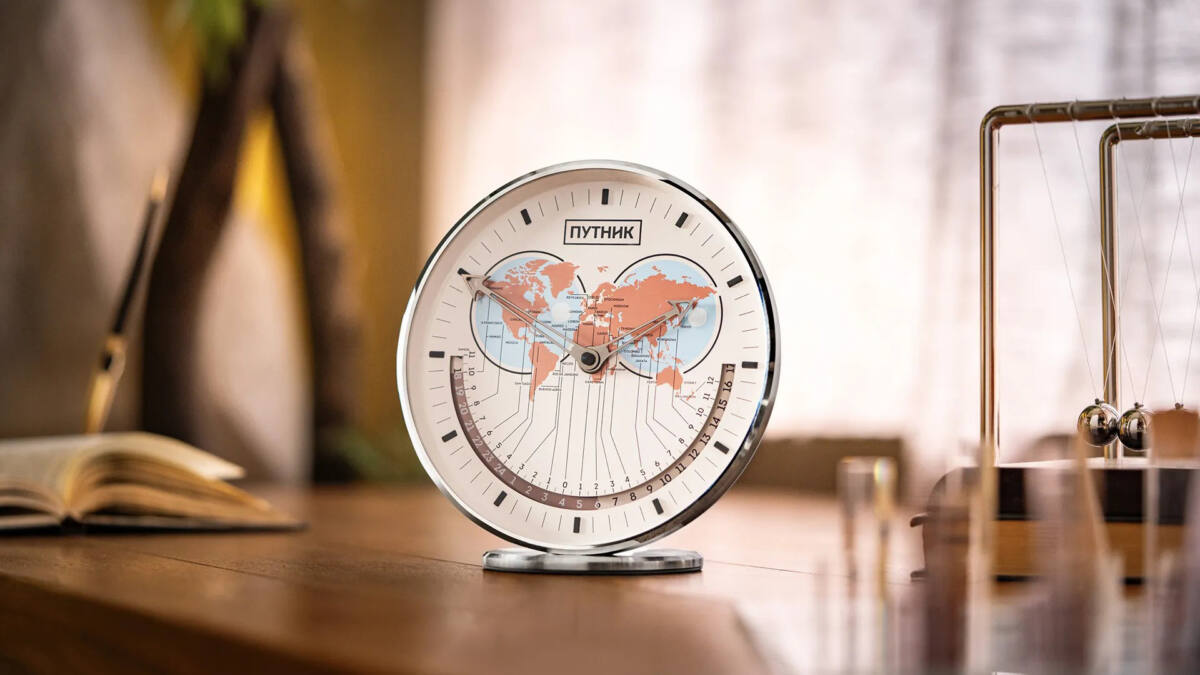
Konstantin Chaykin has turned one of his best-known watch ideas, ”Traveler,” into a world time table clock. It is a neat pivot for a maker whose reputation rests on inventive dial work and mechanical theater: take the recognizable concept, enlarge it, and suddenly the object is less a wristwatch than a desk companion for people who like their timekeeping with a bit of stagecraft.
The move fits a wider pattern in high-end watchmaking. Brands increasingly recycle signature designs into larger, more decorative formats, because collectors like continuity and because the desk is a natural space for horological excess. Less wrist, more room – and, conveniently, more justification for complication-heavy showpieces.
Traveler world time table clock
Chaykin’s original ”Traveler” was already built around the idea of movement across time zones. In table-clock form, that logic becomes even more literal: a world-time display is exactly the kind of feature that makes sense when the object is meant to sit in one place and reference many others.
That is also where independent watchmaking has been heading lately. For smaller maisons, translating a known design into another category can be smarter than chasing novelty for novelty’s sake. It protects identity, keeps collectors oriented, and gives a new product a story that does not need a marketing department to invent one.
Why world time still sells the fantasy
World-time complications have never been just practical. They signal travel, status, and an old-fashioned confidence that time zones are something you personally manage rather than something your phone handles for free. That may sound absurd, but absurd is part of the appeal in this corner of the market.
- Source concept: ”Traveler”
- New format: table clock
- Key complication: world time
What this says about independent watchmaking
Chaykin is not alone in stretching familiar ideas into new objects. Independent watchmakers have been leaning harder into desk clocks, pocket-style pieces, and other display formats because they create more room for mechanical drama without the ergonomic limits of a wristwatch. The result is often less commercial, but much more memorable.
The obvious question is whether ”Traveler” becomes a one-off showcase or the start of a broader tabletop line. If the reaction from collectors is strong, expect more brands to follow the same route: take a recognizable watch, make it bigger, and let the complication do the talking.