

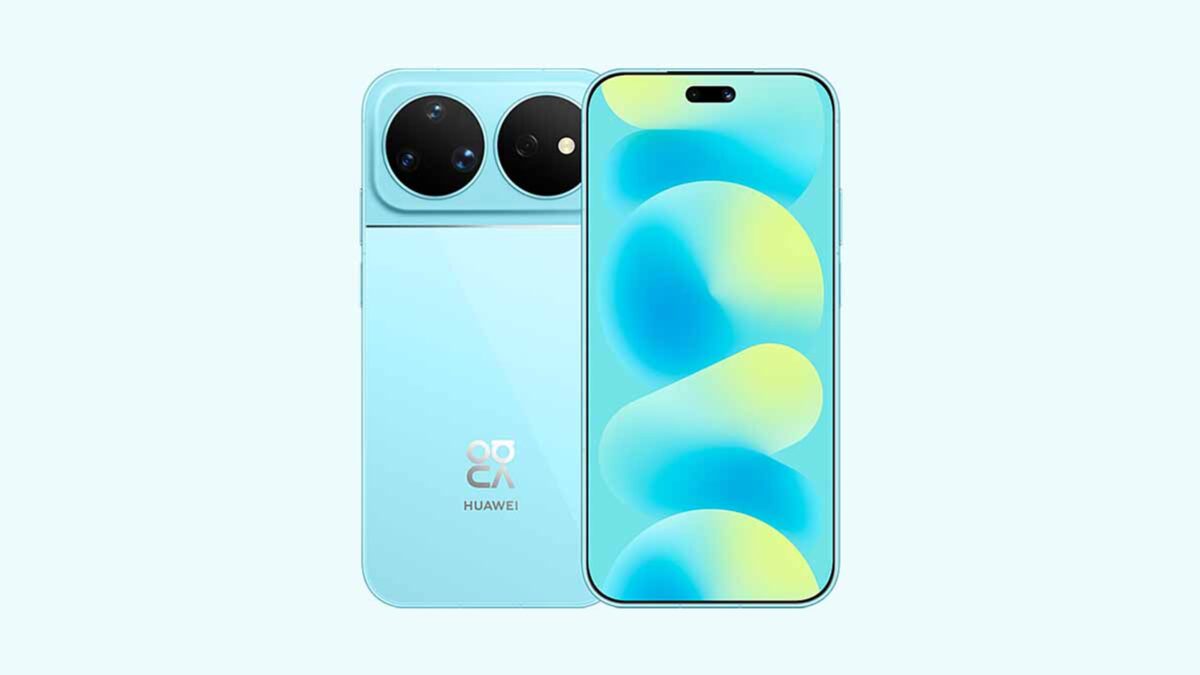
Huawei has started taking preorders for its Nova 16 phone family and has already nailed down the launch date: June 1, 2026. The Huawei Nova 16 series spans four models – Nova 16z, Nova 16, Nova 16 Pro, and Nova 16 Ultra – with the usual Huawei trick of stretching the same basic idea across multiple price and spec tiers.
For now, buyers can reserve the phones only in Sky Blue, and the Ultra is being treated as the prestige option with 1 TB of storage only. That kind of constrained preorder setup is classic launch theater: it builds demand while keeping the first-wave configuration tightly controlled.
Nova 16 series design and storage options
The Nova 16, Nova 16 Pro, and Nova 16 Ultra share a horizontal camera arrangement with a dual-module layout, while the Nova 16z goes its own way with a vertical camera stack inside a square island. It is a small design fork, but an important one: Huawei is clearly separating the entry model from the rest before a buyer even checks the spec sheet.
The rest of the family is built around Huawei’s own Kirin chips and HarmonyOS, which keeps the company firmly inside its self-contained ecosystem. That approach has become more than a branding exercise; with limited room to lean on outside silicon, Huawei keeps doubling down on integrated hardware and software as the selling point.
Kirin chips, 1,440 Hz PWM and camera hardware
- Nova 16z: Kirin 8030, according to leaks
- Nova 16 Pro: Kirin 9010S
- Nova 16 Ultra: Kirin 9020
- All models: high refresh rate displays and 1,440 Hz PWM dimming
- Camera system: 50-megapixel RYYB sensor and second-generation Red Maple image processing
The display spec is the sort of thing Huawei likes to talk up because it sounds technical and solves a very real annoyance: screen flicker. Meanwhile, the 50-megapixel RYYB sensor and updated Red Maple processing suggest the company is still pushing camera hardware hard, even as rivals lean more on computational photography and larger sensor formats.
If Huawei keeps the pricing sensible, the Nova 16 family should land squarely in the middle of the crowded premium-midrange fight. The more interesting question is whether the Ultra’s 1 TB-only positioning signals a true halo device or just a neat way to make the top model look rarer than it is.