

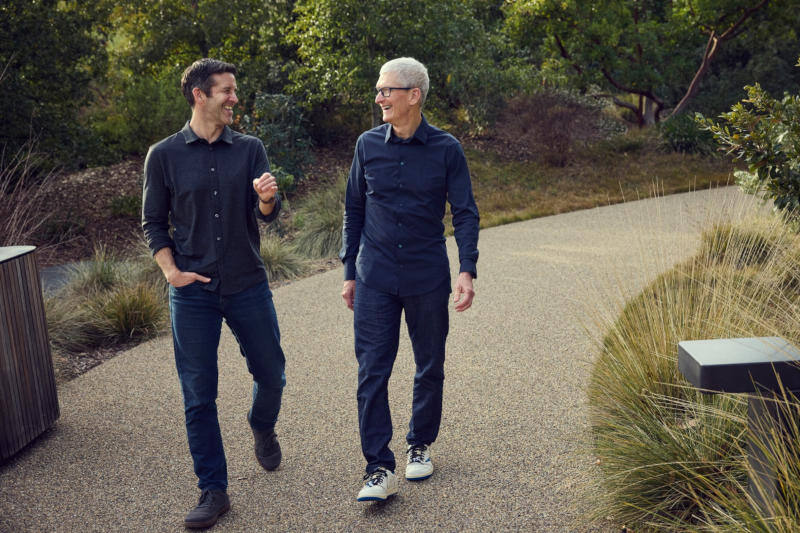
Apple is preparing for a change that could alter more than the nameplate on the corner office. In September, Tim Cook is expected to step aside as chief executive, and John Ternus would inherit a company that still makes absurd amounts of money, but is under pressure to move faster, take bigger product risks, and prove it can matter in AI rather than merely comment on it.
The bet inside Apple appears to be that Ternus will be less consensual than Cook and more willing to pick a lane. That matters because the company’s recent playbook has been excellent at refining existing devices, but much less convincing at creating a new hit category on command – and the AI era punishes hesitation.
Why Apple wants a different kind of chief executive
Cook’s record is not exactly light on big swings. Under him, Apple shipped Apple Watch, AirPods and Vision Pro, while also keeping the iPhone, iPad and Mac on a steady upgrade drumbeat. But the company also burned time and money on Vision Pro and on its cancelled self-driving car project, which is a reminder that scale does not automatically produce vision.
Ternus is being sold internally as the opposite temperament: decisive, less interested in compromise, and more willing to define the future rather than protect the past. That kind of leadership looks tailor-made for a company trying to stop AI rivals from setting the pace.
Apple’s smart-home hardware and wearables plans
The most obvious targets are smart-home hardware and wearables. Apple has been exploring a smart display with face recognition, a tabletop robot with a swiveling screen for video calls and media, and a privacy-focused security camera. On the wearable side, the likely candidates are glasses, a pendant, and updated AirPods, all tied to cameras and AI scanning of the world around the wearer.
- Smart-home display with face recognition
- Desktop robot with a rotating screen
- Privacy-focused security camera
- Glasses, pendant and updated AirPods with cameras
Apple had hoped to launch smart glasses this year, but that timetable may slip to 2027. The tabletop robot was originally slated for 2027 too, before being pushed to 2028. That delay says less about ambition than about the ugly reality of consumer AI: the hardware can be sexy, but the software still has to stop sounding like a chatbot with stage fright.
Siri, AI and the price of moving slowly
The biggest problem is not designing the boxes. It is making the AI inside them good enough to sell. Apple’s smart-home plans are being held back by underdeveloped AI models and Siri, which has spent years as a punchline with a microphone. If Ternus can improve that stack quickly, Apple gets a credible shot at a new hardware cycle; if not, the company risks shipping beautiful devices that do less than they should.
He is already moving in that direction. In April, Ternus reorganized the hardware division around a new AI platform intended to speed up product development and improve device quality. He is also expected to oversee the first foldable iPhone and the long-promised Siri upgrade.
Cook stays, but the job changes
Cook will not disappear. He is expected to stay on as executive chairman, focusing on government relations and geopolitical issues, including Apple’s ties with Donald Trump and China. That leaves Ternus with the product problem and Cook with the diplomacy, which may be the cleanest division Apple has managed in years.
The open question is whether Apple can keep its famed operational discipline while abandoning the comfort of consensus. If Ternus really does get to lead more like Steve Jobs than Tim Cook, the company may finally start acting like it wants another era of category-defining products – not just another round of polished updates.