

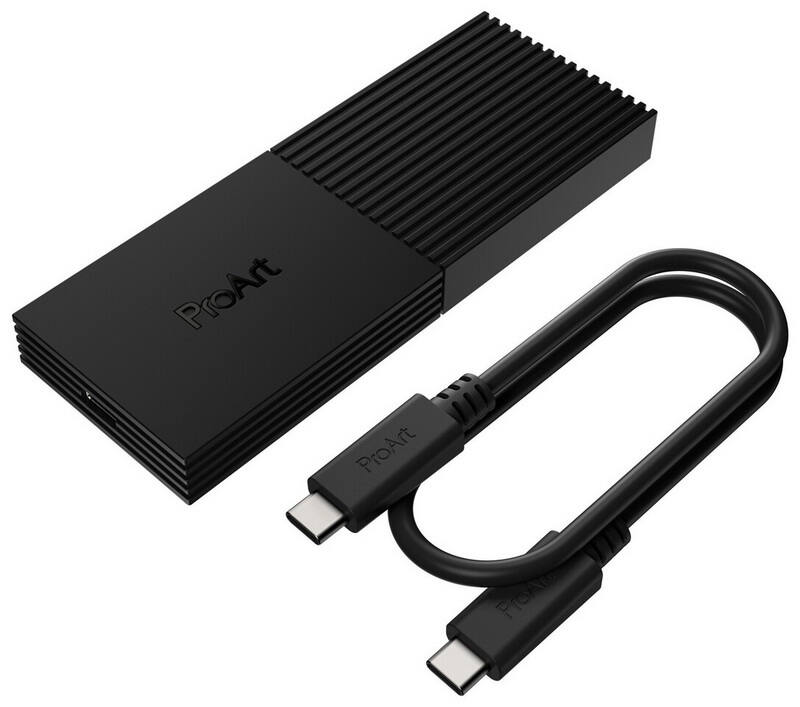
Asus has introduced the ProArt PA40SU, a compact external enclosure that turns an internal NVMe M.2 SSD into a fast portable drive with transfer speeds of up to 40 Gbit/s. It is aimed squarely at people shuffling huge video projects, backups, and other file-heavy workloads that punish ordinary USB storage.
Thunderbolt-class performance is only useful if the enclosure can keep an SSD cool enough to sustain it, and Asus says ProArt PA40SU is built with a four-stage smart fan and a thermal pad to avoid the usual slowdown under long transfers.
Asus says the enclosure continuously moved up to 2,960GB of data over 30 minutes in internal testing. For editors and backup nerds, that is the kind of number that matters more than marketing glitter.
USB4, NVMe support and drive sizes
ProArt PA40SU uses USB4 for up to 40 Gbit/s and supports NVMe M.2 SSDs in 2230 and 2280 sizes. Asus also says the enclosure works with 1TB, 2TB, and 4TB drives, which should cover most creator workflows without forcing users into exotic hardware.
- Interface: USB4, up to 40 Gbit/s
- Supported SSDs: NVMe M.2 2230 and 2280
- Supported capacities: 1TB, 2TB, and 4TB
- Cooling: four-stage smart fan plus thermal pad
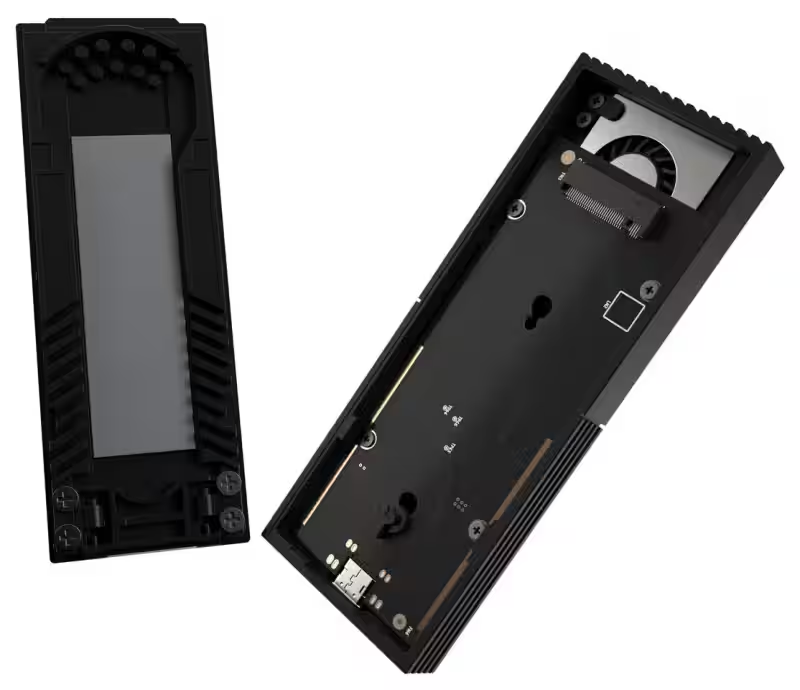
Asus says the enclosure is intended for 4K video editing, large file transfers, backup work, and similar memory-hungry jobs. It also includes a status panel that shows the SSD’s condition, health, and performance, which is useful because external storage products often hide the one thing users actually need to know: whether the drive is getting tired.
ProArt PA40SU size, weight and pricing
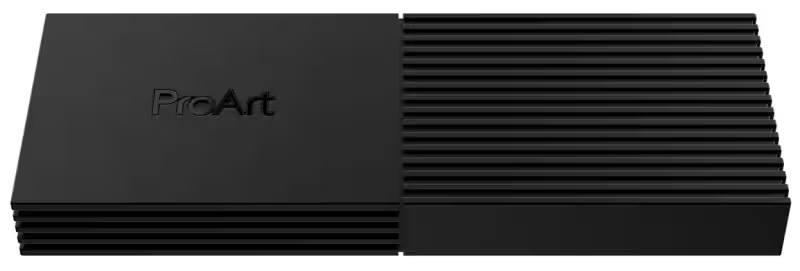
The enclosure measures 124.8 x 46.5 x 13.5 mm and weighs 127 grams, so it is small enough to travel without becoming a bag accessory with commitment issues. Asus has not said how much it will cost.
The real question is whether Asus can price it low enough to compete with the flood of simpler NVMe enclosures, many of which skip active cooling and look great right up until sustained transfers hit the brakes. If the PA40SU lands where ProArt gear usually does, it could become a quiet favorite among editors who care more about stable throughput than desk-friendly aesthetics.