• 4 min read
iPhone 20 may bring Apple’s biggest redesign since X
Apple’s fall 2027 anniversary iPhone may bring curved glass, under-display Face ID, an A21 chip, HBM, and an Apple modem in the US.
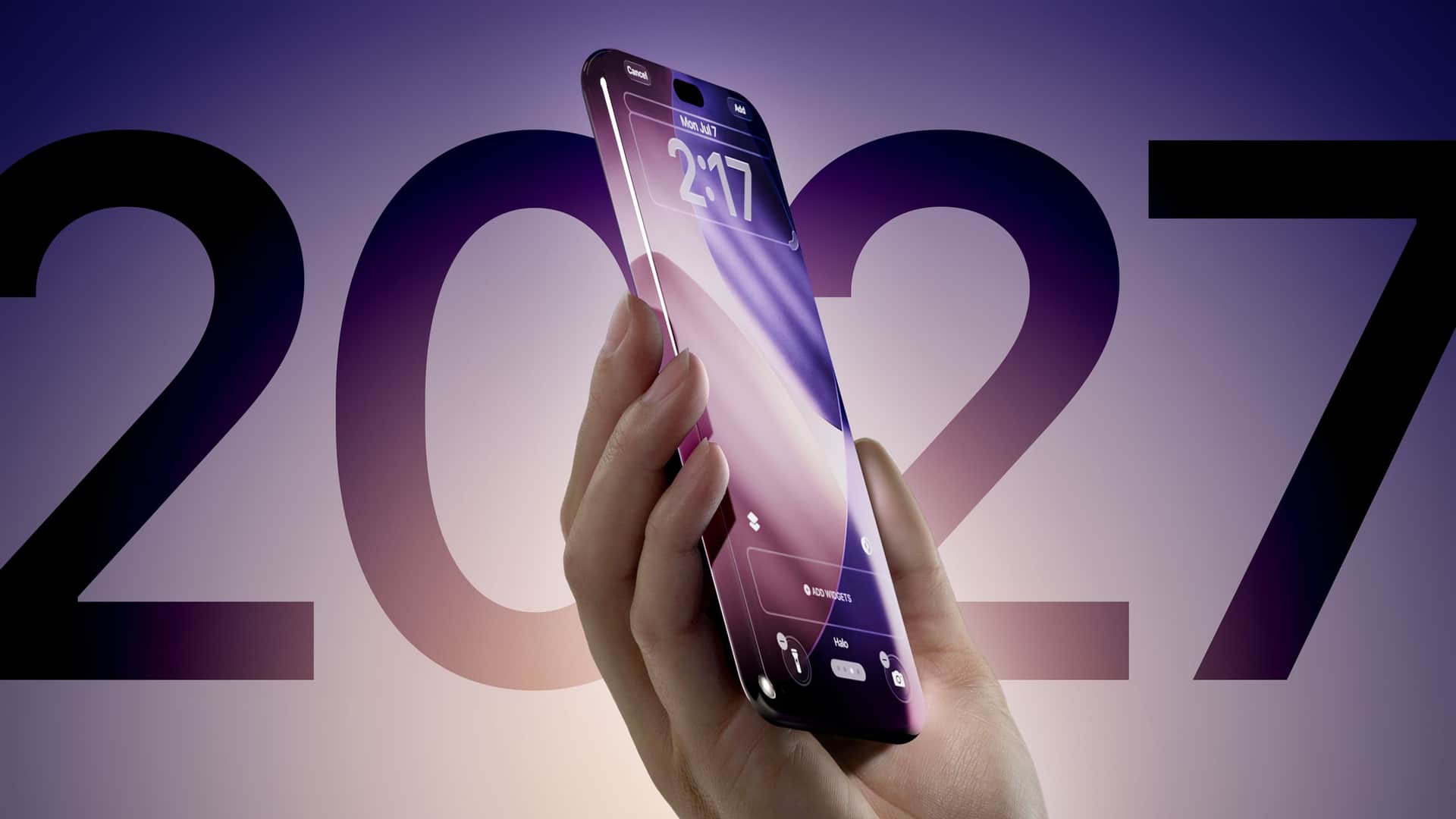
Image: MacRumors
Apple is reportedly planning its most significant iPhone redesign since the iPhone X for the device’s 20th anniversary in fall 2027. The first iPhone was announced in January 2007 and went on sale on June 29, making that date the anniversary technically—although Apple is expected to keep its high-end launch in September or nearby, as it did with the iPhone X in 2017.
The name is unsettled. Apple could skip “iPhone 19,” as it skipped “iPhone 9” before the iPhone X, with current rumors variously calling the model the iPhone 20 or iPhone XX. The anniversary phone is also expected to launch alongside a second-generation foldable iPhone, after the iPhone 18, iPhone 18e, and iPhone Air 2 arrive in spring 2027.
Curved glass and a thinner display stack
The rumored design combines curved glass on the front and back with a display that bends around all four edges. Bloomberg’s Mark Gurman has described it as a curved iPhone without display cutouts. Apple’s supply-chain facilities have reportedly completed renovations ahead of production, with manufacturing quality said to be around that of the first-generation iPhone Air.
Rather than the deep “waterfall” curves used on some Samsung phones, Apple is reportedly pursuing shallow, equal-depth micro-curves. The approach could make edge swipes feel more natural and reduce image distortion. Bending the display circuitry around every edge would require an ultra-thin film encapsulation layer to protect the OLED panel from moisture and air. One leak claims the bezel could measure 1.1mm, compared with approximately 1.44mm on the iPhone 17 Pro.
Apple is also reported to be adopting a Samsung-made panel using Color Filter on Encapsulation. The process removes the polarizing film and places the color filter directly on the encapsulation layer, reducing the display stack’s thickness, increasing light transmission, and lowering power consumption. Next-generation 16nm display driver chips are also rumored, along with a crater-shaped diffusion layer intended to make brightness more uniform, including at the curved edges.

Recommended reading
Galaxy Z Fold8 adds per-app display scaling
Ten rumored hardware changes
The current reports point to these upgrades:
- Under-display Face ID: A “spliced micro-transparent glass” window could allow infrared sensors to work through the panel. The technology is expected to debut first on iPhone 18 Pro models, but DSCC’s Ross Young says it may not be fully ready even in 2027. A smaller Dynamic Island could remain.
- Two screen sizes: The anniversary range is expected to include roughly 6.3-inch and 6.9-inch models, matching the rumored iPhone 18 Pro and Pro Max sizes. The larger version could be marketed as a 7-inch phone because of its slimmer bezels.
- Apple image sensor: Apple is reportedly developing a stacked sensor to replace Sony sensors across the iPhone lineup. A working prototype allegedly uses LOFIC technology, which lets pixels store varying amounts of light and could deliver up to 20 stops of dynamic range.
- Solid-state buttons: A revived “Project Bongo” could replace the Side, volume, Action, and Camera Control buttons with haptic controls integrated into the frame. The buttons have reportedly passed tests involving gloves, wet hands, extreme temperatures, and cases. An ultra-low-energy microprocessor is said to keep them working when the phone is powered off or its battery has run out.
- A21 chip: Both anniversary models are expected to use a second-generation 2-nanometer A21 chip, also intended for the second-generation foldable iPhone.
- High-bandwidth memory: Apple is reportedly considering mobile HBM, which stacks DRAM vertically and uses through-silicon vias to improve signal speeds. Connecting it to the GPU is described as a strong candidate for improving on-device AI performance. Apple has reportedly discussed the plan with Samsung and SK Hynix, which expect to begin mass production after 2026.
- Apple modem in the US: Apple is aiming for modems that outperform Qualcomm in speed and AI functionality by 2027. The anniversary iPhone could be the first high-end US model to use an Apple-designed modem, bringing an efficiency improvement and potentially better battery life.
- Pure silicon battery: Pairing the new display with a pure silicon battery could provide higher energy density than conventional lithium-ion cells and more capacity in the same space. One leaker has claimed a 6,000mAh battery, though the source of that figure is unclear.
- Reverse wireless charging: One leaker has mentioned the feature, but the report does not establish whether it is supported by supply-chain information.
- Under-display audio and new Ceramic Shield: The same leaker has also claimed an earpiece-free audio system and a next-generation Ceramic Shield. Those claims remain unverified.
The 2027 design may be an interim version
The final hardware could still change substantially because the phone is more than a year from launch. Reports describe a two-stage rollout for the curved display: the 2027 version may introduce some edge distortion and brightness loss, followed by a more advanced implementation in 2028. Apple has not announced the anniversary model, its pricing, or a release date beyond the expected fall 2027 window.
Gadgets Editor
Eli is obsessed with the tangible future. He reviews phones, wearables, and everything with a battery. Known for his rigorous testing protocols and unabashed teardowns, Eli has broken more review units than he cares to admit, all in the name of discovering the truth about durability and repairability.
via MacRumors