

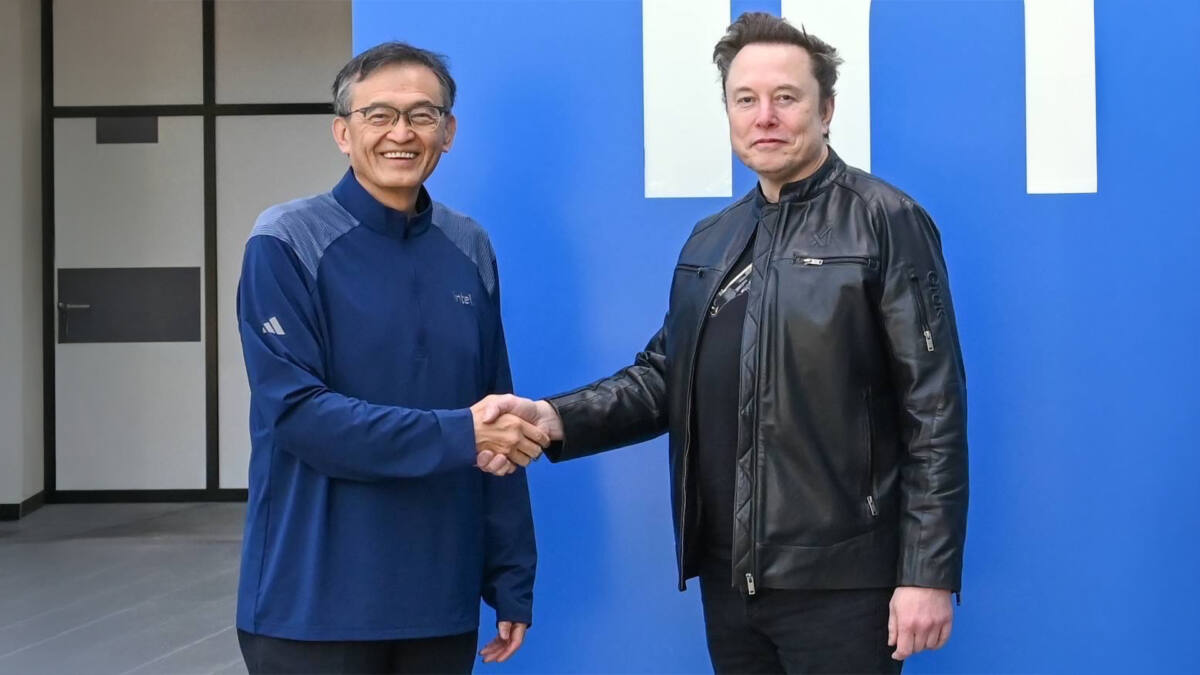
Intel is leaning hard into a new partnership with Tesla, SpaceX, and TeraFab, and CEO Lip-Bu Tan is making no secret of who he thinks is the right person to chase cheaper, faster chip production: Elon Musk. The pitch is bigger than a standard foundry customer win. Intel is signaling that TeraFab may help it test unconventional manufacturing ideas around the upcoming 14A node, while investors are already treating the arrangement like a much-needed validation of the company’s foundry push.
The exact structure is still fuzzy, which is very on-brand for anything involving Musk and semiconductors. Intel has not confirmed whether TeraFab is simply licensing 14A to get production moving faster, or whether the relationship will stretch into something broader. But in a foundry business that is still losing money, even a murky first win matters. Intel said its foundry unit posted a -45% operating margin for Q1 2026, an improvement from -71.7% in Q2 2025, so any credible customer story is going to get airtime.
What Intel and TeraFab may be building
Tan framed the deal as an experiment in making semiconductor manufacturing less expensive and more responsive to demand. He said Intel and Musk share a view that chip supply is lagging behind demand, and that they want to explore ”unconventional” ways to improve manufacturing efficiency. Translation: Intel wants someone with money, urgency, and a tolerance for big bets to help stress-test its next process node.
That approach makes sense for Intel, which has spent years trying to convince customers that its foundry business is more than a PowerPoint promise. Rival foundries such as TSMC and Samsung have long benefited from scale and entrenched customer trust, while Intel has had to rebuild both its technology roadmap and its sales pitch. A fast-moving customer like TeraFab gives Intel a chance to show progress without waiting for the market to hand it a standing ovation.
- Intel says TeraFab is its first major 14A customer.
- The arrangement may start as a 14A license, but that has not been confirmed.
- Intel says the work is meant to improve manufacturing efficiency and economics.

Intel’s stock reaction says plenty
The market did not wait for a detailed technical roadmap. Intel closed Thursday at $66.78, then jumped 19% to $79.74 in after-hours trading after the comments about TeraFab. That kind of move suggests investors are starving for evidence that Intel can turn its foundry arm into a real business, not just a strategic slogan with better typography.
There is still a glaring question hanging over the deal: can a ”broad” partnership actually shorten the path to full-scale production, or is this mostly a high-profile way to announce that Intel wants a marquee customer? If Intel can turn 14A into a usable platform quickly, it could win more business by proving its process technology is flexible, not just technically impressive. If not, this will be remembered as another loud moment in a long, expensive rebuilding effort.